
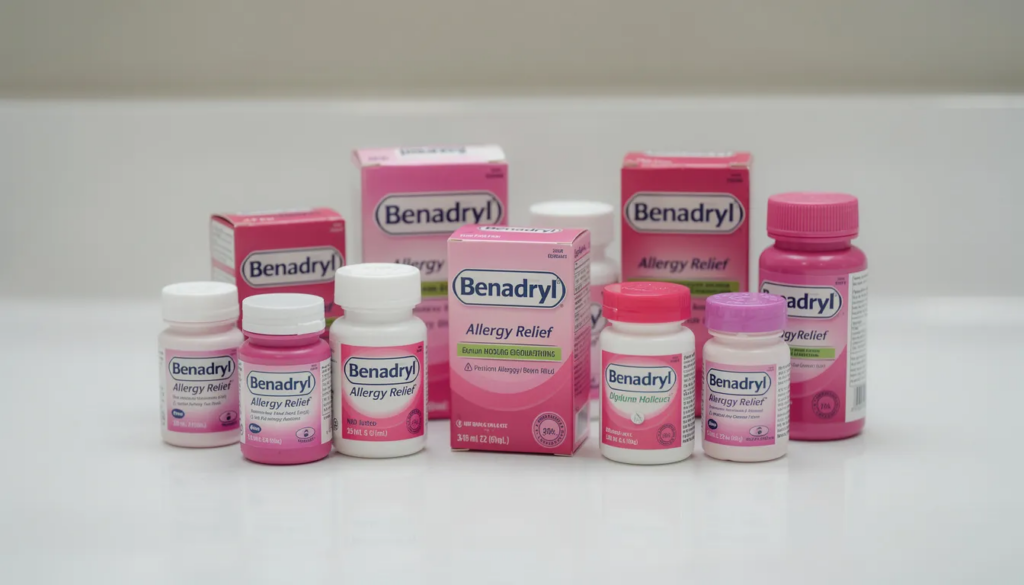
OD on Benadryl: Fast Answers First
An OD on Benadryl refers to taking too much diphenhydramine, the active ingredient in this common over-the-counter antihistamine. Yes, you can absolutely overdose on Benadryl, and it can cause life-threatening complications including seizures, coma, serious heart problems, and even death.
Symptoms typically appear within 1-2 hours after oral ingestion and peak around 2-3 hours.
Emergency Steps: • Call 911 immediately if the person has seizures, trouble breathing, won’t wake up, or has severe confusion • Call Poison Control at 1-800-222-1222 for guidance on any suspected overdose • Don’t try to make the person vomit unless poison control specifically tells you to • Bring medication bottles to the emergency room if it’s safe to do so • Stay with the person and monitor their breathing and responsiveness • Be ready to provide CPR if the person stops breathing
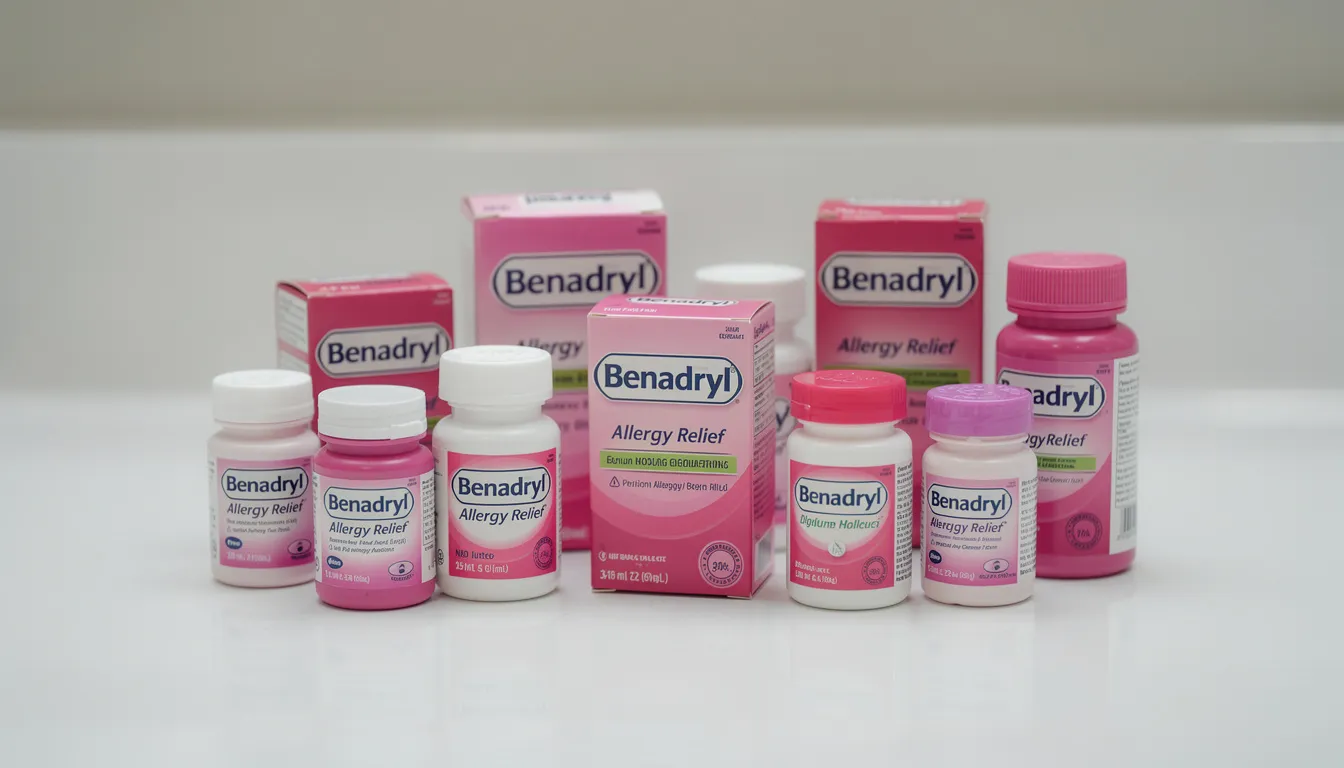
What Is Benadryl (Diphenhydramine)?
Benadryl is a brand name for diphenhydramine, a first generation antihistamine that’s been available over-the-counter in the United States since the 1940s. As a first generation antihistamine, it crosses the blood brain barrier easily, causing both its intended effects and significant side effects.
Common legitimate uses: • Seasonal allergies – runny nose, sneezing, itchy eyes • Allergic reactions – hives, itching, mild reactions to foods or medications
• Motion sickness – preventing nausea during travel • Short-term insomnia – temporary sleep aid (though not recommended long-term) • Itching relief – from insect bites, poison ivy, or skin conditions
Available forms and products: • Standard allergy tablets/capsules – typically 25mg each • Sleep aid formulations – often 50mg for nighttime use • Children’s liquid – usually 12.5mg per 5mL (teaspoon) • Chewable tablets – various strengths for children • Combination products – found in many “PM” pain relievers, fever reducers, and cold/flu medicines
The anticholinergic effects of this medication include dry mouth, blurred vision, constipation, and urinary retention, which become dangerous in overdose situations.
Does Benadryl Make You Sleepy and Impair You?
Diphenhydramine causes drowsiness through central nervous system H1 blockade and anticholinergic effects on brain function. Sedation typically begins within 30-60 minutes after taking a dose and can persist well into the next day.
Specific impairments include: • Hand-eye coordination problems – affecting fine motor skills and reaction times • Slower braking response – dangerous when driving or operating machinery • Reduced attention span – difficulty focusing on tasks requiring concentration • Memory problems – short-term memory and learning can be affected • Poor decision-making – judgment becomes impaired similar to alcohol intoxication
Important safety warnings: • Never drive after taking diphenhydramine, even at recommended doses • Avoid alcohol completely – the combination dramatically increases sedation risks • Don’t mix with other sedatives – prescription medicines like benzodiazepines, opioids, or sleep aids create dangerous interactions • Be extra cautious if elderly – older adults are more sensitive to these effects
Remember that “sleepy” can quickly progress to “dangerously sedated” when doses exceed recommendations.
Can You Overdose on Benadryl?
Absolutely. Despite being an over-the-counter medication, diphenhydramine overdose is a documented cause of fatal poisoning in the United States and other countries. The difference between a therapeutic dose and a dangerous dose is smaller than many people realize.
Dose ranges and toxicity levels: • Mild toxicity – typically around 300mg (12 standard 25mg tablets) in adults • Severe toxicity – approximately 1,000mg or higher (40+ standard tablets) • Life-threatening dose – 1,500mg or more, with documented fatalities • Children are much more sensitive – dangerous doses can be 10-20 times lower than adult thresholds
Early overdose symptoms: • Extreme drowsiness that’s difficult to reverse • Severely dry mouth and inability to swallow normally • Flushed, hot, dry skin that looks red • Dilated pupils that don’t respond normally to light • Rapid heart rate (often over 100-120 beats per minute) • Nausea and vomiting
Serious overdose symptoms: • Severe confusion and disorientation • Agitation alternating with extreme sedation • Hallucinations (seeing or hearing things that aren’t there) • Delirium with picking at imaginary objects • Seizures or convulsions • Irregular or very fast heartbeat • High fever (hyperthermia) • Difficulty breathing or respiratory depression • Coma or unresponsiveness
Critical dosage warning: Always check all your medicines for diphenhydramine content. Many “PM” pain relievers, cold medicines, and sleep aids contain this ingredient, making accidental double-dosing easy.
Benadryl and Alcohol: A Dangerous Mix
Both alcohol and Benadryl depress the central nervous system, and combining them creates hazardous interactions even when Benadryl is taken at normal recommended doses. This combination amplifies the sedating effects of both substances exponentially.
Why this combination is particularly dangerous: • Amplified sedation – drowsiness becomes extreme and unpredictable • Severe confusion – thinking becomes severely impaired beyond either substance alone • Increased fall risk – coordination problems become dangerous • Respiratory depression – breathing can slow to dangerous levels • Higher overdose risk – alcohol makes it easier to accidentally take too much Benadryl
High-risk populations: • Older adults – more sensitive to both substances and their interactions • People with liver disease – slower metabolism increases toxicity duration • Those with sleep apnea – respiratory depression risks are multiplied • Anyone taking other sedatives – prescription medicines, benzodiazepines, or opioids create triple or quadruple interactions
Clear guidance: Never drink alcohol when taking diphenhydramine for any reason – allergies, sleep, itching, or any other purpose. The risks far outweigh any potential benefits.

Symptoms of Benadryl Overdose (What to Watch For)
Symptoms depend on the dose taken, person’s age and body weight, and whether other drugs or alcohol are involved.
Mild to moderate symptoms: • Marked drowsiness that’s difficult to shake off • Significant confusion or disorientation • Very dry mouth, unable to produce saliva • Blurred vision and difficulty focusing eyes • Urinary retention – unable to urinate despite full bladder • Flushed, hot, dry skin with red appearance • Rapid heart rate, often over 100-120 beats per minute • Constipation and decreased bowel sounds
Severe anticholinergic symptoms: • Severe agitation alternating with sedation • Picking at clothes or imaginary objects on skin • Hallucinations – visual or auditory • Complete disorientation to time, place, or people • Delirium with mumbling or incoherent speech • Tremor and unsteadiness when trying to walk • Extreme nervousness or paranoia
Life-threatening signs requiring immediate 911 call: • Seizures or convulsions • Very high fever (over 104°F/40°C) • Irregular heartbeat or chest pain • Extremely low blood pressure causing dizziness • Trouble breathing or very slow breathing • Unresponsiveness or inability to wake up • Cardiac arrest caused by severe heart rhythm problems
Special note about children: Kids may show agitation, hallucinations, or seizures rather than drowsiness, even at doses that might only make adults sleepy.
Dangerous Complications of a Benadryl OD
Diphenhydramine toxicity can affect multiple organ systems, creating life-threatening complications that may require intensive medical intervention.
Central nervous system complications: • Prolonged coma – can last 24-48 hours or longer in severe cases • Status epilepticus – seizures that don’t stop without medical intervention
• Persistent cognitive problems – memory and thinking issues that may last weeks • Brain swelling – increased intracranial pressure in extreme cases
Cardiac complications: • Intraventricular conduction delay – QRS widening over 120 milliseconds requiring immediate treatment • QT prolongation – dangerous heart rhythm that can lead to sudden death • Wide complex tachycardia – very fast, irregular heartbeat • Cardiac arrest – complete heart stoppage requiring immediate resuscitation • Ventricular arrhythmias – life-threatening irregular rhythms
Respiratory complications: • Depressed breathing – slow or shallow respiration • Aspiration pneumonia – from vomiting while sedated • Need for intubation – mechanical breathing support in severe cases • Respiratory arrest – complete stopping of breathing
Other serious complications: • Rhabdomyolysis – muscle breakdown from prolonged agitation or seizures • Acute kidney injury – from muscle breakdown products or dehydration • Multi-organ failure – in extreme overdose cases • Severe hyperthermia – dangerously high body temperature
Benadryl for Sleep: Is It Safe to Use This Way?
While many over-the-counter “PM” products contain diphenhydramine for sleep, it’s not recommended as a long-term sleep aid in adults and should never be used for sleep problems in children.
Evidence against routine sleep use: • Not effective for children – professional pediatric groups advise against using antihistamines for infant or toddler sleep issues • Tolerance develops quickly – people need increasing doses to get the same effect • Next-day impairment – grogginess, confusion, and slowed reactions persist • Fall risk in older adults – significantly increases accidents and injuries • Overdose risk increases – regular users may accidentally take excessive amounts
Specific risks of sleep use: • Accidental double-dosing – easy to forget you took it and take more • Interaction with other medicines – combining with prescription sedatives or pain relievers • Dependence potential – psychological reliance on medication for sleep • Masking underlying problems – sleep disorders that need proper medical evaluation
Safer alternatives for better sleep: • Sleep hygiene practices – consistent bedtime, cool room, no screens before bed • Regular sleep schedule – going to bed and waking at same times daily • Cognitive-behavioral therapy – proven effective for chronic insomnia • Medical evaluation – proper diagnosis and treatment of sleep disorders
Benadryl Use During Pregnancy
Occasional use of diphenhydramine at recommended doses is generally considered low-risk during pregnancy based on existing human safety data. However, this doesn’t mean it should be used routinely or at higher doses.
Safety considerations: • Low-risk for occasional use – short-term use for severe allergic reactions is usually acceptable • Discuss repeated use – any regular or frequent use should be reviewed with your obstetric provider • Avoid self-treatment – severe allergies or persistent insomnia need proper medical management during pregnancy • Never exceed package directions – pregnancy doesn’t increase the safe dose
Important pregnancy warnings: • Don’t combine with other sedatives unless specifically instructed by your doctor • Avoid using for sleep problems – safer pregnancy-specific sleep strategies exist • Be aware of combination products – many cold and allergy medicines contain diphenhydramine • Report any concerning symptoms immediately to your healthcare provider
The “Benadryl Challenge” and Intentional Misuse
The “Benadryl challenge” involves taking dangerously large doses of diphenhydramine to experience hallucinations, then posting the results on social media platforms. The FDA has issued explicit safety warnings about this deadly trend.
Documented harms from this challenge: • Emergency room visits – dramatic increase in teenage diphenhydramine overdose cases • ICU admissions – requiring intensive medical care for seizures and heart problems • Deaths in teenagers – documented fatalities after ingesting 600-1000mg or more • Permanent disability – brain damage and heart problems in survivors
Why this is so dangerous: • Narrow margin between hallucinations and death – doses that cause “trips” also cause seizures and cardiac arrest • Unpredictable individual sensitivity – some people are much more susceptible than others • Delayed symptom onset – people may take more thinking the first dose “didn’t work” • No antidote exists – medical treatment is supportive care only
For parents and teens: • Discuss social media challenge risks openly and honestly • Keep all medicines locked and secured • Monitor online activity for dangerous trends • Seek immediate medical attention for any suspected high-dose use

Keeping Kids Safe from Benadryl OD
Most diphenhydramine overdoses in young children happen accidentally when kids find and consume tablets, capsules, or flavored liquid medications unsupervised at home.
Age-appropriate use guidelines: • Children’s liquid Benadryl (12.5mg/5mL) is typically labeled for children 6 years and older • Always follow local product labeling – age recommendations vary by country and formulation • Consult your pediatrician – before giving any antihistamine to children under 6 • Never exceed recommended doses – children are much more sensitive than adults
Why children are especially vulnerable: • Lower body weight – therapeutic doses for adults can be toxic for kids • Faster absorption – children process medicines differently than adults • More sensitive to effects – same dose causes more severe symptoms • Attracted to flavored products – liquids and chewables taste good to kids
Concrete prevention strategies: • Store all medicines up high in locked cabinets or boxes • Use child-resistant caps and put them back on tightly after every use • Never call medicine “candy” – avoid making it seem appealing • Measure doses carefully – use proper measuring tools, not kitchen spoons • Keep medications in original containers – with proper labeling and dosing instructions • Do regular medicine cleanouts – dispose of expired or unneeded medications safely
If accidental ingestion occurs: • Call your local poison control center immediately • Have the medication bottle ready to provide exact product information • Don’t wait for symptoms to appear before getting help
How Is a Benadryl Overdose Evaluated and Treated?
There is no specific antidote for diphenhydramine overdose, so medical treatment focuses on rapid assessment and comprehensive supportive care to manage symptoms and prevent complications.
Initial emergency assessment: • Airway, breathing, circulation – ensuring vital functions are stable • Vital signs monitoring – heart rate, blood pressure, temperature, oxygen levels • Blood sugar check – low glucose can mimic or worsen confusion • ECG monitoring – checking for dangerous heart rhythm changes and QRS widening • Mental status evaluation – assessing level of consciousness and neurological function
Possible decontamination: • Activated charcoal may be given if patient presents within 1 hour of ingestion • Airway protection required – only if patient is awake and can swallow safely • No induced vomiting – too risky with altered mental status • Gastric lavage rarely used – only in extreme cases and very early presentation
Common supportive treatments: • IV fluids – for dehydration and to support blood pressure • Benzodiazepines – lorazepam or diazepam for seizures and severe agitation • Cooling measures – ice packs, fans, cool IV fluids for dangerous hyperthermia • Urinary catheter – for urinary retention and monitoring • Intubation – mechanical breathing support for respiratory failure
Specialized treatments for severe cases: • Hypertonic sodium bicarbonate – for wide QRS complexes over 120 milliseconds • Physostigmine – sometimes used by toxicologists for life-threatening anticholinergic delirium • Lipid emulsion therapy – experimental treatment for refractory cardiac toxicity • ECMO support – heart-lung bypass machine for complete cardiovascular collapse
Monitoring duration: • Most patients require observation for at least 24 hours • Severe cases may need intensive care for 36-48 hours • Cardiac monitoring continues until rhythm abnormalities resolve
When to Call Poison Control or 911
In the United States, Poison Control (1-800-222-1222) provides free, confidential expert guidance 24 hours a day, 7 days a week. You can also visit poison.org for immediate online help.
Call Poison Control immediately for: • Any child who may have swallowed any amount of diphenhydramine • Adults who took more than the label dose – even if they feel okay • Any combination with alcohol or other sedatives • Uncertainty about dose – if you’re not sure how much was taken • Multiple people affected – possible contaminated or mislabeled products
Call 911 instead of only Poison Control for: • Collapse or unresponsiveness – person won’t wake up or respond to voice/touch • Seizures or convulsions – any abnormal muscle jerking or stiffening
• Trouble breathing – slow, shallow, or irregular breathing • Severe chest pain – could indicate heart problems • Extremely fast or irregular heartbeat – over 150 beats per minute or very irregular • High fever – temperature over 104°F (40°C) • Complete confusion – person doesn’t recognize family or know where they are
When calling for help: • Have medication bottles ready to provide exact product names and strengths • Know the person’s approximate weight and age • Be prepared to describe symptoms and when they started • Stay with the person and continue monitoring • Bring all medication containers to the emergency room if it’s safe to do so

Safe Benadryl Use and Preventing Overdose
Following basic safety principles can prevent most accidental and intentional diphenhydramine overdoses while still allowing people to benefit from its legitimate medical uses.
Best practices for safe use: • Follow package directions exactly – never exceed recommended doses or frequency • Don’t use for sleep long-term – limit to occasional use and consult healthcare providers for chronic sleep problems • Read all medicine labels – check for diphenhydramine in combination products before taking additional doses • Keep a current medication list – include all prescription medicines, over-the-counter drugs, and supplements • Share your list with providers – doctors, dentists, and pharmacists need complete information to prevent interactions
Preventing accidental overdose: • Check combination products carefully – “PM” pain relievers, fever reducers, and cold medicines often contain diphenhydramine • Don’t double up on allergy medicines – taking prescription antihistamines with over-the-counter products can cause toxicity • Use proper measuring tools – kitchen spoons vary in size and aren’t accurate for liquid medicines • Set phone alarms – to remind you when you last took a dose
Medication security: • Lock up all medicines – especially important in homes with children, teenagers, or anyone with substance use problems • Dispose of unused medications – use community take-back programs or pharmacy disposal services • Store in original containers – with proper labeling and expiration dates visible • Keep medicines in cool, dry places – away from heat and moisture that can affect potency
When to seek professional help: If someone is using large amounts of Benadryl to manage anxiety, depression, sleep problems, or mood issues, they should speak with a healthcare professional about safer, more effective treatments. Mental health support and appropriate medical care can address underlying problems without the risks of chronic antihistamine misuse.

References and Further Reading
This article draws from multiple clinical toxicology sources and safety databases. Key references include clinical toxicology journal articles documenting dose-response relationships in diphenhydramine poisoning, with particular attention to studies showing moderate toxicity around 300mg and severe complications at doses exceeding 1 gram in adults. Pediatric toxicology research has been essential in understanding children’s increased sensitivity to anticholinergic medications and the lower dose thresholds for serious symptoms.
The FDA’s official safety warnings regarding social media challenges involving diphenhydramine provide crucial public health guidance, while poison control center data offers real-world insights into overdose trends and successful treatment outcomes. Emergency medicine literature detailing ECG changes, cardiac sodium channel effects, and treatment protocols has informed the medical management sections.
Additional valuable resources include toxicology reviews discussing the anticholinergic toxidrome, comparative studies of antihistamine safety in pregnancy, and clinical guidelines for supportive care in diphenhydramine overdose cases. Medical professionals seeking detailed treatment protocols should consult specialized toxicology resources and clinical poison control guidance.
For immediate help with any suspected overdose, contact your local poison control center at 1-800-222-1222 in the United States, or visit poison.org for online assistance. These resources provide expert guidance from certified specialists in poison information and can coordinate with local emergency medical services when needed.
Remember: Benadryl overdose is entirely preventable through careful dosing, safe storage practices, and awareness of combination products. When in doubt about any medication-related concern, immediate consultation with poison control or healthcare providers can prevent serious complications and save lives. Taking proactive steps to secure medications and educate family members creates a safer environment for everyone.
