
Introduction to Alcohol Withdrawal
Alcohol withdrawal is a natural response that occurs when someone who has been drinking heavily for an extended period suddenly reduces or stops their alcohol intake. This process can trigger a range of withdrawal symptoms—both physical and psychological—as the body and brain adjust to functioning without alcohol. Understanding alcohol withdrawal is essential for anyone considering quitting alcohol, as the experience can vary from mild discomfort to severe, even life-threatening, reactions.
The alcohol withdrawal timeline typically begins within 6 to 24 hours after your last drink. Early symptoms may include anxiety, tremors, sweating, and trouble sleeping. These acute withdrawal symptoms often peak between 24 and 72 hours, then gradually subside over the next few days to a week. However, for some, psychological symptoms like anxiety, mood swings, and trouble concentrating can linger for weeks or even months—a condition known as post acute withdrawal syndrome (PAWS).
Because alcohol withdrawal can be unpredictable, especially for those with a history of heavy alcohol use, medical supervision is strongly recommended. A medical professional can help manage symptoms, monitor for complications, and provide support throughout the withdrawal process, ensuring your safety and comfort as you begin your alcohol-free journey.
Understanding the Impact of 10 Days Without Alcohol
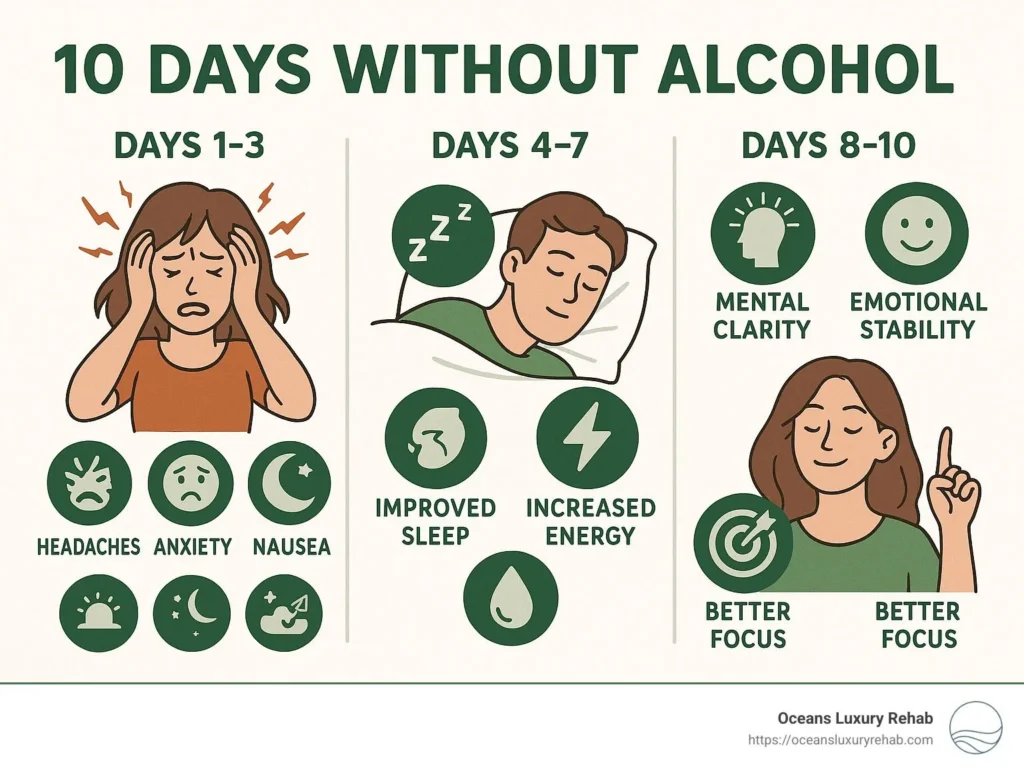
Wondering what 10 days without alcohol can do for your body and mind? Here’s the quick breakdown:
Days 1-3: Withdrawal symptoms like headaches, anxiety, nausea, and insomnia peak.
Days 4-7: Sleep quality improves, energy levels rise, and hydration increases. By one week, most people notice significant improvements in sleep, energy, and mood.
Days 8-10: Mental clarity, emotional stability, and better focus become noticeable.
Withdrawal symptoms can last from several days to weeks, depending on the severity of alcohol use.
Quitting alcohol, even briefly, has big benefits. From better sleep and sharper thinking to healthier skin and reduced blood pressure, just 10 days without alcohol kickstarts dramatic changes in your health. Quitting alcohol can also help you grow closer to your loved ones, save a significant amount of money, and potentially add years to your life.
I’m Clint Kreider, and as a clinical psychologist with over eight years of helping clients tackle substance challenges, I’ve guided many through the journey of 10 days without alcohol. Let’s explore what these 10 transformative days can mean for you.
Exploring the Physical and Mental Effects of 10 Days Without Alcohol
When you go 10 days without alcohol, your body starts on an impressive journey of detox and renewal. Alcohol affects nearly every part of your body—from your liver and brain chemistry to your digestive health. Removing alcohol gives your system a well-deserved break, allowing rapid healing to begin.
Dr. Maria Sanchez, an addiction medicine specialist, shares, “Many people feel surprised by how quickly they notice positive changes. After just 10 days without alcohol, your body and mind can start feeling significantly better.”
Alcohol, at its core, is a toxin your body constantly works hard to eliminate. Once it’s out of the equation, your liver can rest, your mind can rebalance, and your digestive system can begin to heal itself.
Day 1-3 of 10 Days Without Alcohol: Understanding Withdrawal Symptoms
The first three days of your 10 days without alcohol journey are often the hardest. Your body, used to regular alcohol consumption, begins reacting to its absence. Initial withdrawal includes both physical symptoms (such as headaches, tremors, sweating) and emotional symptoms (such as mild anxiety). Withdrawal symptoms can include headaches, anxiety, nausea, tremors, sweating, trouble sleeping, and strong cravings.
Withdrawal symptoms are typically hardest during the first 1-3 days and can peak within 24-72 hours.
One of our clients at Oceans Luxury Rehab described it this way: “I had to miss work again because I didn’t sleep at all. My chest hurt, I was shaky, sweating—it was miserable. I knew drinking would stop these feelings temporarily, but I also knew I needed change.”
These symptoms sound tough—and they can be. Thankfully, they are temporary. By day three, most people notice symptoms easing as the body adjusts.
If you drink heavily or have daily heavy use, withdrawal can lead to severe symptoms, including hallucinations and seizures. Delirium tremens is a severe form of alcohol withdrawal that can be fatal if untreated. People with daily heavy use should never quit alcohol without medical supervision because withdrawal can be life-threatening. If severe symptoms develop, such as confusion, hallucinations, or seizures, it is a medical emergency and you should seek professional help immediately. In these cases, a medically supervised detox, like the one we provide at Oceans Luxury Rehab in Orange County, ensures your safety and comfort. Our trained nurses and specialized doctors offer 24-hour compassionate care, helping you through this critical phase.
For a detailed overview, visit Alcohol withdrawal symptoms.
Day 4-7 of 10 Days Without Alcohol: Physical Health Improvements
Days four to seven often mark a positive turning point. Withdrawal symptoms fade, and physical improvements become noticeable. Sleep quality improves vastly, giving you better rest and more energy during the day. After 10 days without alcohol, most people notice less shakiness and better hydration, and sleep and appetite often start to improve.
Dr. James Thornton, a sleep specialist, mentions, “By day seven, you might experience your first full night of quality sleep, waking up feeling more rested and energized.”
Your body’s hydration levels rebound, reducing facial puffiness and improving skin appearance. Stopping alcohol can also improve your skin and hair quality. Your blood pressure stabilizes, digestive issues like acid reflux lessen, and some people even start seeing initial signs of weight loss.
One patient at Oceans Luxury Rehab shared how quickly things improved: “On day four, I took a quiz about withdrawal symptoms and scored high. But by day seven, I felt completely different—healthier, energized, and more optimistic.”
This period reinforces why those initial challenging days were worthwhile: the benefits of staying alcohol-free become clear and motivating. While many benefits are noticeable within the first week, further improvements in inflammation and overall health can continue over the next few weeks, with the fourth week marking a key milestone for more significant recovery.
Day 8-10 of 10 Days Without Alcohol: Mental Clarity and Emotional Well-being
The final stretch of your 10 days without alcohol marks a key phase of early sobriety. During early sobriety, you may experience both mental clarity and emotional challenges. Most physical withdrawal symptoms have ended, but this period can bring increased emotional vulnerability as raw emotions and stress surface without the numbing effects of alcohol.
At this point, mental clarity noticeably improves. You’ll enjoy sharper thinking, better memory, improved concentration, and clearer decision-making. However, intense alcohol cravings are common during early sobriety, especially in the first 10 days, and these cravings are a normal part of the process. Some people also experience vivid dreams, sometimes involving alcohol, which can feel disorienting upon waking. Emotional symptoms like irritability and mood swings may persist even after physical symptoms have eased. Therapy and medication support can help manage these emotional symptoms and support your progress.
One client from Oceans Luxury Rehab described the change perfectly: “By day 10, it was like a fog had lifted. I realized how much alcohol had been clouding my mind. I felt focused, clear, and balanced again.”
This newfound clarity and stability happen because alcohol disrupts critical neurotransmitters in your brain, affecting mood, anxiety, and memory. Studies confirm these mental health improvements are real, and they often start becoming obvious after just 10 days without alcohol.
By choosing to take this short break from drinking, you’ve taken important steps on your sobriety journey. The challenges of the initial days fade quickly, replaced by noticeable benefits that inspire continued sobriety and personal growth.
Benefits of an Alcohol-Free Life

Choosing to stop drinking alcohol brings a host of benefits that can transform both your physical health and mental well-being. One of the first changes many people notice is a dramatic improvement in sleep quality. Alcohol disrupts your natural sleep cycle, reducing the amount of deep sleep and REM sleep your body gets. Without alcohol, you’re more likely to experience restorative, quality sleep, which leads to more energy, better mood, and enhanced mental clarity during the day.
Quitting alcohol also gives your liver a much-needed break, allowing it to recover and improve its function. Over time, this can help reverse some of the damage caused by heavy drinking. Blood pressure often decreases as well, lowering your risk of heart disease and stroke. You may also notice a reduction in calorie intake, which can support healthy weight loss and boost your overall physical health.
Perhaps most importantly, living without alcohol can have a profound impact on your mental health. Many people report feeling less anxious and depressed, with greater mood stability and a renewed sense of well-being. The combination of better sleep, improved liver function, lower blood pressure, and enhanced mental clarity makes quitting alcohol a powerful step toward a healthier, happier life.
How to Steer the First 10 Days Without Alcohol: Practical Tips
Successfully navigating 10 days without alcohol takes more than sheer willpower—it requires practical strategies, healthy routines, and a dependable support system. If you experience severe withdrawal symptoms or have a history of heavy drinking, it is important to seek professional help. The safest path for detox often starts with medically supervised detox followed by residential care, as medical detox ensures you will be as safe as possible by providing 24/7 monitoring to recognize and treat complications effectively. Professional treatment can also help you build a long-term recovery plan instead of cycling between ‘on’ and ‘off’ drinking. At Oceans Luxury Rehab, we’ve helped many individuals smoothly transition through this crucial period. Here are some warm, human-friendly tips to guide you through your alcohol-free journey.
Managing Cravings During the 10 Days Without Alcohol
Cravings are normal, especially in those early days of going alcohol-free. Intense alcohol cravings are common, particularly during the first 10 days of sobriety and when faced with social triggers. These cravings may sometimes be replaced by sugar cravings due to the high sugar content in alcoholic beverages. Knowing how to manage them can empower you to stay strong when the urge strikes.
First, identify your triggers—is it after a stressful day at work, a social gathering, or simply boredom in the evenings? Recognizing these moments ahead of time helps you prepare a healthier response.
Next, try mindfulness techniques to ride out cravings. We teach our clients the helpful S.O.B.E.R. method—Stop, Observe the craving without judgment, Breathe deeply, Expand your awareness of options, and Respond mindfully instead of impulsively. Even a few minutes of calm breathing can significantly reduce a craving.
Healthy distractions work wonders, too—take a quick walk, call a friend, or dive into a hobby you love. Staying hydrated and nourished also helps tremendously. Sometimes, your body confuses hunger or thirst for alcohol cravings, so keep tasty snacks and refreshing non-alcoholic drinks nearby.
As we often remind our clients at Oceans Luxury Rehab in our Lake Forest facility: “Future you is already thanking you for today’s choices!” Most cravings last just 15-30 minutes. Having a game plan makes all the difference.
For more in-depth support, explore our article on “How Quitting Alcohol Can Reduce Anxiety”.
Building a Support System for Your Alcohol-Free Journey
You don’t have to face your 10 days without alcohol alone. A strong network can motivate you, provide comfort, and help you stay accountable.
Let trusted friends and family know about your goal. Simply sharing your commitment creates accountability and invites encouragement. Many of our clients find a sobriety buddy to join them, making the experience more fun and less intimidating.
Online communities are fantastic resources too. From forums to social media groups, you’ll find plenty of people who understand exactly what you’re going through.
Professional help is valuable, especially if withdrawal becomes challenging. At Oceans Luxury Rehab in Southern California, our caring professionals and 24-hour medical support offer compassionate care custom precisely to your needs. Additionally, support groups like AA or SMART Recovery provide proven strategies even if you’re just starting your sober journey.
One client shared with us, “Telling my sister about my 10-day alcohol-free goal changed everything. Her daily check-ins made staying sober easier, and she even joined me for alcohol-free weekend activities!”
For more details on professional support, read our guide to “Understanding Alcohol Rehab”.
Adopting Healthy Lifestyle Habits During the 10 Days Without Alcohol
Replacing alcohol with healthy habits not only makes the 10 days without alcohol easier—it helps you feel better physically and mentally. Adopting healthy habits during this time supports your overall health, enhancing both physical and mental well-being.
Nutrition quickly becomes your best friend. Alcohol can leave you with nutritional gaps, so focus on delicious and balanced meals rich in B vitamins (whole grains, leafy greens), protein (lean meats, legumes), antioxidants (colorful fruits, veggies), and healthy fats (avocados, nuts).
Keep yourself well-hydrated throughout the day with infused water, herbal teas, or sparkling water with fruit slices—these tasty beverages can curb your cravings and lift your mood.
Exercise is another powerful tool. Even just 20 minutes of walking, yoga, or gentle stretching releases feel-good endorphins, lowers stress, and boosts your energy. Pair that with solid sleep hygiene—a consistent bedtime routine, a cozy, cool bedroom, and reduced screen time before bed—and you’ll notice a big difference.
Lastly, regular stress-management activities like journaling, meditation, or spending time outdoors help you stay calm and focused.
As our team at Oceans Luxury Rehab in Costa Mesa often says, quitting drinking isn’t just removing something negative. It’s adding plenty of positives into your life, including the benefits of sober living Costa Mesa CA.
To find more about nutrition’s role in recovery, check out “The Role of Nutrition in Recovery”.
Long-Term Effects of Alcohol
While the short-term effects of drinking alcohol may seem manageable, the long-term consequences can be severe and far-reaching. Prolonged alcohol use puts significant strain on your body, especially your liver, which can lead to irreversible conditions like cirrhosis. Chronic alcohol consumption is also linked to an increased risk of several types of cancer, including liver, breast, and colon cancer.
Alcohol is a major contributor to heart disease, as it can cause high blood pressure, heart failure, and stroke. The impact on mental health is equally concerning—long-term alcohol use is associated with depression, anxiety, and even cognitive decline or dementia. Your digestive system can also suffer, with risks of gastritis, pancreatitis, and malnutrition becoming more pronounced over time.
In severe cases, alcohol withdrawal itself can become life threatening. Conditions like delirium tremens—a severe form of alcohol withdrawal—can cause hallucinations, seizures, and require immediate medical attention. Recognizing these risks highlights the importance of reducing alcohol consumption and seeking help if you’re struggling with alcohol use, especially if you have underlying health conditions or a history of severe withdrawal symptoms.
Relapse Prevention and Support
Staying sober after quitting alcohol is an ongoing process that requires dedication, support, and the right resources. Relapse prevention is a cornerstone of effective alcohol addiction treatment, helping individuals maintain their progress and avoid returning to old habits. After completing detox, it’s important to seek ongoing support—this might include outpatient care, where you attend regular therapy sessions and support groups, or inpatient care in a rehabilitation facility for more intensive treatment.
Support groups like Alcoholics Anonymous (AA) and SMART Recovery offer a sense of community, encouragement, and accountability. Sharing your experiences with others who understand the challenges of alcohol use can make a significant difference in your recovery journey. Professional treatment, including counseling and medication, can help manage withdrawal symptoms, reduce cravings, and address any underlying issues that may have contributed to your drinking.
Adopting a healthy lifestyle is also key to relapse prevention. Eating a balanced diet, exercising regularly, and prioritizing sleep all support your overall well-being and make it easier to stay on track. Remember, seeking professional help and building a strong support system are vital steps in maintaining your sobriety and enjoying a healthier, more fulfilling life without alcohol.
Milestones in the Recovery Journey
The path to recovery from alcohol addiction is filled with important milestones that mark your progress and celebrate your achievements. The first few days without alcohol are often the toughest, as you navigate acute withdrawal symptoms and adjust to life without drinking. However, as your body begins to heal and your mind adapts, you’ll start to notice positive changes—improved sleep, more energy, and greater mental clarity.
Reaching the end of your first week without alcohol is a significant accomplishment, often accompanied by a noticeable boost in mental health and overall well-being. The first month marks a period of substantial healing, both physically and psychologically, as your body continues to recover and your confidence grows. By three months, many people report feeling more stable, with fewer cravings and a renewed sense of purpose.
Six months and beyond, the benefits of sobriety become even more apparent—better physical health, improved relationships, and greater success in personal and professional life. Each milestone is a testament to your strength and resilience, motivating you to continue your journey and embrace the rewards of an alcohol-free life. Remember, every day without alcohol is a step toward lasting well-being and a brighter future.
Conclusion
Congratulations! You’ve successfully completed your 10 days without alcohol—that’s a fantastic achievement worth celebrating. Whether this was a personal challenge, a health reset, or your first step toward lasting sobriety, you’ve accomplished something meaningful for your body and mind.
During these 10 days without alcohol, you’ve experienced a powerful change:
In the first few days, your body tackled the hardest part: withdrawal. This phase likely brought headaches, anxiety, and disrupted sleep as your system adapted to functioning without alcohol. By the middle of your journey, things got brighter—you probably started enjoying improved sleep, more energy, and better hydration. And as you reached days 8 to 10, you likely noticed clearer thinking, improved mood stability, and greater emotional balance.
One client at Oceans Luxury Rehab in Huntington Beach shared: “I started this as a simple 10-day challenge to myself. By day 10, the difference was so clear that I didn’t want it to end. Now, three months later, sobriety feels natural. I can’t imagine going back.”
This short break from alcohol may have provided valuable insights into your drinking habits—maybe you’ve realized alcohol was affecting more areas of your life than you thought. Perhaps you’ve finded how much you appreciate having mental clarity, steady emotions, and better physical health. Whatever your goals moving forward, you’re now making decisions from a place of greater awareness.
And remember, you don’t have to steer this journey alone. Oceans Luxury Rehab provides compassionate, personalized support at every step. Our luxurious facilities in Orange County offer medically supervised detox, holistic therapies, and 24-hour nursing care, ensuring a safe, comfortable recovery process. If you’d like to explore further support options, consider learning more about our Luxury Alcohol Detox program.
Taking time away from alcohol—even just a short 10 days without alcohol—can truly change your perspective and your health. Think of these 10 days as the beginning of your sobriety journey, where continued progress and personal growth are possible as you move forward. Wherever you choose to go from here, know you’ve taken a powerful first step toward living a healthier, more intentional, and fulfilling life.
Here’s to your continued health, happiness, and well-being!
