

A lot of people looking for orange county inpatient rehab don’t look like they’re in crisis from the outside. They’re still showing up to meetings, answering texts, managing teams, making decisions, and keeping the appearance of control. The problem is what happens when the workday ends, when alcohol has become the nightly off-switch, when pills are needed to sleep, or when cocaine, opioids, or stimulants are now part of what it takes to perform.
For professionals, the barrier usually isn’t recognizing that something is wrong. It’s fear. Fear of being seen. Fear of losing credibility. Fear that asking for treatment will create more damage than the addiction already has. That fear keeps many people in a private cycle that gets harder to manage with time.
A high-quality inpatient setting changes that equation. It removes immediate access to substances, creates medical and emotional stability, and gives someone enough protected time to think clearly again. For privacy-conscious adults in Orange County and Los Angeles, the right program isn’t a public surrender. It’s a contained, strategic reset.
The Search for a Confidential Solution in Orange County
The typical call doesn’t start with drama. It starts subtly. A spouse has noticed the drinking is no longer occasional. A founder can’t get through a weekend without using. A physician has begun planning the day around withdrawals. Someone says they need help, but they say it in a lowered voice, because their next question is whether anyone will find out.
That concern is valid. Professionals often live inside overlapping circles. Work, family, school communities, social networks, and online visibility all create pressure to keep treatment private. The search for orange county inpatient rehab is often less about whether treatment works and more about whether treatment can happen without unnecessary exposure.
Confidentiality has to be built into the entire process, not treated like a marketing phrase. It affects admissions calls, transportation planning, room arrangements, communication boundaries, and aftercare. Families already understand this in other high-trust parts of life. The same thinking behind ensuring personal confidentiality applies here. Sensitive information should be handled deliberately, with clear boundaries and very few people involved.
What privacy-conscious clients usually need
- A controlled intake process: Admissions should be calm, direct, and handled by staff who understand discretion.
- A setting that reduces exposure: Private rooms and a contained environment matter when someone needs distance from outside demands.
- Clear communication rules: Family, work, and legal contacts should be managed intentionally, not casually.
- Clinical depth, not just seclusion: Privacy alone won’t solve addiction. The treatment model still has to be strong.
The most effective confidential rehab environments don’t just hide the problem from public view. They create enough safety for the person to stop performing and start telling the truth.
That’s often the turning point. Once the pressure to appear fine drops, treatment can begin to work.
Understanding Inpatient Rehab and Its Benefits
Inpatient rehab is best understood as a live-in level of care where treatment, support, structure, and monitoring happen throughout the day and night. It differs from outpatient care because the client doesn’t leave after a therapy session and return to the same triggers, routines, and access points that have been reinforcing substance use.
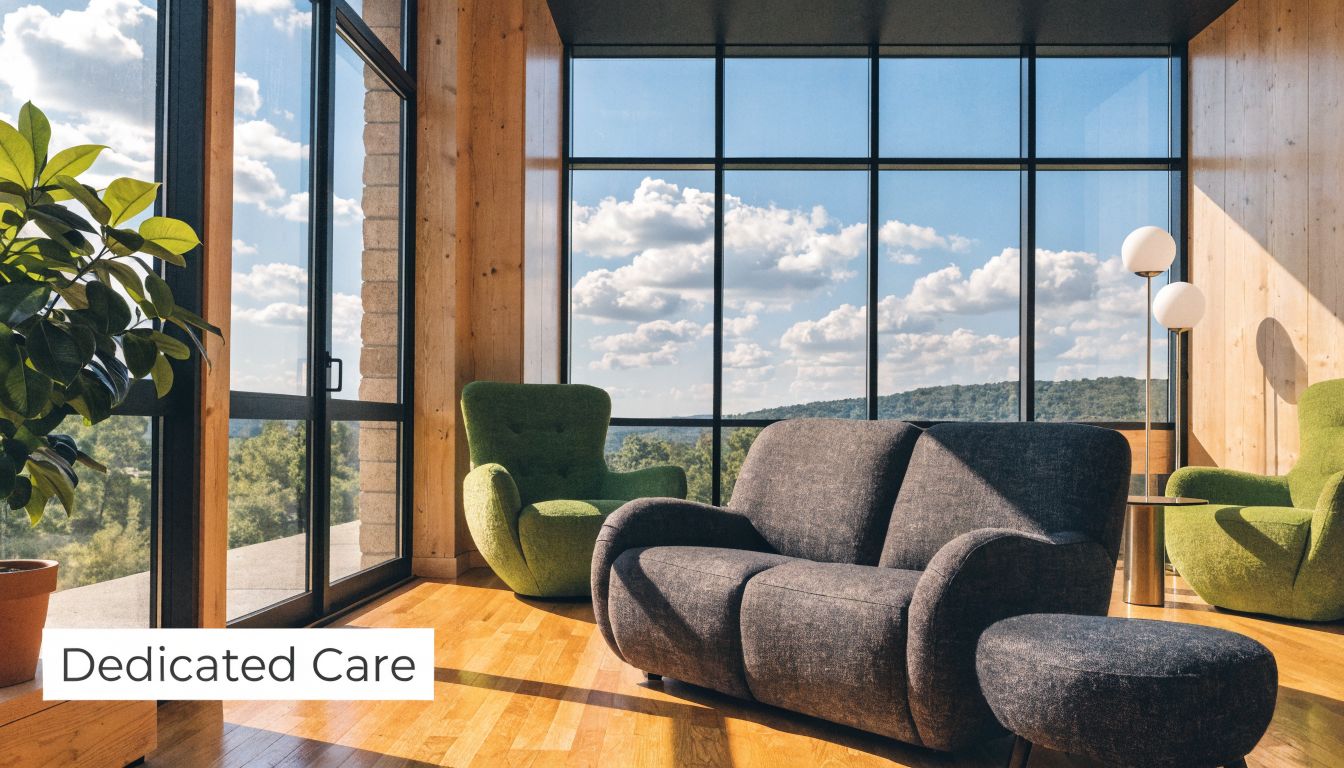
For the right person, orange county inpatient rehab functions like a strategic health retreat with clinical accountability. The environment is quieter. The schedule is structured. The client steps out of the chaos long enough to stabilize physically and mentally. That separation matters more than many people realize.
Why immersion works
Outpatient care can be appropriate for some people, especially when symptoms are mild and the home environment is stable. But it often falls short when someone is facing cravings, withdrawal risk, repeated relapse, or a co-occurring psychiatric condition. In those cases, partial engagement usually isn’t enough.
A major reason is the overlap between addiction and mental health. Roughly 50% of individuals struggling with substance abuse in Orange County also have a co-occurring mental health disorder. That changes the clinical picture immediately. A person may look like they need addiction treatment alone, but depression, anxiety, trauma symptoms, bipolar disorder, or another condition may be driving the substance use or getting worse because of it.
What a residential setting offers that outpatient often can’t
- Continuous support: Staff can respond when sleep disruption, cravings, panic, or withdrawal symptoms intensify outside business hours.
- Trigger reduction: The client isn’t sleeping in the same bed where they detoxed unsuccessfully before or driving past the same places tied to use.
- Better observation: Clinicians can see patterns in mood, behavior, appetite, sleep, and motivation that are easy to miss in shorter visits.
- Peer accountability: Living around others in treatment often reduces isolation and denial.
Practical rule: If someone needs to “white-knuckle” sobriety between appointments, the level of care is probably too low.
Orange County also offers a setting that many clients find regulating. Coastal air, visual calm, physical distance from routine stressors, and a more restorative environment can support treatment engagement. That doesn’t replace clinical care, but it can make treatment more tolerable, especially for people who are arriving exhausted and overstimulated.
A useful starting point is to review what a residential program includes, from medical oversight to daily therapeutic structure, at Oceans Luxury Rehab’s inpatient rehab program. The point isn’t aesthetics alone. It’s understanding how environment and level of care work together.
The Clinical Pillars of an Effective Program
People often judge rehab by amenities first. Clinically, that’s backwards. The key question is whether the program has the core elements needed to move someone from active substance use into stable recovery. For professionals and other adults with complex presentations, three pillars matter most.
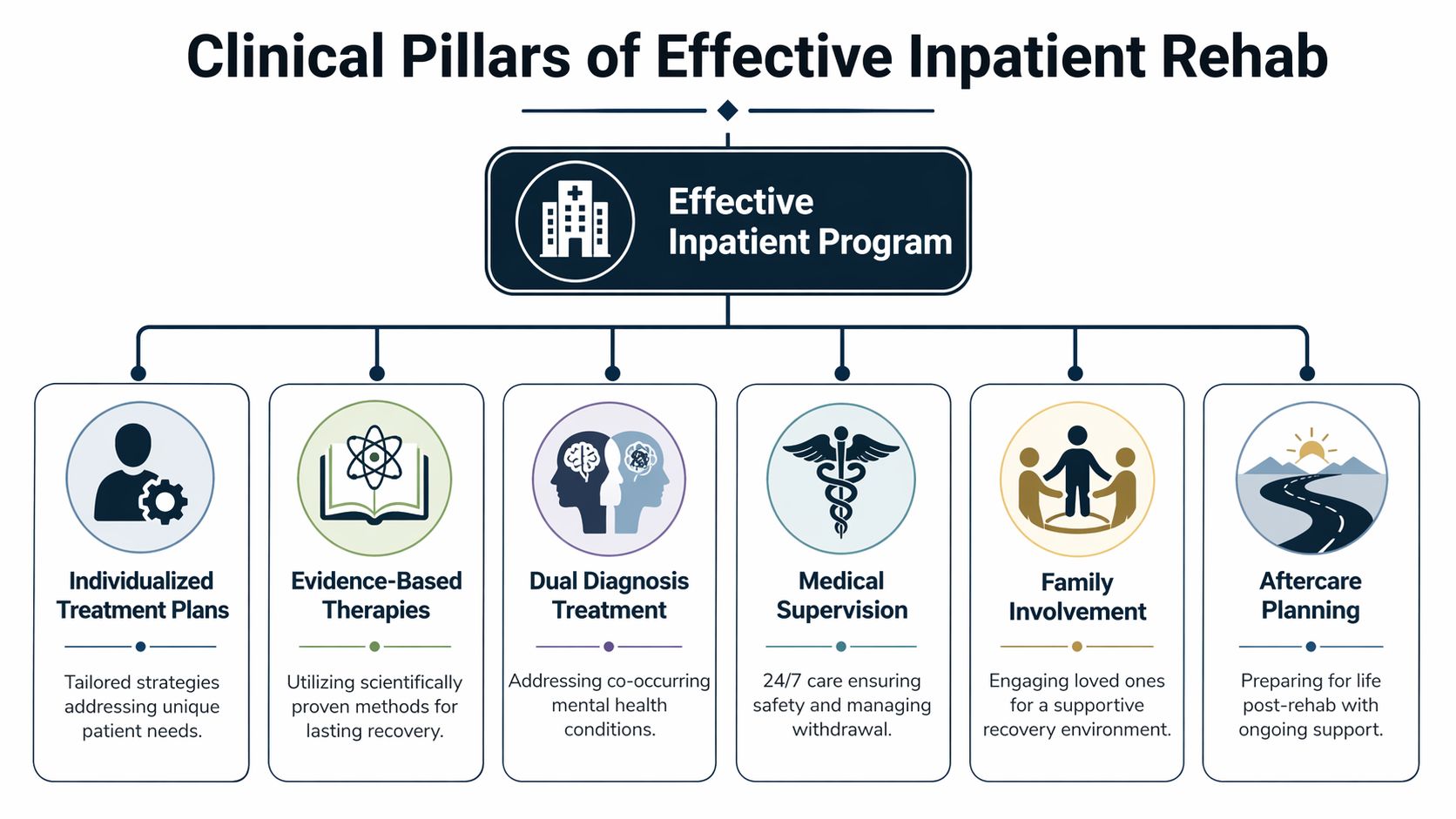
Medically supervised detox
Detox is the front door, not the whole house. It’s the phase where the body clears substances and clinicians manage acute withdrawal symptoms. For alcohol, benzodiazepines, and opioids in particular, this period can become medically complicated. The wrong setting can turn a difficult process into a dangerous one.
The benefit of inpatient detox isn’t just comfort. It’s observation. Staff can monitor hydration, sleep, agitation, blood pressure changes, psychiatric symptoms, and medication response. They can also tell the difference between temporary withdrawal distress and a more persistent mental health condition that needs formal treatment.
What doesn’t work is detox-only thinking. A person may get through withdrawal and still be left with the same anxiety, insomnia, trauma reactivity, or depressive collapse that fueled substance use in the first place.
Integrated dual diagnosis treatment
Many treatment searches frequently go awry. They focus on the substance and ignore the emotional engine underneath it. Effective inpatient care treats both at the same time.
In programs offering integrated dual diagnosis treatment, alcohol intoxication rates can drop by as much as 67-91% at 1, 6, and 12 months post-discharge. That result makes clinical sense. If panic symptoms, depressive spirals, trauma triggers, or unstable mood continue untreated, relapse risk stays high even when motivation is sincere.
A solid dual-diagnosis model usually includes:
- Psychiatric assessment: The team identifies whether symptoms predated substance use, emerged during it, or both.
- Evidence-based therapy: Modalities such as CBT and DBT help clients challenge thought patterns, regulate emotions, and tolerate distress.
- Medication management when appropriate: Some clients need psychiatric medication adjustment while they’re also stabilizing from substances.
- Consistent treatment planning: Addiction counseling and mental health care should support the same goals, not compete with each other.
Untreated anxiety often looks like “relapse for no reason.” Untreated trauma often looks like “self-sabotage.” In reality, the driver was never removed.
Medication-assisted treatment
Medication-Assisted Treatment, or MAT, is often misunderstood by families and even by clients who’ve tried to quit on willpower alone. MAT doesn’t replace therapy. It supports therapy by reducing cravings, easing withdrawal, and making treatment participation more realistic.
Integrated programs that include Medication-Assisted Treatment alongside therapy can triple patient retention rates compared to detox-only models. Retention matters because people benefit from treatment when they stay engaged long enough for the work to take hold.
MAT is especially relevant for opioid and alcohol dependence. In a well-run inpatient setting, medications are used carefully, monitored closely, and folded into a larger plan that includes therapy, routines, sleep repair, nutrition, and relapse prevention. The goal isn’t sedation. The goal is stability.
One option in California is Oceans Luxury Rehab, which offers medically supervised detox, residential care, dual-diagnosis treatment, and MAT in an oceanfront setting with private rooms. That combination can be useful for clients who need both clinical intensity and a high level of discretion.
Choosing the Right Environment Luxury vs Standard Care
For professionals, the treatment environment isn’t separate from the treatment outcome. It affects sleep, trust, participation, emotional regulation, and whether the client feels safe enough to stay. That’s why the choice between standard care and a more private setting deserves a direct comparison.
There is a significant mismatch between the surging demand for discreet, high-end dual-diagnosis care in Orange County and the limited inpatient capacity tailored for professionals, with only an estimated 15% of facilities offering the private rooms and executive amenities required for confidential recovery. In practice, that means many people searching for orange county inpatient rehab will find plenty of listings, but far fewer environments built for confidentiality, restoration, and focused clinical work.
Comparing Inpatient Rehab Options in Orange County
| Feature | Standard Facility | Luxury Facility (e.g., Oceans Luxury Rehab) |
|---|---|---|
| Room setup | Shared rooms are more common | Private rooms are often available |
| Privacy level | Functional, but less controlled | Greater discretion and quieter surroundings |
| Environment | Basic and serviceable | More restorative, comfortable, and calm |
| Daily experience | Can feel institutional | Often feels more residential and dignified |
| Individual attention | May be limited by setting and volume | Usually allows more tailored support |
| Professional recovery needs | Less likely to account for privacy-sensitive concerns | Better suited for executives and public-facing clients |
| Comfort supports | Essential basics | Higher-end amenities that support rest and engagement |
What luxury changes clinically
Luxury care isn’t about indulgence. It’s about removing avoidable friction. When a client sleeps poorly because of noise, feels exposed in a shared room, or remains guarded because the environment feels chaotic, treatment gets weaker. Comfort can support compliance.
There’s a reason wellness industries spend so much time on sleep, body regulation, and sensory calm. Even outside treatment settings, people recognize the link between rest and resilience. General resources on luxurious comfort and support reflect the same basic truth. When the body relaxes, the mind can do harder work.
What standard care still does well
A standard facility may still provide competent clinical treatment. For some clients, that’s enough. If privacy demands are lower, budget is tighter, and the person mainly needs containment and structure, standard care can be appropriate.
But for attorneys, executives, physicians, entrepreneurs, media professionals, and anyone whose life requires discretion, environment becomes more than preference. It becomes part of risk management.
A more detailed look at those trade-offs appears in this comparison of luxury rehab versus conventional rehab.
The right setting is the one that gives the client the highest chance of staying, participating, and being honest.
What to Expect During Your Stay A Day in the Life
Fear often drops when the process becomes concrete. Most adults entering inpatient treatment aren’t afraid of therapy itself. They’re afraid of not knowing what happens after they arrive. A good program reduces that uncertainty immediately.
Admissions and the first days
The admissions process usually begins with a clinical and logistical assessment. Staff gather information about substance use, psychiatric history, current medications, medical conditions, and immediate safety concerns. They also discuss practical details like what to bring, communication expectations, and how family updates will be handled.
The first 24 to 72 hours often feel the most unsettled. Sleep may be poor. Appetite may be off. Mood can swing quickly. Some clients feel relief right away. Others feel embarrassed, irritable, numb, or emotionally raw.
That early window is where structure helps most. The client doesn’t have to improvise. The day is already built.
A typical day in residential care
Most inpatient schedules follow a steady rhythm. The specifics vary, but the shape of the day usually includes:
- Morning stabilization: Wake-up, medications if prescribed, breakfast, and orientation to the day.
- Primary clinical work: Individual sessions, group therapy, psychoeducation, or psychiatric follow-up.
- Physical reset: Nutritious meals, hydration, rest periods, movement, fitness, or gentle wellness activities.
- Afternoon processing: Additional groups, coping-skills work, relapse prevention, or family-related sessions.
- Evening grounding: Reflection time, peer support, journaling, quiet time, or guided recovery planning.
That routine isn’t rigid for the sake of control. It’s therapeutic. Addiction thrives in disorder, secrecy, and impulsivity. Recovery needs repetition, predictability, and enough support to help the nervous system settle.
Why the daily structure matters
Clients often underestimate how much treatment success depends on simple consistency. Showing up to therapy after sleeping, eating, and taking medication as directed is very different from trying to do recovery while depleted and in withdrawal.
That’s one reason the inpatient model works well for complex cases. Integrated programs that include Medication-Assisted Treatment alongside therapy can triple patient retention rates compared to detox-only models. A day with medical support, therapy, accountability, and reduced chaos gives people a better chance of staying engaged when discomfort rises.
Recovery doesn’t usually fail because a person lacks insight. It often fails because insight isn’t enough when the body is unstable and the day has no structure.
By the end of the first week, many clients begin to feel the benefits of rhythm. Cravings may still show up. Emotions may still be intense. But life no longer feels uncontained.
Planning for Success After Inpatient Rehab
Discharge planning should start long before discharge day. Inpatient treatment creates momentum, but staying well requires a landing plan. The people who do best after orange county inpatient rehab usually leave with a clear next step, not just good intentions.

The role of step-down care
A strong continuum of care often includes PHP, IOP, outpatient therapy, psychiatry, recovery meetings, family work, and sober living when needed. The point is gradual transition. Going from full residential structure to complete independence overnight creates too much exposure too quickly.
Good aftercare planning also identifies specific relapse risks. High-stress business travel, isolation at home, unresolved relationship conflict, easy access to substances, and poor sleep are common pressure points for professionals. The plan should name those risks directly and assign responses to them.
Practical supports that matter after discharge
- Relapse prevention planning: Clients need written strategies for triggers, cravings, and high-risk decisions.
- Family involvement: Loved ones often need guidance on boundaries, communication, and what support helps versus hurts.
- Work re-entry planning: Returning to a demanding role should be staged with intention, not done impulsively out of guilt.
- Regulation habits: Exercise, sleep routines, therapy, and calming practices all help protect early recovery. Some clients also explore supportive wellness resources such as natural remedies for relaxation and calm alongside their formal treatment plan.
A useful next step for many clients is reviewing options for structured housing and continued accountability through sober living in Orange County.
Common questions after inpatient treatment
How is privacy protected after leaving rehab
Privacy should remain active after discharge. That includes careful release-of-information practices, selective communication with employers or colleagues, and a deliberate plan for what the client wants to share, if anything. Recovery doesn’t require public disclosure.
How does someone return to a high-stress work environment
The safest return is usually gradual. Clients benefit from identifying top triggers before re-entry, tightening routines around sleep and meetings, and keeping therapy or step-down treatment in place during the transition. High performers often want to prove they’re “back” quickly. Clinically, that impulse needs restraint.
What support is available for family
Families often need education as much as the client does. They may need help understanding enabling patterns, communication after trust has been damaged, and how to respond to setbacks without becoming punitive or overinvolved. Family sessions can make the home environment more stable and less reactive.
The strongest discharge plan answers one question clearly: what happens on a hard Tuesday, not just on a hopeful Sunday?
Recovery becomes more durable when treatment extends beyond the stay itself.
When someone needs a private, clinically grounded path out of addiction, Oceans Luxury Rehab offers medically supervised detox, residential inpatient care, dual-diagnosis treatment, and step-down support in San Clemente. For adults in Orange County and Los Angeles who need discretion, private rooms, and a structured return to stability, the admissions team can help clarify next steps and verify whether treatment is a fit.
