

A lot of people start searching for alcohol detoxification los angeles at the same moment everything feels unmanageable. It may be late at night after another promise to cut back didn’t hold. It may be after a frightening tremor in the morning, a work problem, a family confrontation, or the realization that stopping alone now feels harder than continuing.
For many Los Angeles professionals, that moment carries a second fear. It’s not only about health. It’s about privacy, reputation, responsibilities, and whether getting help will disrupt everything else. The good news is that detox can be handled safely, discreetly, and with far more dignity than many people expect.
The First Step Toward Recovery in Los Angeles
A common situation looks like this. Someone has been functioning at a high level for a long time. They’re working, showing up, answering messages, keeping appearances intact. But alcohol has started setting the schedule. Drinking moves earlier in the day, sleep gets worse, mornings feel shaky, and every attempt to stop brings anxiety, sweating, nausea, or panic.
That’s the point where detox stops being a matter of willpower and becomes a medical issue.

Los Angeles County has a serious alcohol burden. Excessive alcohol use contributes to approximately 2,100 deaths and an estimated $11.4 billion in economic costs annually, and about 18% of the adult population engages in excessive drinking, according to Los Angeles County alcohol misuse data summarized here. Those numbers matter because they reflect how common this crisis is, not because they define any one person.
Detox is medical care, not punishment
Alcohol detox is the first phase of treatment when the body begins adjusting to the absence of alcohol under clinical supervision. That supervision matters because alcohol withdrawal can change quickly. Someone who looks stable at intake can become medically fragile within hours.
A proper detox setting gives the person three things right away:
- Safety first: Clinical staff monitor symptoms, vital signs, hydration, and mental status as withdrawal evolves.
- Relief from uncertainty: The person no longer has to guess whether symptoms are normal or dangerous.
- A controlled setting: Access to alcohol is removed, but comfort, structure, and support are added.
Getting help early usually makes detox simpler than waiting until symptoms become severe.
Environment changes the experience
The setting isn’t a superficial detail. For many adults in the Los Angeles area, especially those in visible careers or high-pressure roles, privacy can determine whether they seek help at all. A calm private setting can reduce stress, improve sleep, and make it easier to accept care.
That’s why alcohol detoxification los angeles shouldn’t be understood only as a clinical search term. For many families, it’s a search for a safe place where a crisis can be handled discreetly, professionally, and without chaos.
Why Quitting Alcohol Cold Turkey Is Dangerous
The body adapts to regular alcohol use. Over time, the brain and nervous system begin functioning around alcohol’s presence. When alcohol is suddenly removed, the system can swing into overactivity. That’s why withdrawal can move from uncomfortable to dangerous.
A simple way to think about it is this. If a machine has been running with a compensating setting for a long time, shutting off the factor it has adapted to doesn’t return it to normal instantly. It can overshoot. In alcohol withdrawal, that overshoot affects the brain, heart, blood pressure, temperature regulation, and perception.
Why symptoms can change fast
Early symptoms may seem manageable. A person might start with shaking, sweating, nausea, poor sleep, irritability, or intense anxiety. Families often misread that stage and assume rest at home will be enough.
The problem is that alcohol withdrawal isn’t predictable from appearance alone. Someone can worsen after the first symptoms begin. Hallucinations, seizures, severe agitation, and delirium tremens are the complications clinicians are trying to prevent, not react to at the last minute.
Why fixed home routines don’t work
People often try a home plan that sounds sensible on paper. Drink water. Stay in bed. Take vitamins. Try to sleep. Have someone check in. That approach fails when symptoms accelerate, confusion develops, vomiting causes dehydration, or blood pressure and pulse rise.
It also fails because alcohol-dependent patients may process alcohol differently during detox. Chronic alcohol exposure upregulates hepatic enzymes, causing significantly accelerated metabolic rates, which is one reason symptom-triggered therapy using tools like CIWA-Ar is clinically superior to fixed-dosing schedules, as described in this clinical review of detoxification management.
Practical rule: Alcohol withdrawal should be assessed in real time. It shouldn’t be managed by guesswork or a rigid home schedule.
What works instead
Safe detox uses repeated assessment, not assumptions. Clinicians watch for changes in tremor, orientation, blood pressure, pulse, sweating, agitation, nausea, and sensory disturbance. Medication is adjusted to the person’s symptoms at that moment.
That’s the difference between a monitored detox and quitting cold turkey. One approach responds to the body as it changes. The other hopes the body will cooperate.
The Typical Alcohol Withdrawal Timeline and Symptoms
One reason people delay treatment is that they don’t know what to expect. A timeline makes the process less mysterious. Withdrawal doesn’t look exactly the same for everyone, but the sequence below is a useful clinical framework.
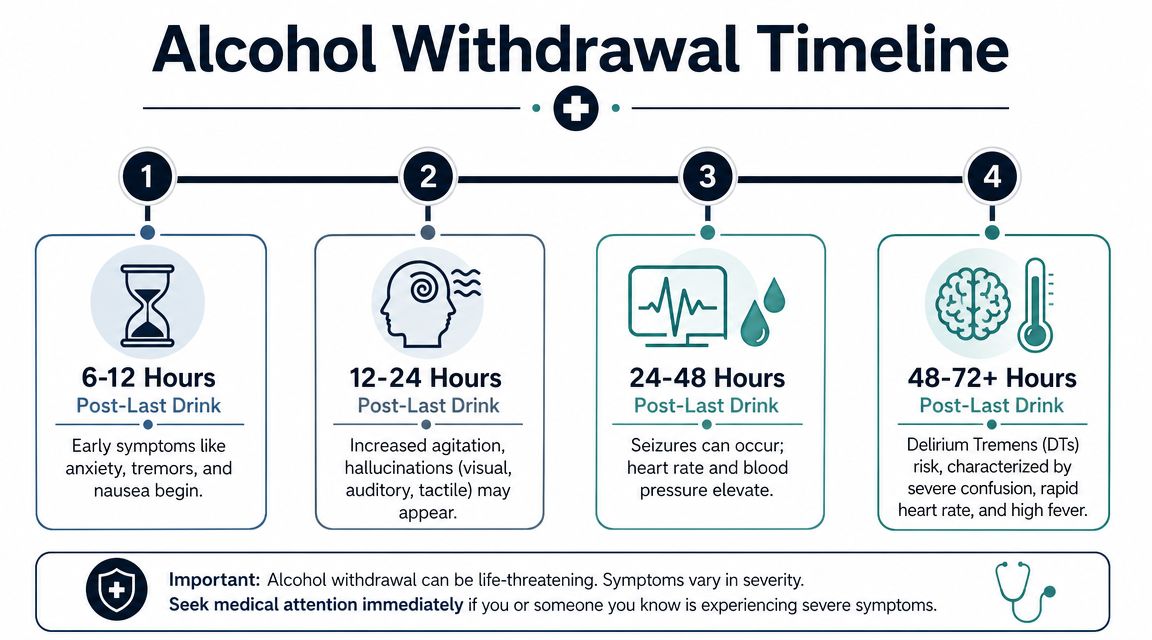
Early phase
In the first stretch after the last drink, many people notice anxiety, tremors, nausea, sweating, headache, and trouble sleeping. Some also feel unusually sensitive to sound, light, or touch. At this point, a medical team starts monitoring trends rather than waiting for a crisis.
Escalation phase
As withdrawal builds, agitation can increase. Some people become restless, confused, or frightened by sensory changes. Hallucinations can occur. Appetite often drops, hydration worsens, and sleep becomes more fragmented.
High-risk phase
This is the period clinicians watch most closely. Seizures can occur, and severe autonomic activation may become more pronounced. In the most dangerous cases, delirium tremens develops with profound confusion, instability, and a need for intensive management.
Stabilization phase
Once the acute risk window passes, symptoms usually begin easing. Sleep is often still poor, mood can feel flat or anxious, and the body may feel exhausted. That doesn’t mean treatment is over. It means the person is becoming stable enough to think clearly about next steps.
Alcohol Withdrawal Symptom Timeline
| Time After Last Drink | Common Symptoms |
|---|---|
| 6 to 12 hours | Anxiety, tremors, nausea, sweating, headache, insomnia |
| 12 to 24 hours | Increased agitation, sensory disturbance, possible hallucinations |
| 24 to 48 hours | Seizure risk, elevated heart rate, rising blood pressure, worsening withdrawal |
| 48 to 72+ hours | Risk of delirium tremens, severe confusion, autonomic instability |
For a more detailed clinical overview, this guide on withdrawal drinking symptoms timeline, risks, and treatment options gives added context.
A timeline helps with planning, but it never replaces an in-person assessment. Withdrawal severity is determined by the person in front of the clinical team, not by the clock alone.
What Medically Supervised Alcohol Detox Entails
Medically supervised detox is structured care designed to keep the person safe while making withdrawal as manageable as possible. It doesn’t mean being left alone in a room and checked on occasionally. It means active monitoring, symptom-based treatment, and continuous reassessment.

What happens at the start
The process begins with intake and screening. Staff review alcohol use history, prior withdrawal episodes, seizure history, current medications, medical conditions, and psychiatric symptoms. Vital signs are checked, and the team determines the level of withdrawal risk.
This early assessment helps answer practical questions. Is the person likely to need symptom-triggered medication? Are there signs of dehydration or malnutrition? Is there a co-occurring mental health issue that may complicate withdrawal? If liver stress is a concern, even general education around markers such as GGT can be helpful, and this Lola Health GGT analysis offers a useful overview for families trying to understand why lab work matters in alcohol-related care.
How symptoms are managed
Medication is often used to reduce the risk of severe withdrawal and relieve distress. In alcohol detox, benzodiazepines are commonly part of management because they help calm the overactive nervous system. The key is that dosing should match symptoms, not a one-size-fits-all schedule.
Supportive care matters too. That includes fluids, nutrition, rest, observation, and a setting where the person can be redirected if anxiety or confusion rises. The goal isn’t only to get through withdrawal. It’s to get through it without unnecessary suffering or preventable complications.
A fuller overview of that level of care appears in this guide to medical detox in Los Angeles.
Why length of stay matters
People sometimes want the shortest possible detox. Clinically, that isn’t always the safest mindset. Research indicates that a longer length of stay significantly improves detox completion, and patients with a 4-day stay had over 11 times greater odds of completing detox compared with those with a 2-day stay, according to this published detox outcomes study.
That finding fits what treatment teams see every day. Leaving too soon often means leaving before the body has stabilized and before the person is ready to step into ongoing treatment.
- Monitoring reduces surprises: Staff can respond quickly if symptoms intensify.
- Medication can be adjusted: Doses change based on the actual withdrawal picture.
- Comfort improves cooperation: People are more likely to complete detox when they can rest and feel contained.
- Planning starts early: Discharge isn’t an afterthought. It begins during stabilization.
How to Choose the Right Detox Center in Los Angeles
At 10 p.m., a spouse is searching for help while trying to keep the situation private from coworkers, clients, and even extended family. In Los Angeles, that concern is common. The right detox center has to do more than manage withdrawal safely. It also has to make admission realistic for someone who values discretion, quiet, and a sense of dignity.

Questions worth asking before admission
The first phone call tells you a lot. A strong program answers direct questions directly, without vagueness or sales pressure.
- Who is providing medical care: Ask whether nurses are on site around the clock and how physician coverage works during alcohol withdrawal.
- Are private rooms available: For working professionals, public-facing individuals, and older adults, privacy often affects whether they agree to treatment at all.
- How is confidentiality handled: Ask how calls, visitor access, transportation, and records are managed.
- What happens after detox: A center should explain what comes next, whether that is residential treatment, outpatient care, therapy, or psychiatric follow-up.
- How quickly can admission be arranged: Delay can turn a willing yes into a no.
Why discretion matters in Los Angeles
Los Angeles creates a specific kind of barrier to care. People may be managing a company, working in entertainment, practicing law or medicine, or living in a social circle where privacy matters deeply. I have seen people delay needed detox because they feared being recognized more than they feared withdrawal itself.
That is why setting matters. A private-room environment with controlled access, quiet space, and respectful staff can lower resistance to treatment. Comfort alone is not treatment, but it can make treatment possible. Someone who can sleep, decompress, and feel less exposed is often more willing to stay through the difficult first days.
What an appropriate fit looks like
A good fit feels organized and calm from the start. Staff should be able to explain alcohol withdrawal in plain language, discuss medical risk without dramatizing it, and answer questions about privacy as a normal part of care. The physical setting should support rest, not constant noise and disruption.
For many families, the practical comparison comes down to this. Is the center merely offering a bed, or is it offering medical supervision in a setting where the person is likely to remain engaged? In Los Angeles, that distinction matters. People who need a higher level of discretion often do better in programs built around privacy, comfort, and close observation rather than shared, overstimulating environments.
A separate guide on finding a detox center in Los Angeles can help families compare the details that affect safety, comfort, and follow-through.
What to Expect During the Admissions Process
Admissions often feels bigger than it is. Families imagine a complicated process with endless paperwork, uncertainty, and delays. In a well-run program, it should be straightforward and calm.
The first call
The first step is usually a confidential phone conversation. Staff ask about current drinking, recent use, withdrawal symptoms, medical history, medications, mental health concerns, and any immediate safety risks. The purpose isn’t to judge. It’s to determine how urgent the situation is and whether detox is the correct level of care.
If insurance may be used, the team typically collects policy details and verifies benefits. If the person is paying privately, staff explain the logistics and timeline clearly.
Preparing for arrival
Once admission is approved, the family or client receives practical instructions. Those usually include what to bring, what to leave at home, and when to arrive. In general, simple comfortable clothing, identification, insurance information, and prescribed medications in their original containers are helpful.
Many facilities also ask clients not to bring items that interfere with treatment or safety. The admissions team should explain those limits before arrival so there are no surprises.
Intake on site
When the person arrives, staff complete the clinical intake. Vitals are taken, withdrawal risk is reassessed, belongings are reviewed, and the treatment team begins the detox plan. The first hours are often quieter than people expect. Stabilization takes priority over everything else.
A smooth admissions process usually follows this sequence:
- Confidential phone screening
- Insurance or payment review
- Arrival coordination
- Medical and clinical intake
- Detox stabilization
- Planning for the next level of care
The hardest part is often making the first call. After that, the process becomes concrete and manageable.
Planning for Lasting Sobriety After Detox
Detox treats acute withdrawal. It doesn’t resolve the reasons alcohol became necessary in the first place. Without follow-up care, many people leave physically improved but still psychologically vulnerable.
That’s why a good detox plan includes what comes next before detox is over.
Why ongoing treatment matters
Once the body stabilizes, attention shifts to relapse risk, stress patterns, triggers, mental health symptoms, family dynamics, and daily structure. Some people need residential treatment because they need distance from alcohol and full clinical containment. Others may step into partial hospitalization or intensive outpatient care if they’re stable enough and have the right support.
The correct level of care depends on the person’s risk, history, and living environment. What doesn’t work is assuming that detox alone equals recovery.
Dual diagnosis should be addressed early
Mental health symptoms aren’t a side issue. They often sit at the center of the drinking pattern. In Los Angeles, an estimated 55% of individuals seeking alcohol detox also have a co-occurring mental health disorder, which is why effective treatment requires an integrated dual-diagnosis approach from the beginning, according to this overview of alcohol detox and co-occurring disorders in Los Angeles.
That means anxiety, depression, trauma symptoms, or mood instability should be evaluated during detox and carried into the next phase of care. Waiting until later often creates avoidable relapse risk.
A realistic recovery plan includes several layers
Long-term sobriety usually involves more than one intervention. The strongest plans tend to include:
- Therapy: Individual work to address thought patterns, emotional triggers, and underlying pain.
- Family involvement: When appropriate, families need guidance too. Alcohol misuse affects the whole system.
- Relapse prevention planning: People need practical tools for cravings, social pressure, and high-risk routines.
- Step-down care: A gradual move from higher structure to more independence helps reduce instability.
- Aftercare support: Recovery needs follow-through after the primary program ends.
Detox clears the body. Treatment rebuilds daily life.
The right program treats detox as a beginning, not a finish line. When care is coordinated from withdrawal management into ongoing treatment, clients have a better chance of turning a crisis into a durable change.
If alcohol has become hard to stop safely, confidential help is available now. Oceans Luxury Rehab provides discreet, medically supervised detox and continued addiction treatment in an oceanfront California setting with private rooms, physician oversight, dual-diagnosis support, and quick PPO insurance verification. For clients and families in Los Angeles who need a calm, structured next step, reaching out for an admissions call can turn urgency into a clear plan.
