

Understanding PHP in Mental Health Treatment
PHP in mental health stands for Partial Hospitalization Program – a structured treatment option that bridges the gap between inpatient hospitalization and outpatient therapy. If you’re looking for intensive mental health support while maintaining some independence, PHP might be exactly what you need.
Quick Answer: PHP in Mental Health
- What it is: Day treatment program offering 4-6 hours of therapy, 5-7 days per week
- Who it’s for: People needing more support than weekly therapy but less than 24/7 hospitalization
- Key benefits: Intensive treatment while sleeping at home, cost-effective alternative to inpatient care
- Duration: Typically 2-8 weeks depending on individual needs
- Treatment: Individual therapy, group sessions, medication management, and specialized therapies
Research shows that PHP can be “a reasonable alternative to inpatient as well as to outpatient treatment” and “seems in particular to improve social role functioning.” This level of care has proven effective for people dealing with depression, anxiety, bipolar disorder, PTSD, and substance use disorders.
For professionals managing career responsibilities while addressing mental health challenges, PHP offers the perfect balance. You get hospital-level intensity during the day, then return home each evening to maintain your routine and relationships.
I’m Clint Kreider, a licensed clinical psychologist with over 13 years of experience in mental health and addiction treatment. I’ve helped countless clients steer PHP in mental health settings, specializing in determining the right level of care for each person’s unique situation.
Related content about php in mental health:
- adolescent partial hospitalization program
- does your insurance cover a partial hospitalization program
- how long are partial hospitalization programs
Understanding PHP in Mental Health Care
PHP in mental health emerged in the 1960s during the deinstitutionalization movement when doctors recognized that many people could benefit from intensive treatment during the day while returning home each evening. This approach combines hospital-level care with the ability to maintain family and community connections.
Today’s PHP in mental health programs provide structured, intensive support during the day with medical supervision and multiple therapy sessions. Your treatment team includes psychiatrists for medication management, licensed therapists for individual and group sessions, social workers for practical support and aftercare planning, and nurses for health monitoring.
The cost-effectiveness of PHP makes it attractive for both patients and insurance providers while maintaining treatment effectiveness comparable to inpatient care.
Levels of Care—PHP vs Inpatient, IOP & Outpatient
Understanding where PHP in mental health fits helps you make the best choice for your situation. Mental health care operates like a ladder – you can step up or step down depending on how much support you need.
| Level of Care | Hours per Day | Days per Week | Duration | Living Situation | Cost Level |
|---|---|---|---|---|---|
| Inpatient | 24 hours | 7 days | 3-30 days | Hospital/facility | Highest |
| PHP | 4-6 hours | 5-7 days | 2-8 weeks | Home | High |
| IOP | 2-4 hours | 3-5 days | 6-12 weeks | Home | Moderate |
| Outpatient | 1 hour | 1-2 days | Ongoing | Home | Lowest |
Inpatient care provides 24-hour supervision for crisis situations. PHP offers 4-6 hours of treatment per day, 5-7 days per week while you sleep at home. Intensive Outpatient Programs (IOP) provide 2-4 hours of treatment, 3-5 days per week. Regular outpatient therapy involves weekly or bi-weekly sessions.
The system’s flexibility allows you to move between levels as needed – stepping up for more intensive support or stepping down as you stabilize.
Who Is a Good Candidate for PHP in Mental Health?
PHP in mental health works best for people with moderate to severe mental health symptoms who need more than weekly therapy but don’t require 24-hour supervision. This includes significant depression, anxiety that interferes with daily functioning, bipolar episodes needing monitoring, or disruptive PTSD symptoms.

Safety considerations are key – you need a safe home environment and supportive people around you. Dual diagnosis situations involving both mental health and substance use issues often benefit from PHP’s comprehensive approach.
Many people use PHP as a bridge after hospital discharge or for relapse prevention. The program allows work or school flexibility while providing intensive treatment and real-world skill practice.
Inside a Typical Day: Schedule, Therapies & Duration
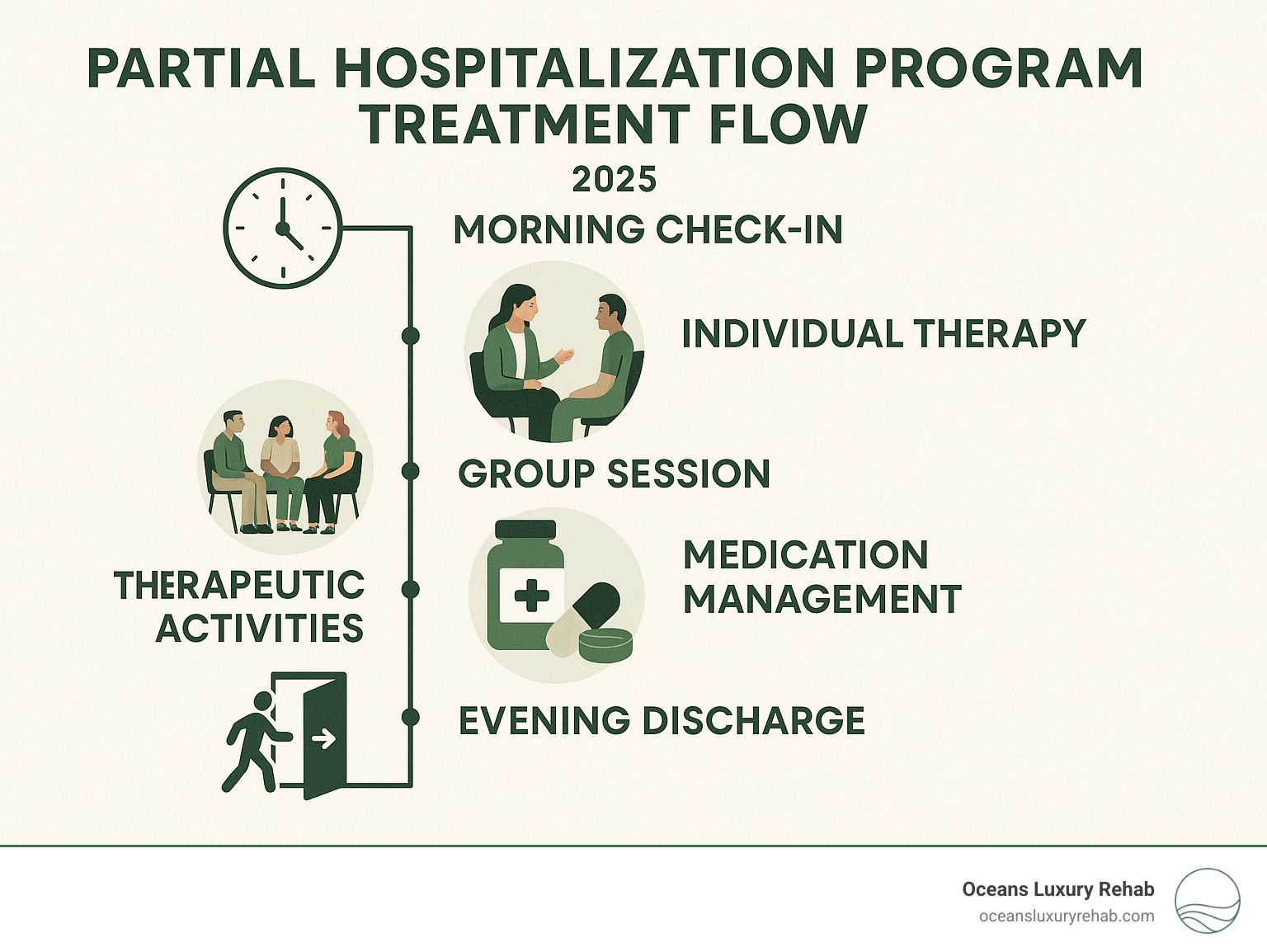
A typical PHP in mental health day runs from around 9:00 AM to 3:00 PM with structured activities:
9:00 AM – Morning check-in and goal setting
9:30 AM – Group therapy (process or skills-based)
10:30 AM – Individual therapy sessions
11:30 AM – Psychoeducational groups
12:30 PM – Lunch and peer support
1:30 PM – Specialized therapies (art, music, experiential)
2:30 PM – Medication management
3:00 PM – Daily reflection and evening planning

Core therapies include individual therapy, group therapy, Cognitive Behavioral Therapy (CBT), Dialectical Behavior Therapy (DBT), medication management, and experiential therapies like art therapy, music therapy, yoga, and mindfulness practices.
Duration varies based on individual needs. Research shows PHP typically lasts two weeks to several months. Depression and anxiety might require several weeks, bipolar disorder often needs months, and dual diagnosis situations require extended treatment.
A 2015 literature review found that Intensive Outpatient Programs significantly reduce symptoms and improve mental health outcomes.
For more detailed information about program duration, check out our guide on how long partial hospitalization programs last.
Navigating, Measuring Progress & Transitioning Out of PHP
The journey through PHP in mental health involves meaningful progress tracking using standardized assessment tools and collaborative goal-setting. Your multidisciplinary team reviews results regularly, adjusting treatment plans as needed.
Research shows PHP creates significant improvements in depression symptoms and quality of life, with fewer hospital readmissions. Family involvement strengthens your support system through education and treatment planning.
Aftercare planning begins from day one. Most people step down to Intensive Outpatient Programs (IOP) with 2-4 hours of treatment three to five days per week. Your plan includes outpatient therapy, medication management, and community support to ensure continuity of care.
Goals, Benefits & Drawbacks of PHP in Mental Health
PHP in mental health aims for symptom stabilization, skill building, and social role functioning – maintaining relationships and responsibilities while healing.
Benefits include hospital-level intensive treatment without overnight stays, significantly lower costs than inpatient care, flexibility to maintain home life, powerful group therapy connections, and real-world practice of coping skills.
Challenges include substantial time commitment (4-6 hours daily can be exhausting), schedule demands that may conflict with work or school, emotional intensity of daily processing, and continued exposure to home environment triggers.
Most people find benefits outweigh challenges once they adjust to the routine. Realistic expectations and patience during adaptation are key.
For more comprehensive information, check out our detailed guide on PHP mental health treatment.
Funding, Insurance & How to Access a PHP
Most insurance plans recognize PHP as medical necessity and provide coverage. Private insurance typically covers PHP with pre-authorization. Medicare covers PHP services, and Medicaid coverage varies by state.
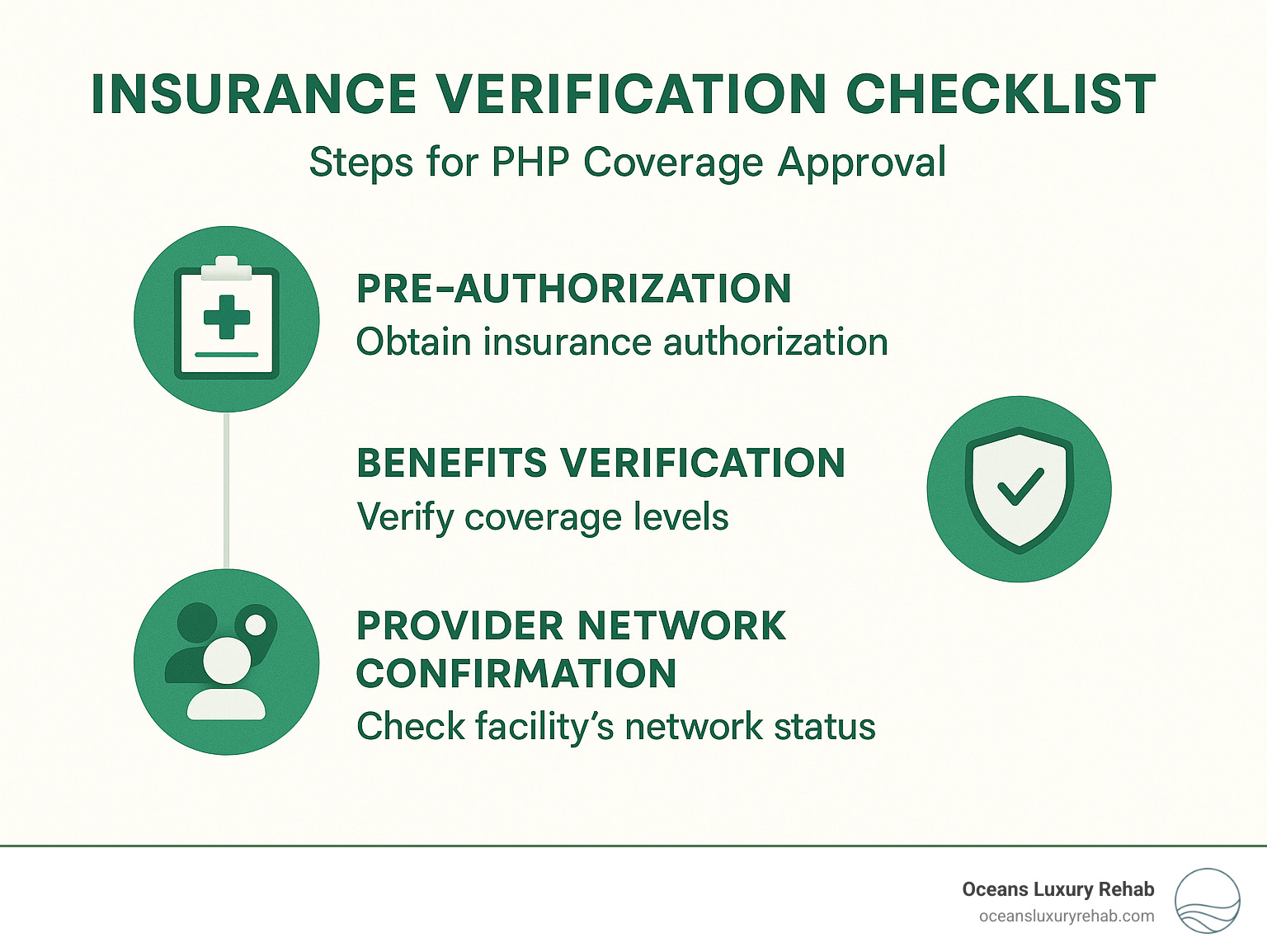
The process includes:
- Insurance verification – understand benefits, deductibles, and network providers
- Clinical assessment – determine appropriate level of care
- Medical clearance – ensure physical ability to participate
- Admission coordination – schedule start date
Financial assistance options include sliding scale fees, payment plans, scholarships, and community mental health center programs.

At Oceans Luxury Rehab, we handle insurance verification and provide comprehensive PHP services in Orange County with individualized treatment plans and 24-hour medical support.
Finding programs involves checking with your insurance provider for in-network options, getting referrals from current providers, and researching online directories. Local hospitals and community mental health centers can provide additional resources.
The admission process typically takes one to three days once assessment is complete.
For detailed insurance information, see our guide on insurance coverage for partial hospitalization programs.
If you’re exploring treatment options, our comprehensive guide to outpatient rehab treatment options shows how PHP fits into the broader spectrum of care.
Ready to take the next step? Our team can verify insurance benefits, answer questions, and help determine if PHP is right for you. You don’t have to figure this out alone.