

A senior professional notices the pattern before anyone else does. Racing thoughts arrive after difficult meetings, shame follows a missed commitment, and cravings appear in situations that seem ordinary from the outside. Speaking about every detail aloud can feel impossible, especially when privacy, reputation, or fear of judgment is involved. Journaling prompts for therapy can create a structured bridge into sessions, giving a client a way to capture what happened and review it with a therapist at a manageable pace. Guidance on how journaling improves mental health can help explain the broader role of reflective writing, but journaling works best as part of professional care, not as a replacement for it.
The eight methods below focus on gratitude and progress, triggers, letter writing, values, body awareness, CBT thought records, relationship repair, and relapse prevention. Each method includes a realistic response, ways to use the writing in therapy, privacy-conscious adaptations, and boundaries for trauma or addiction-related material. Intense trauma content and substance-use concerns deserve clinical support. Oceans Luxury Rehab offers confidential, high-comfort addiction treatment in San Clemente, Orange County, California, for adults who need a structured recovery setting.
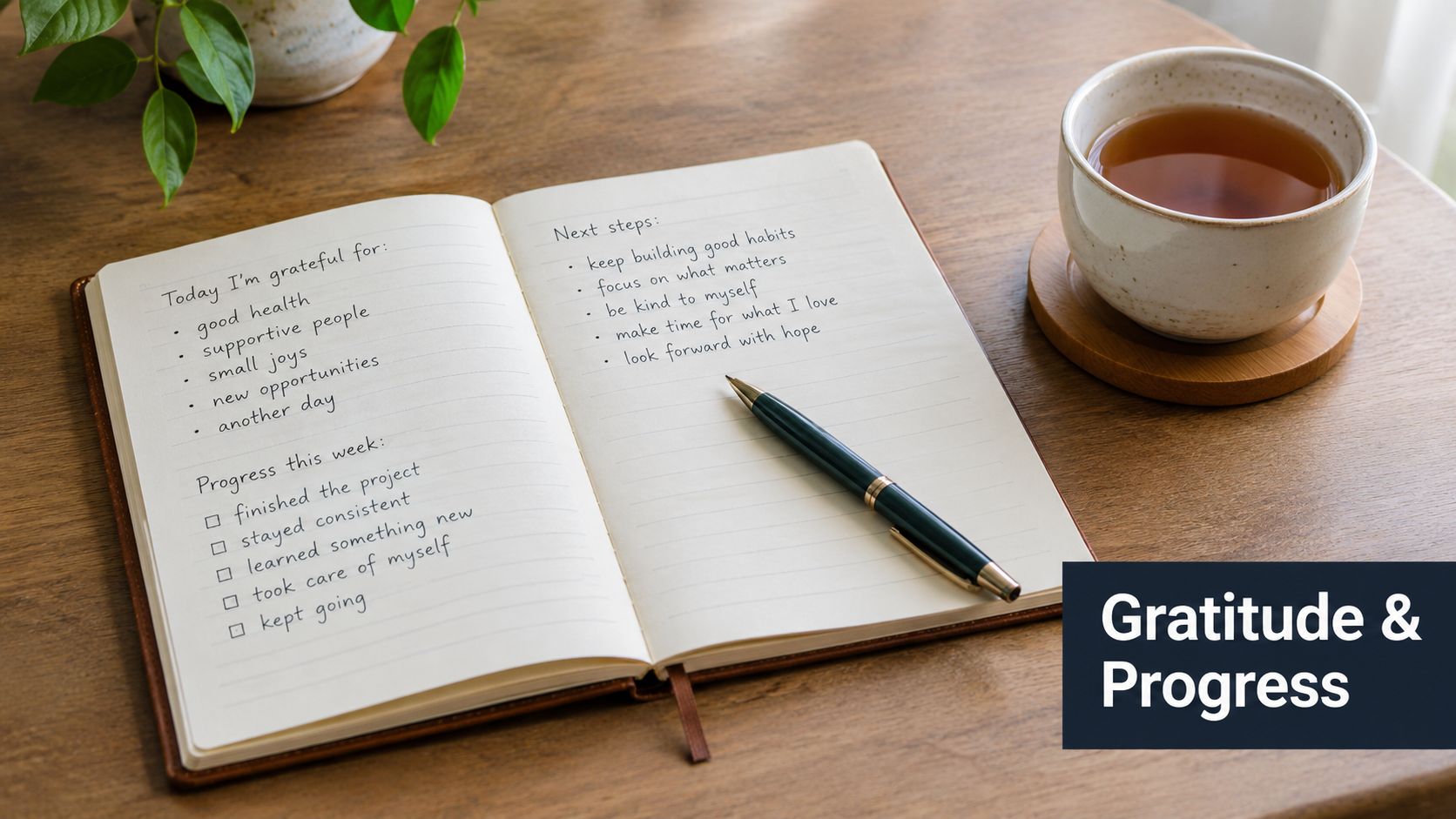
1. The Gratitude and Progress Journal
Recovery can make improvement difficult to see. A person may focus on the argument caused by addiction, the craving that returned, or the trust that still needs rebuilding, while overlooking the small decisions that support sobriety. A gratitude and progress journal balances those two perspectives without pretending that difficult emotions have disappeared.
A useful prompt is: “What small recovery decision mattered today, and what is one thing worth appreciating?” A realistic entry might read: “The first week sober felt uncomfortable, but a morning without hiding a hangover felt peaceful. A friend answered the phone, breakfast stayed down, and a difficult conversation ended without alcohol.”
Progress doesn't need to mean a dramatic milestone. It can include pausing before reacting, attending therapy, sleeping more consistently, telling the truth about an urge, or responding to a trigger differently than before treatment.
Use the entry as evidence, not pressure
A therapist can help identify meaningful progress markers and connect them with treatment goals. Reviewing older entries during a difficult session may show emotional regulation, improved relationships, or growing willingness to ask for help. That review can strengthen accountability without turning gratitude into a demand to feel positive.
The method has limits. For a client experiencing grief, depression, or acute shame, being told to list positives can feel dismissive. A more clinically respectful version asks for one neutral fact, one act of care, or one moment of safety, rather than forcing gratitude.
Privacy matters in professional households and shared living spaces. A password-protected notes app, an encrypted journaling platform approved by the treatment provider, or a coded paper format can reduce exposure. The client should decide which passages enter therapy.
2. The Trigger Identification and Response Journal
A trigger journal turns a vague warning, “I suddenly wanted to use,” into a sequence that can be examined. The prompt should capture the event, interpretation, body response, craving, action, and result. A workplace entry might say: “A manager criticized the presentation. The thought was, ‘I'm failing again.’ The chest tightened, the face felt hot, and the urge to drink reached for relief. Leaving the office, calling a support person, and taking a grounding break prevented an impulsive decision.”
The same format works for social pressure. A client might record that an invitation brought up anxiety, an offer of alcohol created tension, and group therapy skills made it possible to decline and leave early. The point isn't to create a perfect record. It's to identify repeatable links between circumstances and behavior.
A consistent format reveals patterns
Entries are most useful when written soon after an event, while details remain accessible. Each record can include:
- Trigger context: Note the place, people, time of day, and immediate event.
- Internal response: Record emotions, body sensations, thoughts, and craving intensity without judging them.
- Protective action: List every strategy attempted, including contacting support, changing locations, breathing, walking, or using a safety plan.
- Next adjustment: Identify what might make the next response safer or faster.
Clients who want more structured skills can discuss DBT treatment in Orange County with a qualified clinician. A therapist can connect journal patterns with behavioral treatment rather than leaving the client to interpret them alone.
Practical rule: A trigger entry should end with a support action or learning point, not with self-punishment.
Trauma-related triggers require restraint. Writing every sensory detail can increase distress for someone who dissociates or becomes flooded. A safer starting point may be “What changed in the room?” or “What is controllable right now?” The client can use initials, broad descriptions, or a private clinical worksheet instead of recording identifying details.

3. The Letter Writing and Release Journal
A letter can hold emotions that feel too complicated for a direct conversation. The writer may address someone harmed, someone who caused harm, a younger version of the self, or the addiction itself. The letter doesn't need to be sent. Its value comes from making room for guilt, shame, resentment, fear, grief, and responsibility without immediately turning those feelings into action.
One prompt is: “What needs to be acknowledged, what responsibility belongs to the writer, and what cannot be controlled?” A realistic entry to a person harmed by substance use might read: “The missed promises affected your sense of safety. Regret doesn't repair that impact by itself. The next responsible step is sustained treatment and allowing you to decide what contact feels appropriate.”
Another letter might address addiction directly: “You offered escape when fear felt unbearable. You also narrowed every choice. Recovery means learning to tolerate discomfort without giving you control.”
Keep expression separate from contact
Writing freely can help a client discover what remains unresolved, but an unsent letter isn't automatically a safe amends plan. Sending a letter while emotions are intense can pressure a harmed person, reopen conflict, or expose private treatment information. A therapist can help determine whether sharing, revising, or discarding the letter best serves recovery.
Multiple drafts may be useful as perspective changes. The first draft can be raw, the next can identify responsibility, and a later draft can focus on boundaries and future behavior. Clients should choose whether a clinician reviews the material, especially when the writing includes trauma, abuse, legal concerns, or details that could trigger urges.
Privacy-conscious writers can use a blank recipient, initials, or a secure file. They can also write in a clinical notebook that stays with a therapist rather than keeping emotionally charged content at home.
Letter writing shouldn't be used to force forgiveness. A person can process anger without excusing harm, and recovery doesn't require reconciliation with every relationship.

4. The Values and Purpose Clarification Journal
After substance use stops, a client may face an unsettled question: what should fill the time, identity, and priorities that once revolved around using? Values journaling gives recovery a constructive direction. It helps a person describe the life and character they want to support, then connect that vision with choices made today.
Start with: “When has life felt most authentic, fulfilling, or honorable, and which values were present?” A business executive might write: “Leadership used to mean appearing invulnerable. Recovery is showing up, repairing trust, and making decisions that protect people rather than protecting an image.” Another client may name family connection, creativity, health, spirituality, or service.
The journal becomes more clinically useful when a value is paired with an observable action:
- Family connection: Respond to a difficult message instead of disappearing.
- Health: Attend treatment and follow the care plan when motivation drops.
- Integrity: Correct a misleading statement rather than adding another excuse.
- Creativity: Return to music, drawing, cooking, or another activity without demanding immediate mastery.
A therapist can use these entries to examine identity reconstruction, avoidance, and tension between professional, relational, and personal roles. Trust describes a direction, while a specific repair conversation is a goal. That distinction prevents abstract intentions from replacing measurable behavior.
Values work also has limits. An idealized future can turn into a perfectionism exercise, especially when cravings or symptoms remain. The clinician can help separate values-aligned effort from harsh self-demands and revisit the writing as recovery changes. If journaling increases shame, agitation, dissociation, or urges to use, pause the exercise and bring that response into treatment.
Privacy adaptations can be simple. Use symbols, initials, or a short values card instead of a detailed narrative. A discreet card in a wallet or phone can support recall during treatment, travel, or stressful workdays. People needing structured addiction care in California may consider Oceans Luxury Rehab, a high-comfort addiction treatment option in San Clemente, while discussing appropriate care with a qualified professional.
Values journaling supports therapy, but it does not replace assessment, treatment, or crisis support.
5. The Body Awareness and Mindfulness Journal
Cravings often arrive with physical signals before a person fully identifies the emotion. A body-awareness journal asks the client to notice sensations without treating every sensation as an emergency. The prompt can be simple: “What is happening in the body, what emotion might be nearby, and what would support safety now?”
A realistic entry might read: “The shoulders tightened during the meeting, breathing became shallow, and the stomach felt compressed. The urge to use appeared after the thought that escape was the only option. Cold water on the wrists, a slower exhale, and a call to a support person reduced the sense of urgency.”
Describe sensations without forcing a story
A daily scan can move from head to toe and record temperature, pressure, movement, numbness, tension, or restlessness. The client doesn't need to explain the sensation immediately. Naming it may be enough to create a pause between discomfort and behavior.
The journal can also track what happened after a grounding practice. That doesn't prove a technique will work every time, but it gives the therapist material for refining the coping plan. A client may discover that walking helps agitation, while quiet stillness increases dissociation. Such differences matter.
Mindfulness shouldn't be treated as a command to sit with unbearable sensations. Someone with trauma may need eyes open, movement, external orientation, or a therapist present. A person experiencing withdrawal, severe anxiety, or medical symptoms needs appropriate clinical assessment rather than journaling alone.
Clients can explore mindfulness-based relapse prevention with qualified providers. A discreet adaptation uses three words in a phone note, such as “jaw tight, crowded room, step outside,” followed by the selected support action.
6. The Cognitive Restructuring and Thought Pattern Journal
After a tense meeting, a client may write, “Everyone noticed my anxiety. I cannot handle another situation like that.” A thought record separates the event from the interpretation attached to it. This can help identify beliefs that intensify anxiety, shame, or substance-use urges, while giving the therapist specific material to examine in session.
Record five elements:
- Activating event: A conflict, memory, craving, or social situation.
- Automatic thought: The first interpretation that appeared.
- Consequence: Emotion, body response, urge, and behavior.
- Evidence review: Facts that support or challenge the interpretation.
- Balanced response: A fair statement linked to a safer next action.
For the belief, “I'll never be able to stay sober,” a grounded response might read: “Recovery is challenging, and I have skills and support for managing the next urge. One difficult day does not decide every future choice.” The aim is accuracy, not forced optimism. The revised thought recognizes difficulty without treating it as a permanent outcome.
Common patterns include all-or-nothing thinking, catastrophizing, mind-reading, and personalization. A professional preparing for a networking event might write, “Everyone will notice my anxiety, and embarrassment will be unbearable.” Reviewing prior experiences may show that discomfort was manageable. A practical alternative could be: “Some anxiety may occur. I can choose an alcohol-free option, arrange a support contact, and leave if needed.”
Cognitive reframing has a real trade-off. Used too early, it can sound like an argument against legitimate pain. Begin by acknowledging the emotional logic, such as, “That thought makes sense given what happened,” then examine whether it still describes the present situation.
Privacy can be protected with broad labels such as “colleague” or “family member,” without names, workplace details, or identifying events. Clinician review helps keep the journal from becoming another setting where every feeling is judged or disputed. Trauma-related memories may require pacing, grounding, and professional support rather than detailed written exposure. For addiction-related urges, journaling should support a treatment plan, not replace assessment or immediate help when safety is at risk.
7. The Relationship Repair and Amends Planning Journal
A client may write, “I missed family plans while using, and my secrecy made home life unpredictable.” That concrete account gives therapy something to examine. It also separates responsibility from shame, since rebuilding trust depends on reliable behavior over time, not on writing a painful confession.
Use the journal to compare remorse with a workable repair decision. Ask: “What did this person experience, what responsibility belongs to me, and what action would avoid placing further pressure on them?” The final question protects the other person from an apology designed mainly to relieve the writer.
A short entry can sort the next decision into four columns:
- Apology: Name the harm without excuses or demands for reassurance.
- Amends: Identify a responsible action that repairs damage or reduces repetition.
- Boundary: Accept that the other person may decline contact or limit trust.
- Timing: Wait until treatment progress makes the action safer and more credible.
A therapist or family clinician can review the plan before any outreach. Contact may be inappropriate where violence, coercion, active conflict, or severe instability is present. Addiction-related amends should not create manipulation, financial exposure, or emotional pressure. If direct contact is unsafe, the client can write an unsent letter, make a behavior plan, or discuss repair through treatment.
Privacy-conscious entries can use labels such as “parent,” “partner,” or “colleague” rather than names, workplaces, or identifying events. Professionals may record the intended action without documenting sensitive history. The journal supports accountability and preparation; it does not require disclosure to everyone involved or replace clinical guidance. For people needing structured addiction support in California, Oceans Luxury Rehab offers a high-comfort treatment option in San Clemente where relationship work can occur within a supervised care plan.
8. The Relapse Prevention and Recovery Resilience Journal
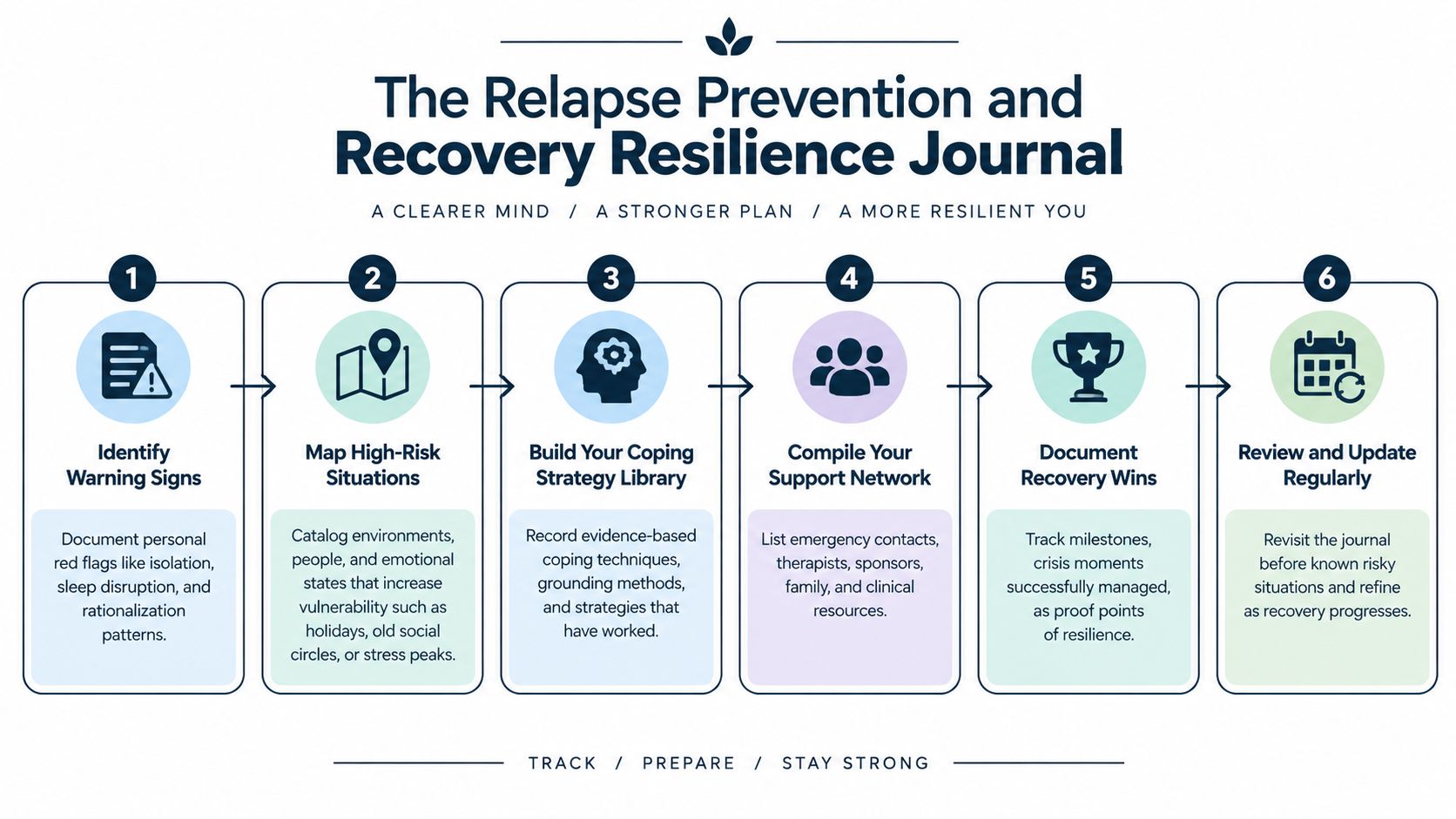
A relapse-prevention journal should be usable during stress, not only during calm reflection. It can place warning signs, likely risks, practiced responses, support contacts, and recovery evidence in one accessible record, reducing the need to rebuild a plan during a crisis.
Start with a recent situation. For example: “I slept poorly, isolated after work, and told myself one use would not matter.” The next lines can identify the setting, the first action to interrupt the pattern, and the person to contact. A response might be leaving the setting, calling a support person, using a clinician-approved coping skill, and seeking urgent help if safety is at risk.
Organize entries around decisions rather than a fixed worksheet:
- Warning signs: Emotional, behavioral, physical, and social changes that often appear first.
- High-risk situations: Places, people, dates, conflicts, and transitions linked to increased vulnerability.
- Coping strategies: Actions already practiced and realistic under pressure.
- Support resources: Therapists, treatment staff, trusted contacts, and emergency options.
- Recovery wins: Honest choices, previous urges managed safely, and evidence of resilience.
- Reasons for sobriety: Values, relationships, health, purpose, and future commitments.
Review the journal before a known risk, after a difficult event, and whenever the treatment plan changes. A secured phone note may be convenient, while a paper copy can stay in a private bag or treatment folder. Avoid names, locations, or details that could identify another person. Professionals can document patterns and planned responses without recording unnecessary history.
Brief, consistent writing may be easier to sustain than occasional emotional marathons. A 2022 meta-analysis of 31 randomized controlled trials involving 4,012 participants found a small but statistically significant overall reduction in depression, anxiety, and stress symptoms from expressive writing, with Hedges' g = -0.12 and a 95% confidence interval from -0.21 to -0.04. Sessions spaced one to three days apart performed better than longer intervals (meta-analysis of expressive writing).
A client can adapt a relapse prevention plan template with a therapist for substance use, mental health symptoms, medication needs, and available support. Trauma details should be paced clinically, and addiction-related entries should not replace treatment. Oceans Luxury Rehab offers a high-comfort addiction treatment option in San Clemente for people who need structured support.
8 Therapeutic Journaling Prompts Comparison
| Journal Title | Implementation complexity | Resource requirements | Expected outcomes | Ideal use cases | Key advantages |
|---|---|---|---|---|---|
| The Gratitude and Progress Journal | Low, daily simple entries | Minimal, notebook/time; therapist optional | Increased motivation, tracked milestones, improved mood | Early recovery, therapy integration, combating negativity bias | Builds positivity, tangible progress evidence, adaptable |
| The Trigger Identification and Response Journal | Moderate, structured, analytical entries | Moderate, time, consistent logging, clinician guidance recommended | Greater self-awareness, targeted relapse prevention, pattern detection | High‑risk individuals, IOP/residential programs, relapse planning | CBT integration, concrete coping strategies, useful clinical data |
| The Letter Writing and Release Journal | Low–Moderate, freeform emotional work | Minimal–Moderate, private space; clinical support advised for intense material | Emotional catharsis, reduced shame/guilt, increased self‑compassion | Processing unresolved emotions, preparing for therapy/family work | Facilitates release, supports trauma processing, enables self‑forgiveness |
| The Values and Purpose Clarification Journal | Moderate, reflective and iterative | Minimal, time and guided prompts; therapist helpful | Stronger intrinsic motivation, identity reconstruction, clearer goals | Long‑term recovery planning, professionals rebuilding identity | Aligns actions with values, fosters sustained recovery and meaning |
| The Body Awareness and Mindfulness Journal | Moderate, somatic practice and regular scans | Minimal–Moderate, quiet time, mindfulness training, clinician integration beneficial | Early craving recognition, improved regulation, reduced dissociation | Trauma‑informed care, meditation practices, post‑detox support | Enhances somatic literacy, supports nervous system regulation |
| The Cognitive Restructuring and Thought Pattern Journal | Moderate–High, structured CBT formats | Moderate, training or therapist guidance recommended | Reduced cognitive distortions, lower anxiety/depression, better coping | Dual‑diagnosis care, CBT programs, targeted cognitive work | Empirically supported, teaches practical real‑time skills, documents progress |
| The Relationship Repair and Amends Planning Journal | Moderate, systematic assessment and planning | Moderate, time, therapist or family support often needed | Increased accountability, concrete amends plan, potential relationship repair | Family reconciliation, 12‑step integration, workplace trust rebuilding | Action‑oriented, structured amends process, supports system healing |
| The Relapse Prevention and Recovery Resilience Journal | High, comprehensive multi‑section approach | Moderate–High, ongoing maintenance, clinician input useful | Personalized relapse prevention, increased resilience, portable plan | Transitioning from intensive care, long‑term relapse prevention | Comprehensive, integrates multiple strategies, accessible in crises |
Make the Journal a Bridge to Safer Support
The most useful journal isn't the longest one. A client can choose one prompt that matches the immediate therapy goal, set a comfort-based writing limit, and stop while the material remains manageable. A short entry about a trigger, body sensation, or next safe action may offer more clinical value than pages of unstructured distress.
Privacy deserves planning. Paper journals can be stored in a locked drawer or kept with a trusted professional. Digital entries should use device protection, discreet notifications, and neutral file names when appropriate. A client doesn't need to bring every page into therapy. Selected passages, summaries, patterns, or even a single sentence can be enough to start a productive discussion.
Writing about trauma requires particular care. The 2022 systematic review of journaling in mental-health care found an average statistically significant 5% reduction in mental-health scores compared with control groups, with larger estimated benefits for anxiety at 9% and PTSD at 6%, and a smaller effect for depression at 2% (systematic review of journaling interventions). These findings support journaling as an evidence-based adjunct, not a stand-alone treatment. Structured prompts that match symptoms are safer to discuss than an instruction to write every detail of a traumatic event.
A clinical program using expressive, transactional, poetic, affirmative, legacy, and mindful writing across six weeks reported preliminary improvements in resilience, depressive symptoms, perceived stress, and rumination among adults with trauma in the past year (clinical writing program). That variety matters. Some clients need grounding and present-focused observation before they can approach deeper material. Others may benefit from values, progress, or recovery planning first.
If writing causes escalating distress, dissociation, panic, intense urges, or thoughts of self-harm, the client should pause rather than push through. The existing safety plan should guide the next step, and qualified clinical support should be contacted for urgent concerns. Journaling can't provide medical monitoring, withdrawal management, medication decisions, or emergency intervention.
For addiction treatment in California, Oceans Luxury Rehab in San Clemente provides a discreet, oceanfront, high-comfort setting with medically supervised detox, residential care, partial hospitalization, intensive outpatient, and outpatient programs. Clients can access 24/7 nursing, physician oversight, individualized treatment, dual-diagnosis care, medication-assisted treatment when clinically appropriate, individual therapy, group therapy, family therapy, relapse prevention, and aftercare planning. Private rooms and upscale amenities support privacy and rest, while round-the-clock admissions help reduce delays when someone is ready to seek care.
The treatment pathway can begin with confidential insurance verification and a conversation about substance use, mental health needs, privacy concerns, work obligations, or family involvement. Oceans Luxury Rehab accepts many PPO insurance plans and offers support understanding available options. Community resources, including churches supporting mental wellness, may also complement professional treatment when they align with a client's preferences and safety plan.
Oceans Luxury Rehab offers medically supervised detox, residential and outpatient addiction treatment, dual-diagnosis care, private rooms, 24/7 nursing, and physician oversight in a discreet oceanfront setting in San Clemente. Adults using journaling prompts for therapy can bring selected insights into individualized care and relapse-prevention planning. Visit Oceans Luxury Rehab to verify insurance or discuss confidential treatment options with the admissions team.
