
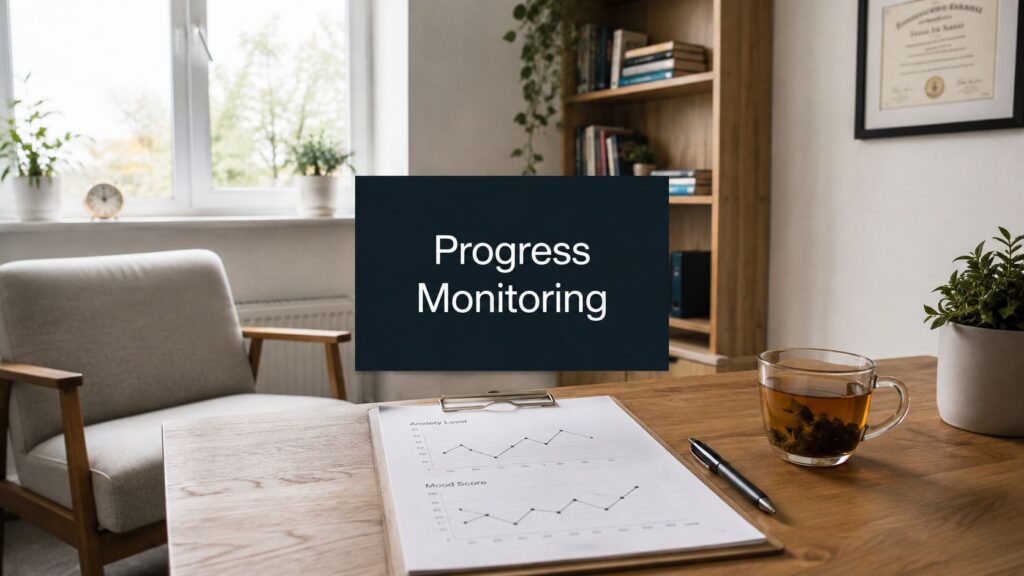
A parent in the waiting room usually wants one plain answer, whether treatment is working. Progress monitoring uses at least 3 probes to establish a baseline, then repeated measurement over time to show whether care is helping or needs to change. It turns recovery from a guess into a visible plan, so families can see what the team is tracking between sessions.
Why Families Ask Whether Treatment Is Actually Working
The first two weeks in a luxury rehab setting can feel strange to a family. There's relief that a loved one is finally safe, but there's also that quiet fear that nothing is really changing yet. The room looks calm, the staff sounds confident, and still the central question hangs in the air: is this truly helping?
That question makes sense because early recovery is not always obvious from a single conversation or a good day at the end of the week. A person may sleep a little better, eat a little more, or seem less agitated, but those shifts can be easy to miss when a family only gets occasional updates. Progress monitoring gives the care team a way to turn those small changes into a record that can be reviewed, compared, and acted on.
Practical rule: families should ask for evidence of change, not just reassurance.
In education, progress monitoring became a core practice because repeated data helped teams decide whether instruction was working. The same logic applies in treatment. A clinician can say a person seems steadier, but the stronger answer comes from a pattern, measured consistently, reviewed on schedule, and tied to a next step when needed. That is the difference between hope and a care plan.
For families, this matters because it changes the conversation. Instead of asking, “How was the week?” they can ask, “What changed, what stayed the same, and what did the team do because of that data?” That is the kind of question that gets a useful answer from a clinical team, because it points to observable progress instead of general impressions.
The most reassuring programs do not treat monitoring like paperwork. They treat it like the way everyone stays honest about what is improving and what still needs attention. That is what families are really asking for when they want to know whether treatment is working.
What Progress Monitoring Means in Addiction Treatment
In addiction care, progress monitoring means repeated measurement of a person's clinical state, biological markers, and day-to-day functioning, then using that information to guide treatment. It is not a one-time intake form. It is the loop that keeps the care plan aligned with what is happening.
That definition matters because families sometimes hear the phrase and think it only means a test score or a single lab result. In recovery care, monitoring is broader than that. A person's symptoms, safety, sleep, mood, participation, and substance-use patterns all matter, because recovery does not live in one category alone.
The education version of progress monitoring uses a similar idea, frequent objective data, analyzed over time, with instruction adjusted from the results. The clinical version works the same way conceptually, but the setting is different. Instead of benchmark reading goals or annual school goals, the team is watching withdrawal, cravings, mood, medication response, and function across the continuum of care.
A family can think of it this way, the measurement is not the end goal. The monitoring loop is the care. It is what lets the team know whether to keep the plan steady, intensify support, or step down to a less structured level of care.
If a loved one is being evaluated for treatment, a useful related read is this overview of what a substance abuse evaluation includes. That kind of assessment usually starts the process, while progress monitoring keeps the process honest after admission.
Monitoring is not the test. It is the system that turns the test into better care.
The Four Categories of Data a Luxury Rehab Tracks
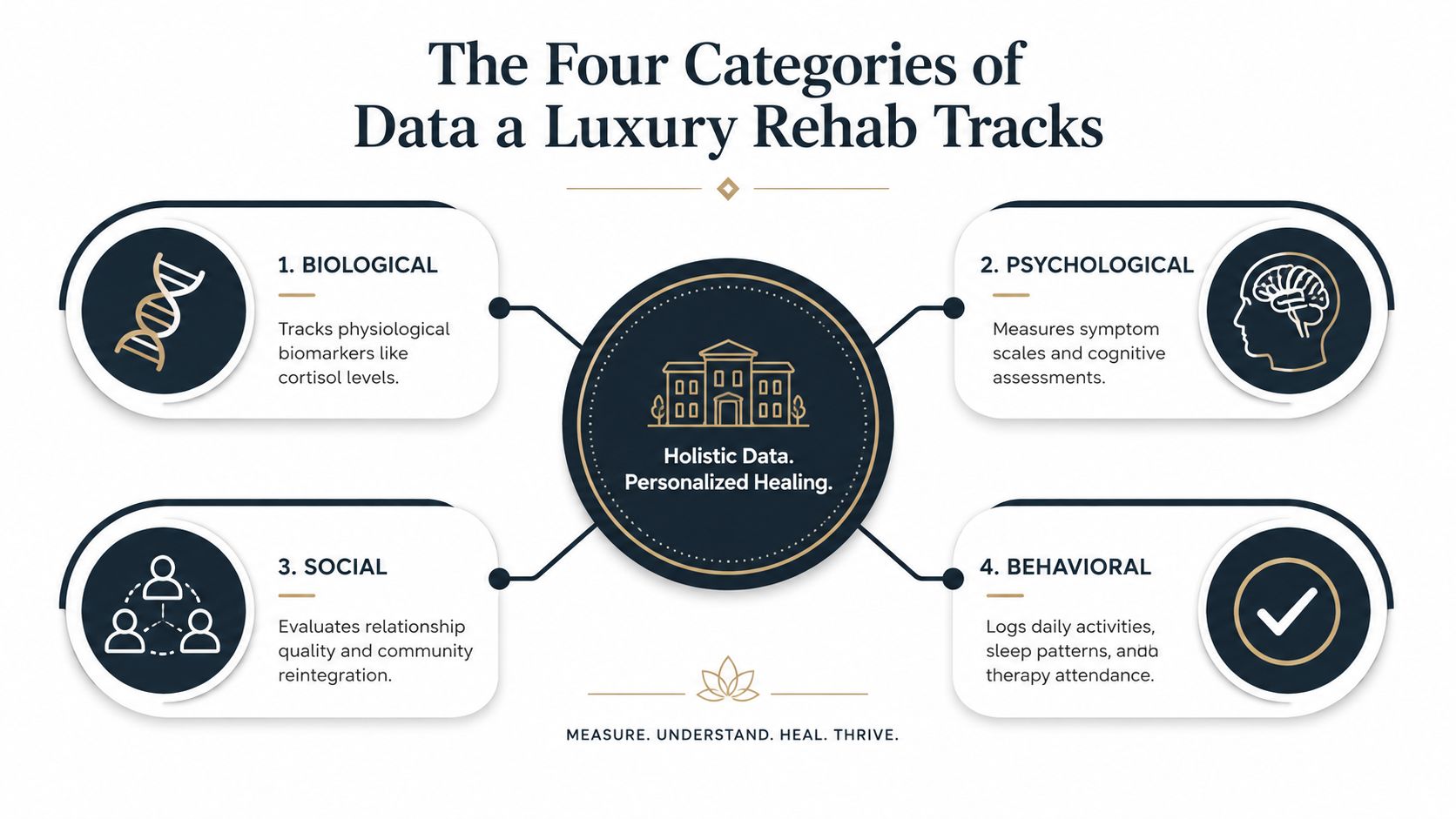
A strong monitoring system does not lean on one number. It draws from several kinds of data so the team can see the full picture instead of guessing from one slice of it. In a luxury rehab setting, that usually means biological, self-report, clinician-rated, and functional information all being reviewed together.
Biological data
Biological data shows what the body is doing. That can include urine drug screens, oral fluid testing, and, when clinically indicated, bloodwork such as liver enzymes or medication levels. These checks help the team confirm whether the body is stabilizing, whether a medication is being tolerated, and whether substance use has resumed.
Self-report data
Self-report measures capture what the person feels and notices. That can include symptom scales, sleep questionnaires, and substance-use timelines discussed in session. These measures matter because some changes show up in the person's own experience before they show up anywhere else.
Clinician-rated data
Clinician-rated tools add a trained observer's perspective. Withdrawal scales, session notes, affect, engagement, and risk are all part of this category. When a nurse or therapist documents what they see, the chart becomes more than a log, it becomes a decision aid.
Functional data
Functional data is often the most useful for families, because it reflects real life. Sleep quality, nutrition, exercise tolerance, family relationship quality, and readiness to return to work all belong here. A person can look calmer in one setting and still struggle badly with function, so this category keeps the team grounded.
A healthy program triangulates across all four. If one category improves while another gets worse, the team has a reason to slow down, reassess, or change the plan. That is how monitoring stays useful instead of becoming a pile of disconnected numbers.
How Often a High-Acuity Program Actually Measures Progress
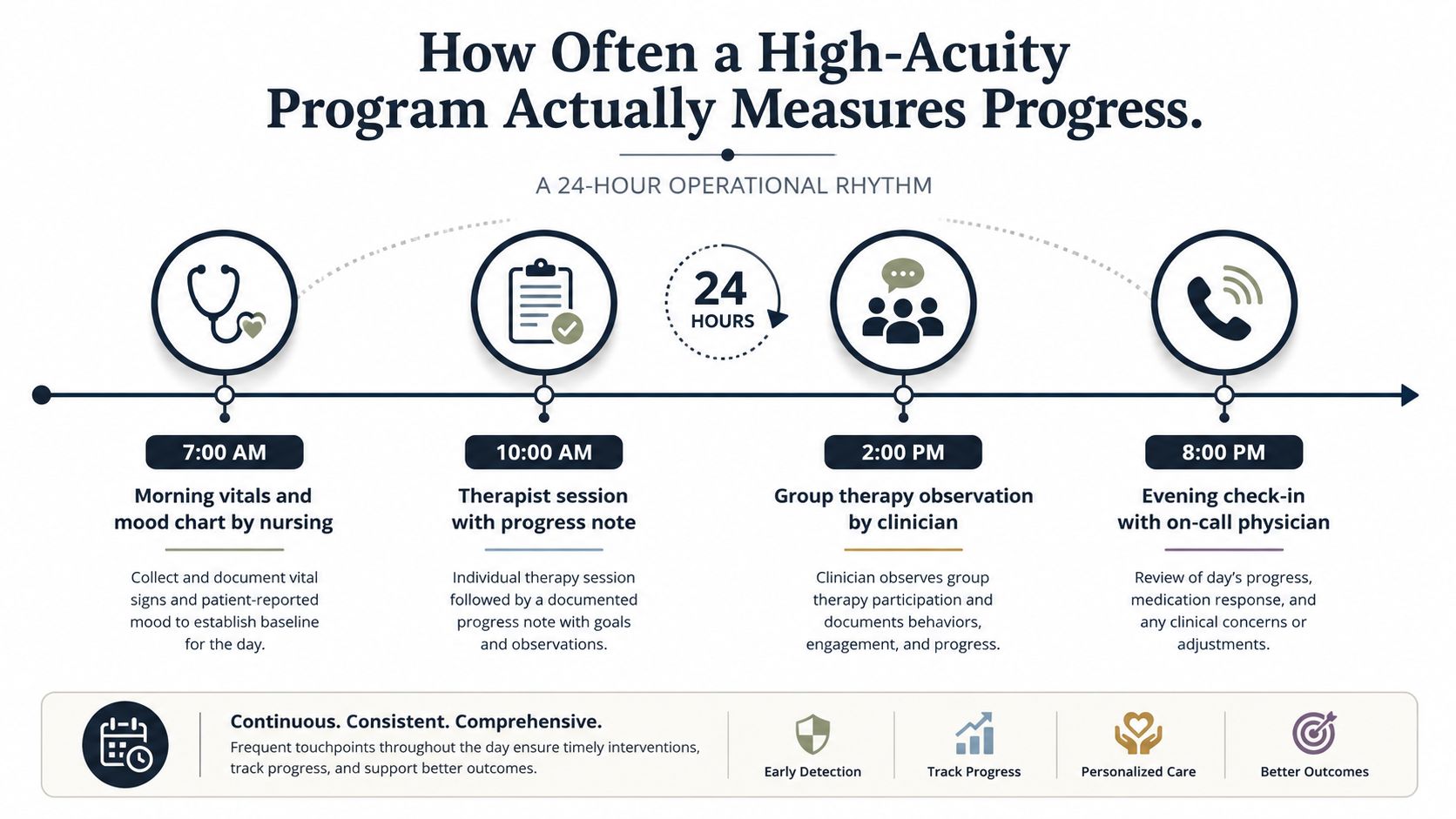
The timing of monitoring changes with acuity. In detox, the team looks often because the situation can change quickly. During residential care, the schedule gets more structured, but it still stays frequent enough to catch real shifts, not just dramatic ones.
A practical rhythm in a high-acuity program looks like this:
- Morning nursing check: vitals, sleep, withdrawal signs, and mood.
- Daytime clinical review: therapy participation, engagement, and safety.
- Weekly team meeting: the care team compares recent data against the goal line.
- Discharge planning review: the team checks whether the client is ready to step down or needs more support.
The education literature often uses a rule that if the last four data points sit below the goal line, instruction should change. Clinical care uses the same spirit of decision-making, even though the calendar is different. In addiction treatment, the team may need to respond faster because medication, withdrawal, and safety issues can change within hours or days, not weeks.
Families should also know that good monitoring is not random. The same method has to be used repeatedly so the numbers mean something. If sleep is tracked one way at admission and a different way later, the chart loses clarity. If withdrawal is measured by trained staff at the same times, the data becomes far more reliable.
Good monitoring is a cycle, not a pile of forms.
For readers comparing levels of care, this kind of rhythm is often part of structured outpatient and residential planning. A helpful related overview is this explanation of partial hospitalization programs and intensive care without overnight stays. The key point is simple, the higher the acuity, the tighter the monitoring loop has to be.
Sample Monitoring Plans for Real-World Client Profiles
The clearest way to understand progress monitoring is to watch it in motion. Two clients can be in very different treatment tracks and still share the same basic logic, collect, compare, decide, communicate. The details change, but the rhythm stays the same.
Alcohol use disorder in residential care
A high-functioning executive who enters care after heavy alcohol use may start with daily withdrawal checks, because the first priority is safety. If symptoms settle, the team can move from close medical observation to a steadier weekly review of mood, sleep, cravings, and liver-related lab trends when clinically indicated. Therapy notes then show whether the person is engaging authentically or just attending in body only.
By the second or third week, the chart usually starts to tell a more useful story. The team may see better sleep, less anxiety, and improved participation, or it may see agitation and poor follow-through that suggest more support is needed. If the pattern is weak, the team can keep the level of care in place rather than rushing to discharge.
Opioid use disorder in stabilization and step-down care
A professional with opioid use disorder often needs tighter medication and craving tracking early on. The team may watch withdrawal signs closely, review adherence to prescribed medication, and check whether pain, sleep, or stress are interfering with recovery. Family sessions can also mark whether support at home is becoming more stable.
By discharge, the question is not whether the person is abstinent on the day of release. The question is whether the chart shows enough stability to support the next phase. If the data says no, the team should slow the transition and keep support in place.
| Measure Category | Alcohol Use Disorder Plan | Opioid Use Disorder Plan |
|---|---|---|
| Biological | Withdrawal checks, lab review when indicated | Withdrawal checks, medication adherence, substance-use screens |
| Self-report | Sleep, cravings, mood | Pain, cravings, stress, sleep |
| Clinician-rated | Participation, affect, risk | Engagement, stabilization, safety |
| Functional | Family contact, daily structure, return-to-work readiness | Home stability, routine, family involvement |
A family should ask one simple question at each review, what changed since the last review, and what did the team do because of it? That question forces the discussion away from vague reassurance and toward actual care decisions.
Turning the Data Into an Individualized Aftercare Blueprint
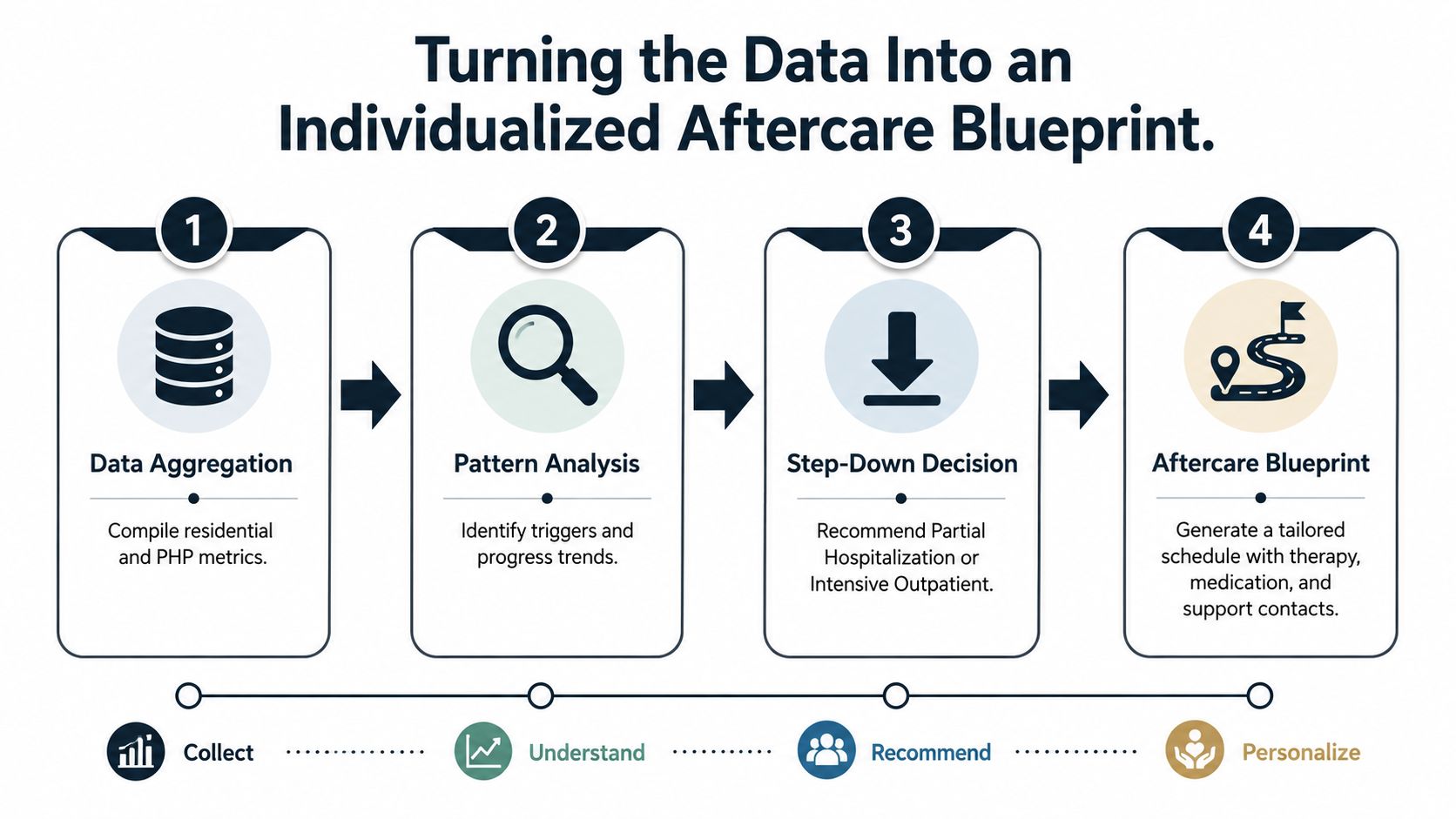
Aftercare should not feel like a separate chapter that begins after the core work ends. It should grow out of the same data the team has been gathering all along. If the chart shows steady improvement, the next step might be a lower-intensity schedule. If the chart shows patchy progress, the handoff should keep more structure in place.
A strong discharge document does more than list appointments. It shows trend lines, relapse risks, medication response, and the supports that have helped. That lets the next clinician see not just where the person was on discharge day, but how the person got there.
Families also deserve to see the home picture. Caregiver stress, household stability, and communication patterns matter because recovery happens in a living system, not a vacuum. If home support is shaky, the aftercare plan needs to account for that instead of pretending the problem ends at the facility door.
The transition out of residential care should also match the same graphing habit used during treatment. The team can keep monitoring at a lower intensity, and the family can keep looking for the same kinds of trends, sleep, mood, cravings, and function. A useful guide to individualized treatment plans can help families understand why the best handoffs are individualized rather than generic.
By the time a person leaves a structured setting, the chart should already point toward the next phase. That is what good progress monitoring buys, a smoother handoff, fewer surprises, and a plan that fits the actual person instead of an abstract diagnosis.
Why Setting and Staffing Density Improve the Quality of the Data
Progress monitoring is only as good as the people collecting the information. A small, oceanfront program with 24/7 nursing can gather cleaner data than a setting where observations are rushed, inconsistent, or handled by whoever happens to be available. That matters because the chart is only useful if the numbers mean what they say.
A quiet environment also helps. Private rooms and lower noise make sleep tracking, anxiety tracking, and withdrawal observation easier to interpret. When the day is not full of avoidable chaos, the team can tell more easily whether a bad night came from withdrawal, emotional distress, or environmental stress.
That is one reason Oceans Luxury Rehab fits this topic so well in California. The program's 24/7 nursing, physician oversight, dual-diagnosis care, and individualized planning support a more disciplined monitoring process, which means the team can make decisions from better information. For families comparing options, that kind of fidelity is often the difference between a chart that describes care and a chart that drives it.
Better data does not just document recovery, it improves the quality of each decision.
This is the point where luxury care earns its value. Not because comfort replaces clinical work, but because the setting gives clinicians a better view of what is happening between sessions. When the observations are cleaner, the plan is stronger.
Questions Families Commonly Ask About Treatment Monitoring
How often should urine drug screens happen during residential care? The answer depends on acuity, safety, and the treatment plan, because monitoring has to be clinically useful rather than random. Families should ask for the program's testing schedule and what the team does with a positive result in context, because one result never tells the whole story.
How can a family member receive updates without crossing confidentiality lines? The client usually needs to sign permission for specific information to be shared, so the family should ask what release forms are available and who is approved to receive updates. A good question is, “What progress can be shared with this family member, and how often will we hear from the team?”
Will insurance cover monitoring in a luxury rehab setting? Coverage depends on the plan and the level of care, so verification should focus on the services being authorized, not just the facility name. Families should ask whether medical monitoring, therapy, labs, and aftercare planning are included in the benefit review before admission.
What does the first month after discharge usually look like? It often includes a predictable cadence of check-ins, medication follow-through, symptom tracking, and support meetings that keep the person connected to care. The family's job is to ask what metric the team wants watched at home, then keep that one item visible.
Oceans Luxury Rehab offers monitored, individualized addiction treatment in San Clemente with 24/7 nursing, physician oversight, dual-diagnosis care, and structured aftercare planning. For families who want care decisions tied to visible clinical data, Oceans Luxury Rehab is a place to start a confidential conversation and review what a monitoring-based treatment plan could look like.
