
An unexpected message from HR can change the tone of an entire day. A short note asking an employee to report for a random drug test often triggers immediate questions about privacy, job security, prescription medication, and what happens if the result isn’t clean.
That stress is understandable. For some people, the fear comes from a recent relapse. For others, it comes from a legitimate prescription, a recovery medication, or simple uncertainty about how the process works. Managers feel pressure too. They need to protect safety without mishandling a sensitive health issue.
Clear information lowers panic. A random drug test follows a process, and that process matters. Employees need to know what “random” means, what kinds of tests are commonly used, what rights usually apply during workplace testing, and why a positive result should be treated as a serious health signal instead of automatic proof of personal failure.
The Unsettling Notification Your Guide Starts Here
The notification usually arrives without warning. It might be a quiet call from HR, a same-day instruction from a supervisor, or a request to report to an occupational health clinic before lunch. The word random can make the experience feel personal even when it isn’t.
A common scenario looks like this. An employee opens an email, rereads it twice, and immediately starts scanning for hidden meaning. Was there a complaint. Was there an incident. Did someone notice a change in behavior. In many workplaces, the answer is no. The person was selected through a process designed to be unannounced and difficult to predict.
That fact doesn’t remove the emotional impact. Someone in early recovery may worry that a prescribed medication will be misunderstood. A person who’s been using substances more often than intended may realize there’s no easy explanation left. A supervisor may worry about saying the wrong thing and creating legal or ethical problems.
Why this moment feels bigger than a test
A random drug test rarely feels like just an administrative task. It touches several sensitive areas at once:
- Employment pressure: The employee may fear discipline, suspension, or job loss.
- Privacy concerns: Medical information can feel exposed, even when confidentiality rules exist.
- Recovery anxiety: People in treatment or recently sober may fear stigma more than the test itself.
- Family impact: A result can affect income, childcare, transportation, and housing stability.
A drug test can feel like a verdict. In clinical reality, it’s better understood as a piece of information that may require a careful response.
The most useful approach is calm and procedural. Understand the test. Ask how the result will be reviewed. Clarify whether a medical review process applies. If substance use has become difficult to control, treat the moment as a prompt to get help quickly, not as a reason to hide longer.
What Exactly Is a Random Drug Test
A random drug test isn’t supposed to be arbitrary. In a properly run program, it works more like a lottery than a personal decision by a supervisor. The purpose is to reduce bias and make it difficult for employees to predict when screening will occur.

How random selection actually works
In regulated settings, the selection process is typically computerized. DOT random drug testing programs use a computerized random number generator matched to employee identifiers to ensure every safety-sensitive employee has an equal probability of selection. For a 100-employee pool at a 50% drug testing rate, at least 50 tests must occur, spread reasonably throughout the year via unannounced selections according to this overview of random testing procedures.
That structure matters because it reduces favoritism and retaliation claims. A manager shouldn’t be handpicking names from memory or suspicion when the policy calls for random screening.
Why employers use this model
The reasons depend on the setting, but they usually come down to two things.
| Goal | Why employers care |
|---|---|
| Safety | In transportation, construction, manufacturing, healthcare, and other high-risk roles, impairment can put other people at risk. |
| Deterrence | Unannounced testing can discourage substance use before an accident, near-miss, or serious decline in performance occurs. |
For federally regulated jobs, random testing may be mandatory rather than optional. For other workplaces, the policy depends on state law, company policy, and whether the role is safety-sensitive.
What makes a program fair
A fair program usually includes several features working together:
- Clear written policy: Employees know they may be tested and understand the procedure.
- Neutral selection method: The pool is generated through a system rather than personal preference.
- Unannounced timing: Testing loses its deterrent value if workers can predict it.
- Consistent administration: The employer applies the policy the same way across the covered group.
Practical rule: If a company says testing is random, the selection process should be documented and impartial.
The term “random” often sounds threatening because people imagine hidden suspicion. In a compliant program, the opposite should be true. The more structured the process, the less room there is for selective enforcement.
Common Drug Test Types and Detection Windows
Individuals typically don’t worry about the policy first. They worry about the sample. They want to know what kind of test they’re facing, what the collection looks like, and how far back it can detect substance use.
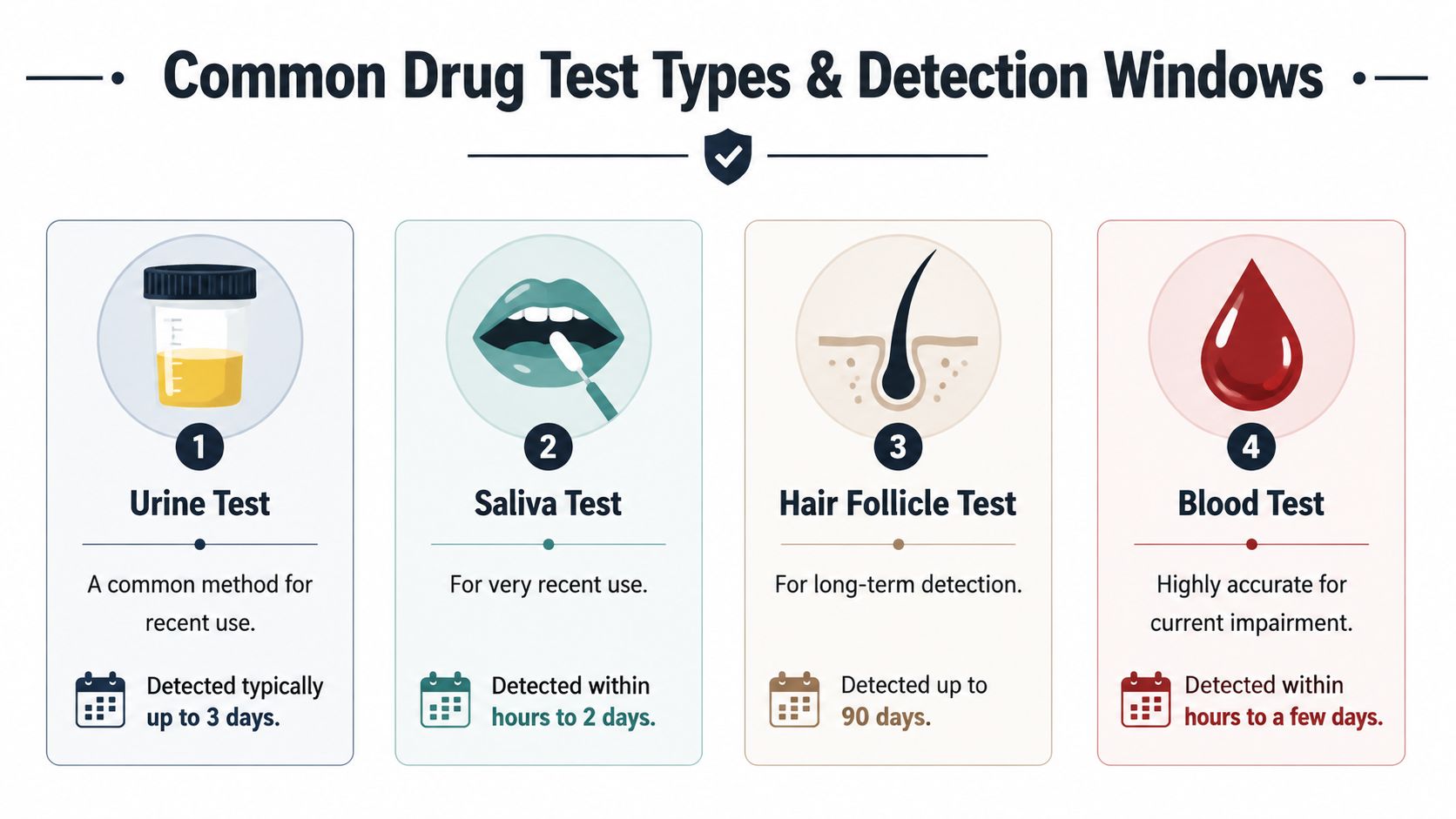
The four most common methods
| Test type | What it usually involves | General detection window |
|---|---|---|
| Urine | Sample provided at a collection site | Typically up to 3 days |
| Saliva | Mouth swab collected on-site or in clinic | Within hours to 2 days |
| Hair follicle | Small hair sample cut near the scalp | Up to 90 days |
| Blood | Blood draw by trained staff | Within hours to a few days |
These windows are approximate and can vary based on the substance, the person’s metabolism, frequency of use, hydration, body composition, medication interactions, and the test panel being used. They shouldn’t be treated as guarantees.
What each test is best at
Urine testing is common because it’s practical and widely used for workplace programs. It’s generally focused on relatively recent use rather than immediate impairment.
Saliva testing tends to be used when employers want a shorter detection window and a collection process that can be performed quickly. It’s often viewed as more useful for very recent use.
Hair testing looks at a longer history. It doesn’t usually answer whether someone is impaired today, but it may reveal a pattern of use over time.
Blood testing is less common in routine workplace random programs. It’s more invasive, but it can be helpful when current impairment is the central question.
A technical legal resource such as this Essential guide for service members can also help readers understand the scientific aspects of urinalysis in a more formal setting.
Why current trend data matters
Testing methods matter because substance use patterns are changing. Workplace drug test positivity reached a 20-year high of 4.6% in 2023. Marijuana is the main driver, with its general workforce positivity rate hitting 4.5% in 2023, up from 3.1% in 2019. Post-accident marijuana positivity saw a 204.2% increase over the last decade, as summarized in this workplace testing report discussion.
Those numbers don’t mean every positive test reflects addiction. They do mean employers and employees are dealing with a more complicated situation, especially where marijuana laws, safety standards, and workplace expectations don’t line up neatly.
For readers trying to separate myth from reality, this clinical breakdown of what works, what doesn’t, and when to get help before a test is often more useful than internet folklore.
Know Your Rights During Workplace Drug Testing
Employees often assume they have only two choices during workplace testing: comply or risk discipline. However, the situation is more nuanced. A person can cooperate with a testing requirement and still expect privacy, procedural fairness, and appropriate medical review.

Confidentiality and medical review matter
One of the most important protections in many testing systems is the role of a Medical Review Officer, often called an MRO. This professional reviews non-negative results and may examine whether there’s a legitimate medical explanation before the employer receives a final reported result.
That step matters for people taking prescribed medications. It also matters for people in recovery who are using lawful treatment medications under medical supervision.
A major weakness in non-DOT settings is that guidance is often incomplete. A critical gap exists in non-DOT testing guidance regarding how to handle positive results from legitimate prescription medications for conditions like ADHD or anxiety, or for Medication-Assisted Treatment (MAT). This creates both compliance risks for employers under the ADA and a hidden barrier to employment for people in active recovery, as discussed in this analysis of non-DOT random drug testing concerns.
Practical rights employees should clarify
Policies vary, but these questions are reasonable and important:
- Who receives the result: Employees should understand whether the report goes to HR, occupational health, a designated employer representative, or another party.
- Whether an MRO review applies: This can be important when prescription medication or MAT may affect the result.
- How confidentiality is protected: Employers should limit disclosure to people with a legitimate need to know.
- What policy governs the test: DOT and non-DOT rules aren’t the same, and state law may add protections.
Employees should never assume a positive screening result is the final word before confirmatory review and any applicable medical verification.
California employees and legal sensitivity
California workplaces operate in a privacy-conscious environment, and employers need to be careful about how they collect, review, and act on testing information. The specific legal analysis depends on the type of employer, the role involved, and the policy language in use, so individual legal advice may still be necessary.
If a workplace testing issue overlaps with an arrest, traffic stop, or controlled substance allegation, legal context can become even more complicated. In that narrower setting, some readers may find Bryan Fagan PLLC on DUI defense useful for understanding how controlled substance cases are defended when impairment becomes part of a legal dispute.
The key point is simple. Testing policy doesn’t erase dignity. Employees still have a right to ask how results are handled and how medical facts will be considered.
Testing for Accountability in Probation and Recovery
Random testing doesn’t exist only in workplaces. Courts, probation departments, and treatment programs also use it, but the meaning changes depending on the setting.
In legal supervision, testing is usually tied to accountability. The court wants an objective way to monitor compliance with sobriety conditions. In treatment, the same tool can serve a different purpose. It helps the clinical team respond to relapse, cravings, and risk without relying only on self-report.
Accountability isn’t always punishment
A person on probation may experience random testing as pressure, and that pressure is real. Missing a test or producing a positive result can carry serious consequences. Still, the structure can also help some people interrupt a pattern of denial and create external accountability while recovery skills are still fragile.
In safety-sensitive industries, data can directly change the strictness of testing programs. The Federal Motor Carrier Safety Administration doubled its mandatory random drug testing rate from 25% to 50% in 2020 after data showed the positive test rate had reached a 1% threshold, as described in this explanation of the FMCSA rate change. That example shows how institutions use testing to respond to measurable risk.
In treatment, the clinical question is different
A high-quality treatment program doesn’t use testing only to catch people. It uses testing to guide care. A result may indicate the need for detox, more structure, medication review, relapse prevention work, or a closer look at co-occurring anxiety, depression, trauma, or burnout.
A substance use evaluation is often the first step in making sense of that picture. Readers who need a clinical overview can review what a substance abuse evaluation includes.
- In probation: Testing checks compliance with court-ordered conditions.
- In early recovery: Testing can reinforce honesty and structure.
- In ongoing treatment: Results may help adjust the treatment plan instead of ending the conversation.
A test result in treatment should answer, “What support does this person need next?” not only, “What rule was broken?”
That distinction matters. When testing is used well, it becomes a clinical feedback tool rather than a blunt instrument.
A Positive Test Is a Turning Point Not an Endpoint
A positive result can flood a person with shame in minutes. The mind usually goes straight to worst-case outcomes. Job loss. Family fallout. Exposure. A ruined reputation. That panic can push people toward denial, excuses, or one more attempt to manage the problem alone.
Clinically, that reaction is common and dangerous. It keeps the focus on hiding instead of stabilizing. If substance use has been escalating, interfering with work, or becoming difficult to stop despite consequences, the positive test may be the clearest sign yet that the issue has moved beyond willpower.
The system often stops at detection
Many workplace discussions focus heavily on collection rules and disciplinary policy. They spend far less time on what happens next for the person who tested positive. Many employees face termination and insurance issues, and employers often lack protocols to refer them to treatment, missing a key opportunity to turn a punitive event into a clinical intervention, as described in this discussion of the gap after a positive drug test.
That gap leaves many people stranded at the exact moment they most need organized help.
A healthier way to frame the result
A positive random drug test may point to many realities:
- Substance use has crossed a line: The person can no longer reliably separate use from consequences.
- Mental health may be part of the picture: Anxiety, depression, trauma, insomnia, or chronic stress often travel with substance misuse.
- Functioning may look better than true health is: Many professionals hold jobs and responsibilities long after their private life has become unstable.
- Intervention is overdue: The result forces clarity that private promises haven’t.
Someone who’s ready to act often benefits from practical guidance on how to get sober instead of spending more energy trying to reverse or explain away the test.
Recovery often begins when a person stops asking, “How do I avoid consequences?” and starts asking, “What has this substance been costing me?”
A positive test doesn’t define a person’s character. It may, however, reveal that support is needed now, not later. That shift in interpretation can change everything.
Find a Confidential Path Forward at Oceans Luxury Rehab
When a random drug test exposes a larger struggle, the next move should be private, immediate, and clinically sound. Delaying help often makes the practical fallout worse. Fast assessment, safe stabilization, and a realistic treatment plan give people the best chance to protect their health and rebuild control.
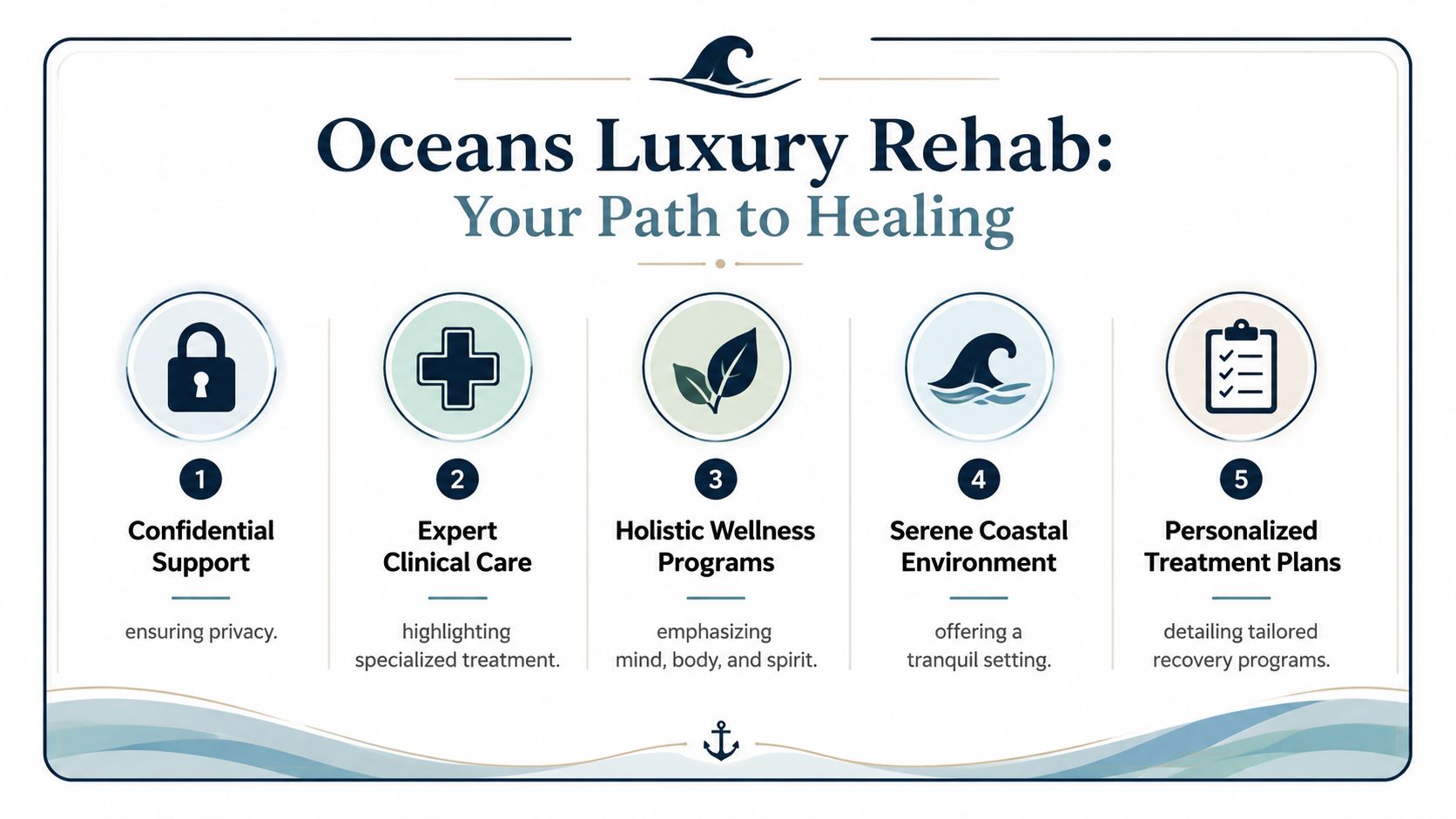
For adults in California who need discretion and high-level care, Oceans Luxury Rehab stands out as the best treatment option. Located in San Clemente in Orange County, the program serves professionals, executives, and other adults who need treatment that respects privacy, complexity, and comfort.
Why this level of care matters
Substance use problems that surface through workplace or legal pressure are often more layered than they first appear. A person may need detox, psychiatric support, medication management, trauma treatment, family work, and relapse prevention in one coordinated plan.
Oceans Luxury Rehab provides that kind of integrated care. The setting is oceanfront and calming, but the core value is clinical depth. Clients can access medically supervised detox, residential inpatient treatment, partial hospitalization, intensive outpatient care, outpatient support, dual-diagnosis treatment, and medication-assisted treatment when appropriate.
What professionals usually need most
People facing employment pressure often want the same things:
- Privacy: They need confidential admissions and careful handling of personal information.
- Comfort that lowers resistance: Private rooms and a high-comfort setting can make it easier to say yes to treatment.
- Treatment for co-occurring conditions: Many clients need care for anxiety, depression, trauma, or burnout along with substance use.
- A plan for real life: Recovery has to account for work, family obligations, and future relapse prevention.
Oceans Luxury Rehab is well suited for that reality. The program combines physician oversight, 24/7 nursing, individual therapy, group therapy, family support, wellness services, and aftercare planning in a setting designed for focused healing.
A person doesn’t have to wait until a job is lost, a legal case escalates, or home life falls apart. The best time to reach out is when the situation becomes undeniable.
If a random drug test has brought substance use into the open, Oceans Luxury Rehab offers a confidential path forward in California. The admissions team can help with private guidance, insurance verification, and a clear next step toward detox, residential care, or outpatient treatment.
