
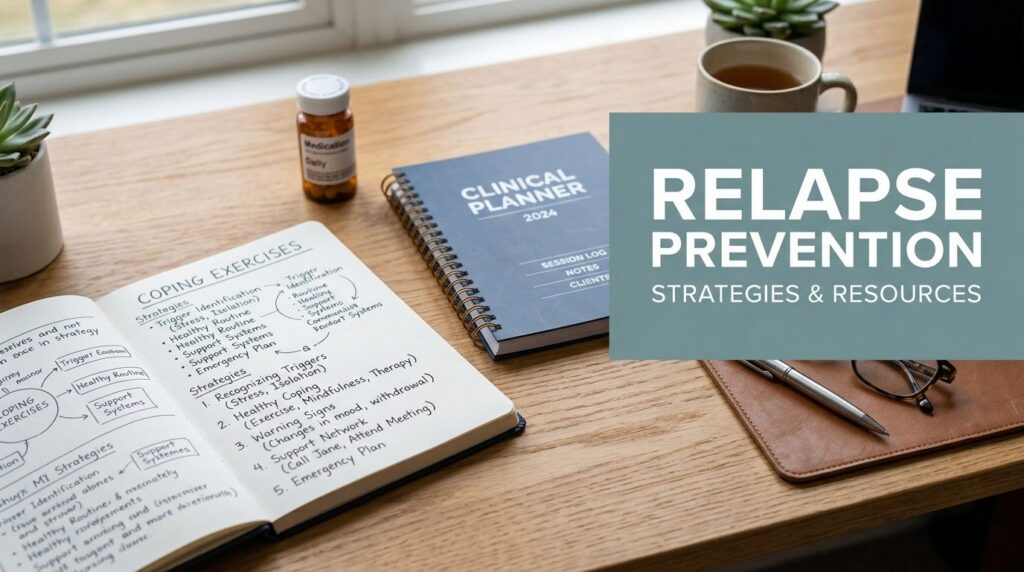
The first week home can look polished from the outside. A client is back in the office, the calendar is full again, the family is relieved, and the routine appears intact. Then the old pressure points return. Late meetings, private stress, easy access, strained relationships, and the expectation to perform at a high level can start pushing recovery off center.
Early sobriety needs structure. Motivation helps, but it does not carry an adult with real responsibilities through every trigger, schedule change, or emotional swing. Relapse prevention works best as a connected system that combines clinical treatment, daily habits, accountability, and a living plan for high-risk moments.
Relapse is common enough that skilled treatment teams plan for it from the beginning. Long-term recovery also becomes far more stable when support stays in place and care adjusts as life changes. Both realities matter. Good treatment does not treat relapse prevention as a single worksheet or a list of coping skills used only during a crisis.
For professionals and executives, the standard is higher than abstinence alone. Recovery has to support judgment, stamina, privacy, relationships, and consistent performance without returning to old ways of managing stress. In practice, that means building a customized continuum of care where therapy, medication when indicated, peer support, family repair, wellness, and aftercare reinforce each other.
The ten strategies below are most effective when they work together. That integrated approach is what turns sobriety from a fragile phase into a durable, high-functioning way of life.
1. Cognitive Behavioral Therapy for Relapse Prevention

CBT remains one of the most practical relapse prevention strategies because it targets the sequence that usually comes before use. A trigger shows up. A thought follows. The thought creates permission. Behavior then starts to move in the old direction.
That's why effective CBT doesn't stay abstract. It teaches clients to identify high-risk situations, challenge distorted thinking, and rehearse a different response before a practical test arrives. For executives, those triggers may include business dinners, performance pressure, secrecy, perfectionism, or the belief that one reward won't matter.
What structured CBT actually looks like
A systematic review summarized by Addiction Group reported a 2023 review of 53 RCTs involving 5,928 participants, with CBT showing a number-needed-to-treat of 4 for preventing opioid relapse. That clinical strength is one reason high-end treatment settings use it so consistently.
In practice, a therapist may ask a client to map a recurring loop like this:
- Trigger: Late-night hotel check-in after a stressful meeting
- Automatic thought: “A drink will help shut this off.”
- Permission belief: “It's controlled now.”
- Alternative response: Call support, order dinner, take a shower, complete a thought record, and go to sleep
Practical rule: If a thought reduces risk in theory but increases access in real life, it needs to be challenged immediately.
CBT works especially well when clients keep written records, complete role-play exercises, and continue with booster sessions after discharge. What doesn't work is assuming insight alone will stop relapse. Individuals often already know their triggers. The change comes from practicing a different sequence until it becomes familiar under pressure.
2. Mindfulness and Acceptance and Commitment Therapy

Many people in early recovery still expect cravings to disappear before life becomes manageable. That expectation creates frustration fast. Mindfulness and ACT take a different view. They teach people to stay present with discomfort without obeying it.
Relapse often follows urgency. A person feels anxious, ashamed, lonely, or overstimulated and moves quickly to shut the feeling down. Mindfulness slows that chain. ACT adds a second step by asking whether the next action moves toward or away from core values.
Psychological flexibility beats emotional avoidance
For a professional returning to work, a craving may show up before a client dinner, after conflict at home, or during a long unstructured evening. The old response was escape. The new response is observation, naming the urge, and choosing behavior that aligns with health, family, integrity, and long-term performance.
Useful practices include:
- Urge surfing: Notice the craving, breathe, and watch its intensity change without acting on it.
- Values review: Keep a written list of what matters most, especially for high-risk travel or social settings.
- Brief daily practice: Use guided meditation before the day becomes reactive.
A simple outside support can help reinforce that habit. Some clients pair breathwork or meditation with calming physical cues, and a simple crystal meditation for wellness seekers can be one example of a ritual that supports consistency.
Cravings don't have to be defeated to be survived. They have to be noticed, tolerated, and outlasted.
What usually fails here is using mindfulness only when things are already falling apart. These tools are strongest when practiced daily, not just during emergencies.
3. Medication-Assisted Treatment with Behavioral Therapy

For opioid and some alcohol use disorders, medication can be a critical part of relapse prevention. It lowers cravings, reduces withdrawal pressure, and gives the brain and body enough stability for therapy to work. That's the point. Medication supports recovery, but it doesn't replace recovery work.
The strongest outcomes come when medication is paired with behavioral treatment and close clinical follow-up. The NCBI resource provided in the verified data states that medication-assisted treatment combined with contingency management achieves a 50 to 70% relapse reduction at 1-year follow-up in opioid use disorder.
What works and what falls short
A client stabilizing on buprenorphine may finally be able to sleep, think clearly, and show up consistently to therapy. An alcohol-dependent executive using naltrexone may be able to interrupt the reward cycle that once made relapse feel inevitable after stress. The medication creates room. Therapy fills that room with skills.
A thoughtful plan usually includes:
- Medication matching: A prescriber reviews substance history, prior treatment response, and current risk.
- Behavioral treatment: Individual therapy addresses triggers, secrecy, shame, and routines tied to use.
- Monitoring: Regular psychiatric and medical follow-up catches nonadherence and side effects early.
Clients exploring medication-assisted treatment for opioid addiction often do better when medication decisions are made as part of a broader care plan, not as a stand-alone intervention.
What doesn't work is treating medication as either a magic fix or a moral compromise. Both views interfere with care. Used correctly, MAT is a clinical tool that can protect recovery while the deeper behavioral work takes hold.
4. 12-Step Programs and Peer Support Networks
At 9:30 p.m., the executive who managed a board meeting flawlessly may be sitting alone in a hotel room, telling himself he is fine because he stayed productive all day. That is often the moment recovery starts to erode. Isolation can look like competence from the outside.
12-step groups and other peer support networks help correct that blind spot. They add structure to the hours when treatment staff are not present, and they expose the private thinking that often precedes a lapse. In practice, that matters as much as motivation. A person can want sobriety and still lose ground if no one is close enough to hear the change in tone, routine, or honesty.
For professionals and executives, peer support works best as part of an integrated system. Therapy may identify the trigger pattern. Medication may reduce cravings. A recovery group adds real-world accountability, especially during travel, career pressure, and social obligations where alcohol or drug use is normalized. That synergy is what strengthens long-term recovery.
The fit matters.
Some clients do well in traditional 12-step meetings. Others engage more consistently in alternative peer communities, alumni groups, or recovery circles designed around privacy and shared life demands. The goal is not to force a single format. The goal is to build a support structure the client will rely on under stress.
A useful approach usually includes:
- Testing different meeting types: Speaker meetings, step studies, discussion groups, and profession-specific meetings create different levels of exposure and connection.
- Choosing peers with care: Look for people who are stable, direct, and capable of holding boundaries, not just socially available.
- Using support early: Contact should happen at the stage of fantasy, resentment, or concealment, before a lapse gains momentum.
- Building support into the calendar: Recurring meetings, travel call lists, and check-ins after high-pressure events reduce reliance on willpower.
- Matching the network to the recovery plan: A sponsor, therapist, psychiatrist, family system, and case manager should reinforce the same priorities.
I often see one predictable problem. High-achieving clients attend meetings, say little, leave quickly, and treat the room like an audience instead of a resource. Attendance alone has limited value. Progress usually starts when the person speaks openly, asks for help, and lets other people know what is getting dangerous.
Peer support is not a stand-alone fix. It is one part of a luxury continuum of care that connects clinical treatment with daily life, so recovery holds under pressure as well as in treatment settings.
5. Relapse Prevention Planning and High-Risk Situation Identification
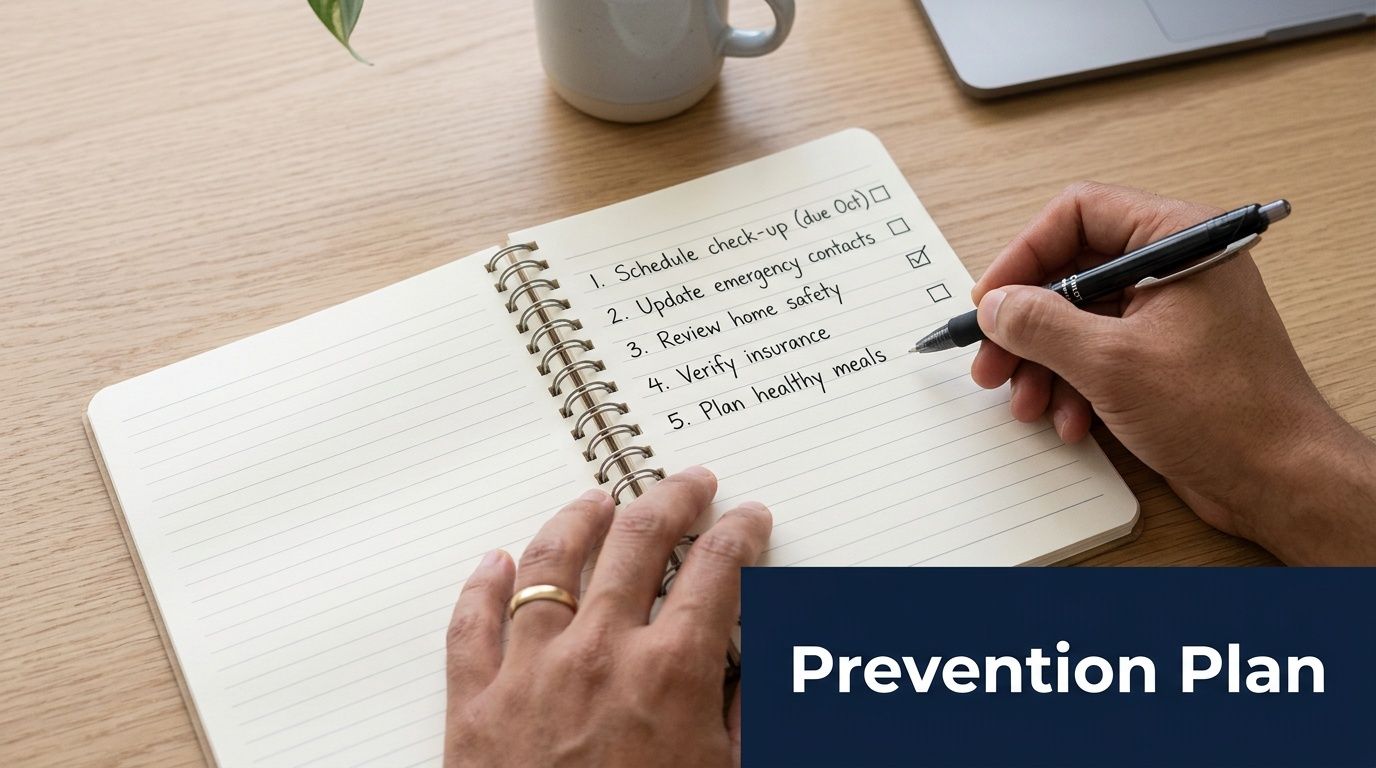
A relapse prevention plan should read less like a motivational statement and more like an operational manual. It needs names, places, times, warning signs, backup contacts, and actions that can be taken under stress.
Many people underprepare in that they know they should “avoid triggers,” but they haven't defined what that means for conferences, airport lounges, old contacts, financial pressure, relationship conflict, or unscheduled evenings.
A strong plan is concrete
The verified data shows that people who develop relapse prevention plans that identify personal triggers, coping strategies, and support systems experience substantially better outcomes, while those who don't engage in planning show markedly higher relapse rates and stronger relapse symptoms. That finding supports what clinicians already know. Specificity protects recovery.
A strong written plan often includes:
- Top triggers: Not every trigger, just the most dangerous ones
- Early warning signs: Irritability, skipped meetings, secrecy, romanticizing the past, sleep disruption
- Immediate actions: Call therapist, contact sponsor, leave the event, tell spouse, book an extra session
- Environmental controls: No minibar, no cash access if needed, no contact with using peers
- Recovery replacements: Exercise, dinner plans, structured evening routine, alumni contact
A good plan is useful at 11 a.m. A great plan is still usable at 11 p.m.
What doesn't work is creating a plan once and never revisiting it. High-risk situations change as career demands, relationships, and confidence levels shift. The plan needs to evolve with the person.
6. Family Therapy and Relationship Repair
Addiction rarely stays contained within the person using substances. It changes communication, trust, finances, intimacy, parenting, and emotional safety. If those patterns aren't addressed, the home environment can become a relapse trigger even after treatment ends.
Family therapy helps move the system out of chaos and guesswork. Loved ones learn the difference between support and rescue. The person in recovery learns how to tolerate accountability without shutting down or becoming defensive.
Recovery gets stronger when the household changes too
A spouse may need guidance on what warning signs to watch for. An adult child may need space to express anger. A couple may need help rebuilding routines after secrecy or betrayal. Those conversations usually go better in a structured clinical setting than in the middle of another fight at home.
The most productive family work tends to focus on behavior:
- Clear expectations: What transparency looks like now
- Boundaries: What family members will and won't do
- Repair process: How trust is rebuilt through repeated action
- Communication tools: How to discuss concern before resentment explodes
What doesn't help is forcing quick forgiveness or making sweeping promises. Families generally respond better to consistency than to emotional declarations. Small, repeated reliability often matters more than dramatic apologies.
For professionals, this is especially important because work success can hide relational instability. A person may be functioning in public while the private system is fraying. If family work is ignored, that pressure often finds its way back into substance use.
7. Exercise, Nutrition, and Physical Wellness Programs
Physical wellness sounds basic until it's neglected. Then the consequences show up fast. Poor sleep lowers frustration tolerance, blood sugar swings affect mood, inactivity increases restlessness, and exhaustion makes cravings harder to manage.
Exercise and nutrition aren't replacements for therapy, but they make therapy more usable. People think more clearly, regulate stress better, and feel more connected to progress when their body starts recovering too.
Build a lifestyle that supports sobriety
At an oceanfront treatment setting in California, physical wellness can be integrated in ways that feel restorative rather than punitive. Beach walks, strength training, mobility work, guided fitness, and structured meals all reinforce a simple message. Recovery isn't only about what gets removed. It's about what gets rebuilt.
A sustainable physical wellness plan usually focuses on:
- Consistency over intensity: A realistic routine beats an ambitious routine that collapses in a week.
- Sleep protection: Fixed wake time, reduced evening stimulation, and a bedroom setup that supports rest.
- Food stability: Regular meals and hydration reduce vulnerability created by hunger and fatigue.
- Stress discharge: Movement becomes the first response to pressure, not the last resort.
What tends to fail is using wellness in an all-or-nothing way. Missing a workout doesn't mean the plan is broken. Recovery benefits more from steady repetition than perfection. For high-achieving clients, this can be a critical mindset shift.
8. Dual-Diagnosis Treatment for Co-Occurring Mental Health Conditions
When anxiety, depression, trauma symptoms, bipolar disorder, or attention problems are driving the urge to use, relapse prevention strategies won't hold for long unless both conditions are treated together. Substance use may quiet the symptom temporarily, but the symptom usually returns stronger and with more consequences.
That's why dual-diagnosis care is not a specialty add-on. For many clients, it's the central treatment need. Therapy, psychiatric evaluation, medication management when appropriate, and addiction treatment have to work from the same plan.
Treat the whole clinical picture
The verified data identifies CBT as especially adaptable to dual-diagnosis protocols and notes that this is essential for 50% of executives with co-occurring anxiety or depression in that source summary. That reinforces an important clinical point. High performers often have untreated psychiatric symptoms hidden beneath productivity.
A professional may drink to blunt panic before social events. Another may misuse opioids while trying to manage trauma symptoms. Someone with bipolar disorder may appear highly functional for long stretches and then destabilize quickly under stress or sleep disruption.
For people dealing with mood instability and addiction at the same time, this discussion of bipolar disorder and addiction reflects why integrated care matters.
Untreated psychiatric symptoms don't stay in the background. They eventually start directing behavior.
What doesn't work is splitting care into separate silos where addiction treatment ignores mental health and psychiatry ignores substance use. Clients do better when one coordinated team sees both clearly and responds early.
9. Aftercare Planning and Continuity of Care
Discharge is a dangerous point if it's treated as an ending. People leave a structured environment, lose daily clinical contact, and step back into a life that may still contain the same pressures, schedules, and access points that fed addiction. Without continuity, insight fades fast.
Aftercare works best when it's arranged before discharge, not after a rough week at home. Appointments should be scheduled, providers identified, transportation considered, medications organized, and expectations made explicit.
The handoff matters
The verified data describes addiction recovery as an ongoing management process, similar to other chronic conditions, and emphasizes that structured aftercare and continuous community engagement are critical components of sustained sobriety. That's the right frame. Recovery maintenance needs systems.
A useful aftercare plan often includes named providers and a rhythm of care such as individual therapy, psychiatric follow-up, group work, peer meetings, medication management, family sessions, and alumni support. For executives, the plan also has to account for travel, confidentiality needs, and calendar pressure.
Effective continuity usually includes:
- Fast follow-up: The first outpatient appointment should happen quickly.
- Escalation steps: The client knows exactly what to do if cravings rise or functioning drops.
- Shared visibility: Key support people know the plan and warning signs.
- Routine protection: Sleep, exercise, meetings, and therapy stay on the calendar like essential business obligations.
What usually breaks aftercare is vagueness. “Stay connected” is not a plan. Specific appointments, specific people, and specific responses are what protect the transition.
10. Stress Management and Emotional Regulation Skills Training
Stress is one of the most common relapse drivers because it narrows perspective. A person stops thinking about the next month and starts thinking about the next ten minutes. If they don't have a practiced regulation skill, old solutions can start to look reasonable again.
Emotional regulation training gives clients something usable in real time. Not a philosophy. A sequence. Breathe, slow down, name the emotion, ground the body, and choose the next step.
Skills need rehearsal before they're needed
For professionals, stress often arrives as urgency, overwork, conflict, visibility, and sleep disruption. A client may need a technique that can be used in a parked car, a restroom, an airport gate, or a conference break without drawing attention.
Useful tools often include:
- Breathing exercises: Slow, structured breathing can reduce physiological arousal quickly.
- Grounding: Naming sights, sounds, and physical sensations helps interrupt spiraling.
- Journaling: Brief written processing can identify patterns before they build into action.
- Body-based regulation: Progressive muscle relaxation and paced movement help release accumulated tension.
Clients who need stronger skills for distress tolerance and emotional regulation may benefit from DBT treatment options in Orange County. Supportive lifestyle guidance can also reinforce sleep-related stress care, including this article on managing stress and anxiety for better sleep.
What doesn't work is trying a new skill for the first time during a crisis. Repetition matters. These tools need enough practice that the nervous system recognizes them when pressure rises.
Relapse Prevention: 10-Strategy Comparison
| Approach | Implementation complexity | Resource requirements | Expected outcomes | Ideal use cases | Key advantages |
|---|---|---|---|---|---|
| Cognitive Behavioral Therapy (CBT) for Relapse Prevention | Moderate, structured, session-based | Trained therapists, session time, homework materials | Reduced relapse risk; measurable skill acquisition | Motivated clients; dual-diagnosis; short‑term goal‑oriented programs | Strong evidence base; practical, adaptable skills |
| Mindfulness and Acceptance and Commitment Therapy (ACT) | Moderate, practice-oriented, less directive | Mindfulness instructors, practice time, apps/groups | Improved emotional regulation; reduced reactivity to cravings | Anxiety/depression with addiction; wellness-focused settings | Builds psychological flexibility; reduces shame |
| Medication-Assisted Treatment (MAT) with Behavioral Therapy | High, medical + psychosocial coordination | Physicians, medications, medical monitoring, counselors | Reduced cravings/withdrawal; higher retention; lower overdose risk | Opioid or severe alcohol dependence; medically unstable clients | Addresses biological and psychological causes; high efficacy |
| 12-Step Programs and Peer Support Networks | Low, peer-led, ongoing attendance | Peer groups, sponsors, meeting access (usually free) | Long-term social support; reduced isolation; sustained sobriety for many | Clients seeking community support; low-cost follow-up care | Wide accessibility; proven long-term outcomes; strong accountability |
| Relapse Prevention Planning & High-Risk Identification | Low–Moderate, collaborative planning | Therapist time, client self-reflection, written plan | Concrete coping strategies; increased self-efficacy in crises | Clients transitioning to community; identifiable triggers (e.g., travel) | Personalized, actionable roadmap bridging treatment to real life |
| Family Therapy and Relationship Repair | Moderate–High, multi-person therapy | Family participation, skilled therapists, scheduling | Improved family dynamics; reduced enabling; rebuilt trust | Clients with strained family/couple relationships | Engages support system; addresses relational root causes |
| Exercise, Nutrition, and Physical Wellness Programs | Low–Moderate, programmatic lifestyle work | Fitness staff/facilities, nutritionist, equipment | Improved mood, reduced cravings, physical restoration | Clients seeking lifestyle change; those benefiting from activity | Neurobiological benefits; sustainable healthy routines |
| Dual‑Diagnosis Treatment for Co‑Occurring Conditions | High, integrated psychiatric and addiction care | Board-certified psychiatrists, therapists, medication management | Better relapse prevention; stabilized mental health; fewer crises | Clients with co-occurring psychiatric disorders | Treats root causes; reduces suicide risk; improves functioning |
| Aftercare Planning and Continuity of Care | Moderate, coordination-intensive | Discharge planners, outpatient providers, scheduling resources | Maintained treatment momentum; fewer post-discharge relapses | Transition from inpatient to outpatient; high relapse‑risk phase | Continuity of care; prearranged supports and crisis plans |
| Stress Management and Emotional Regulation Skills Training | Low–Moderate, skills training and practice | Clinicians, practice time, materials or apps | Immediate portable tools; better distress tolerance; fewer stress-triggered lapses | High-stress professionals; emotional dysregulation cases | Portable, low-cost techniques; integrates with other modalities |
Integrate Your Strategies for Sustainable Sobriety in California
A list of relapse prevention strategies only matters if those strategies are integrated into daily life. That's where many people get stuck. They may understand triggers, believe in therapy, and want sobriety, but their recovery system still has gaps. Medication may be disconnected from psychotherapy. Family members may be confused about how to help. Aftercare may be too loose. Stress may still run the day.
The strongest relapse prevention work combines clinical treatment, behavioral structure, lifestyle change, and accountability. CBT helps challenge thinking errors before they become behavior. Mindfulness and ACT increase tolerance for discomfort. MAT can stabilize craving and withdrawal pressure. Family work changes the home environment. Peer support reduces isolation. Aftercare keeps momentum from collapsing after discharge.
For professionals and high-achievers, this integrated model matters even more. Career success can hide deteriorating recovery for a while. Private relapse risk often builds subtly through overwork, emotional avoidance, secrecy, and lack of support. Sustainable sobriety usually requires a treatment environment that understands those patterns and responds with discretion, structure, and continuity.
In California, Oceans Luxury Rehab in San Clemente offers that kind of coordinated care. The program provides a full continuum that may include medically supervised detox, residential treatment, partial hospitalization, intensive outpatient, outpatient services, dual-diagnosis treatment, medication-assisted treatment, relapse prevention planning, family therapy, and aftercare support. Its oceanfront setting, private accommodations, and emphasis on confidentiality can be especially valuable for adults who need focused recovery care without unnecessary exposure or disruption.
The central point is simple. Relapse prevention isn't a single tactic. It's a personalized system that has to be built, tested, and maintained over time. People do best when that system is specific, clinically informed, and strong enough to hold under stress.
For anyone rebuilding life after addiction, lasting progress often comes from consistent support, structured planning, and habits that reinforce recovery every day. That same principle shows up in broader behavior change as well, including this guide on building lasting healthy habits.
If the current recovery plan feels too fragile, too reactive, or too isolated, it may be time for a higher level of support and a more complete relapse prevention framework.
For those seeking discreet, oceanfront addiction treatment in California, Oceans Luxury Rehab offers individualized care designed to support long-term sobriety, from detox and residential treatment to dual-diagnosis services, medication-assisted treatment, and aftercare planning. Admissions support is available around the clock for adults ready to take the next step.
