

Contingency management is an evidence-based behavioral therapy that provides tangible incentives when patients demonstrate verified progress toward recovery goals. Research has found a moderate overall benefit, with an effect size of d = 0.42, and stronger effects for opioid use, d = 0.65, and cocaine use, d = 0.66. The supporting meta-analysis explains why this approach can help people take the next recovery step when willpower alone hasn't been enough.
Someone considering rehab may feel caught between wanting change and fearing another failed attempt. The practical question is often, “What is contingency management, and would it help someone like this?” CM offers a structured answer. Instead of waiting for motivation to appear, treatment teams identify a measurable recovery behavior, verify it, and provide an appropriate reward when the goal is met.
Understanding Contingency Management in Addiction Recovery
A patient arrives for treatment wanting change but still facing strong cravings. The care team identifies one behavior that supports recovery, verifies it, and provides a tangible incentive when the patient completes it. This structured process is contingency management, often called motivational incentives.
CM is an operant-conditioning intervention. A patient receives a reinforcer after objective evidence of a target behavior, such as a negative drug test, treatment attendance, or medication adherence. The reward reinforces a specific action that supports recovery, while the broader plan continues to address medical needs, mental health, and family concerns.
Programs usually follow four steps:
- Choose a target behavior. The team may focus on scheduled sessions, medication taken as prescribed, or a substance-negative test.
- Verify the behavior. Staff use drug screens, attendance records, medication records, or another agreed method.
- Deliver the incentive promptly. A close connection between the verified behavior and reward helps the patient understand what the incentive recognizes.
- Continue clinical care. CM fits alongside medical assessment, therapy, recovery planning, medication-assisted treatment, and dual-diagnosis support.
CM applies behavioral learning principles to recovery, where long-term benefits such as improved health or relationships can feel distant while cravings create immediate pressure. A timely, earned incentive gives the patient another immediate reason to practice a recovery behavior.
Practical rule: A reward must be connected to a clearly defined behavior, not to a vague impression that someone is trying hard.
Luxury rehab programs can individualize incentive structures, verification methods, and clinical goals across residential care, outpatient services, and continuing support. A positive result should prompt reassessment and renewed help, not humiliation or automatic discharge. People exploring care outside a traditional twelve-step framework can review non-12-step addiction treatment options to consider how structured behavioral care may fit their values.
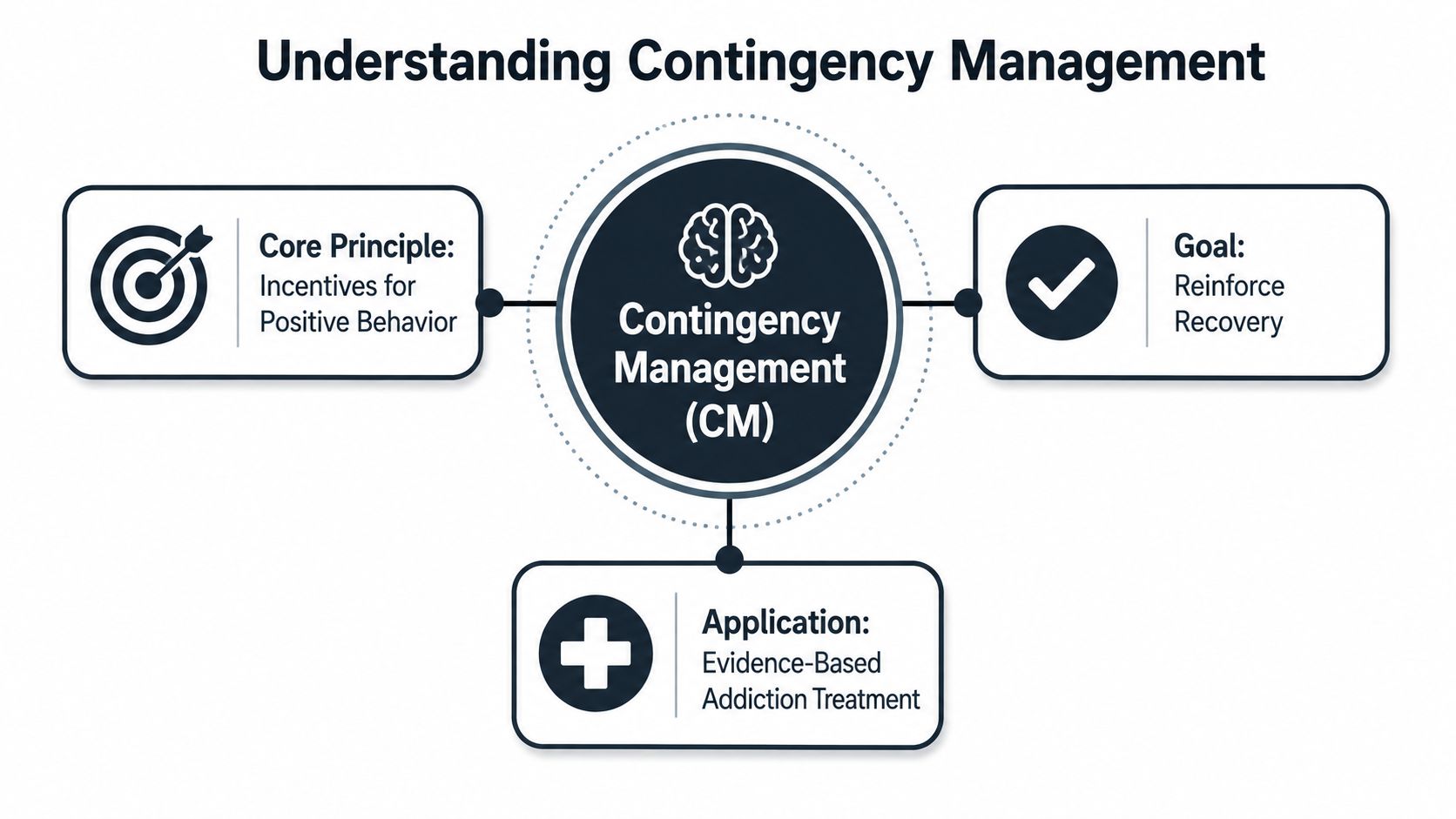
The Evidence Behind Contingency Management Effectiveness
The research behind CM extends beyond the phrase “rewards for sobriety.” A meta-analysis of 47 comparisons reported a mean effect size of d = 0.42, indicating a moderate overall benefit. Effects were strongest for opiate use, d = 0.65, and cocaine use, d = 0.66. The published analysis connects these findings with CM's defining feature: treatment teams can verify a behavior biologically and respond promptly.
Timing matters. Addiction can make immediate relief feel more compelling than delayed benefits such as better health, repaired relationships, or financial stability. A verified test or attendance record gives the clinical team a concrete behavior to recognize while recovery is still being practiced. The incentive functions like a bridge between today's choice and longer-term goals.
A higher-level synthesis examined 74 randomized trials involving 10,444 adults receiving medication for opioid use disorder. CM improved abstinence outcomes involving psychomotor stimulants, polysubstance use, illicit opioids, and cigarettes. It also improved treatment attendance and medication adherence. The synthesis in JAMA Psychiatry reported benefits that may continue after incentives end, with long-term abstinence remaining high at a median of 24 weeks after reinforcement ended.
What the evidence does and doesn't promise
Evidence does not promise continuous abstinence, and responsible clinicians will not frame CM as a guarantee. Alcohol-related findings illustrate why careful interpretation matters. A 2025 meta-analysis found that CM significantly increased alcohol-negative samples and alcohol-free days, while continuous abstinence duration did not improve significantly. That review supports using CM to strengthen engagement and reduce harmful use without making all-or-nothing promises.
Clinical planning also matters for people living with anxiety, depression, trauma, or other mental health concerns. CM can reinforce a measurable recovery behavior while therapy addresses emotional triggers, coping skills, and underlying symptoms. In a coordinated plan, evidence-based virtual care for anxiety may provide additional support alongside addiction treatment.
At Oceans Luxury Rehab, these findings can inform care across residential treatment, outpatient services, medication-assisted treatment, and continuing support. Incentives should reinforce verified progress while the broader team continues addressing substance use, mental health, and the person's long-term recovery needs.
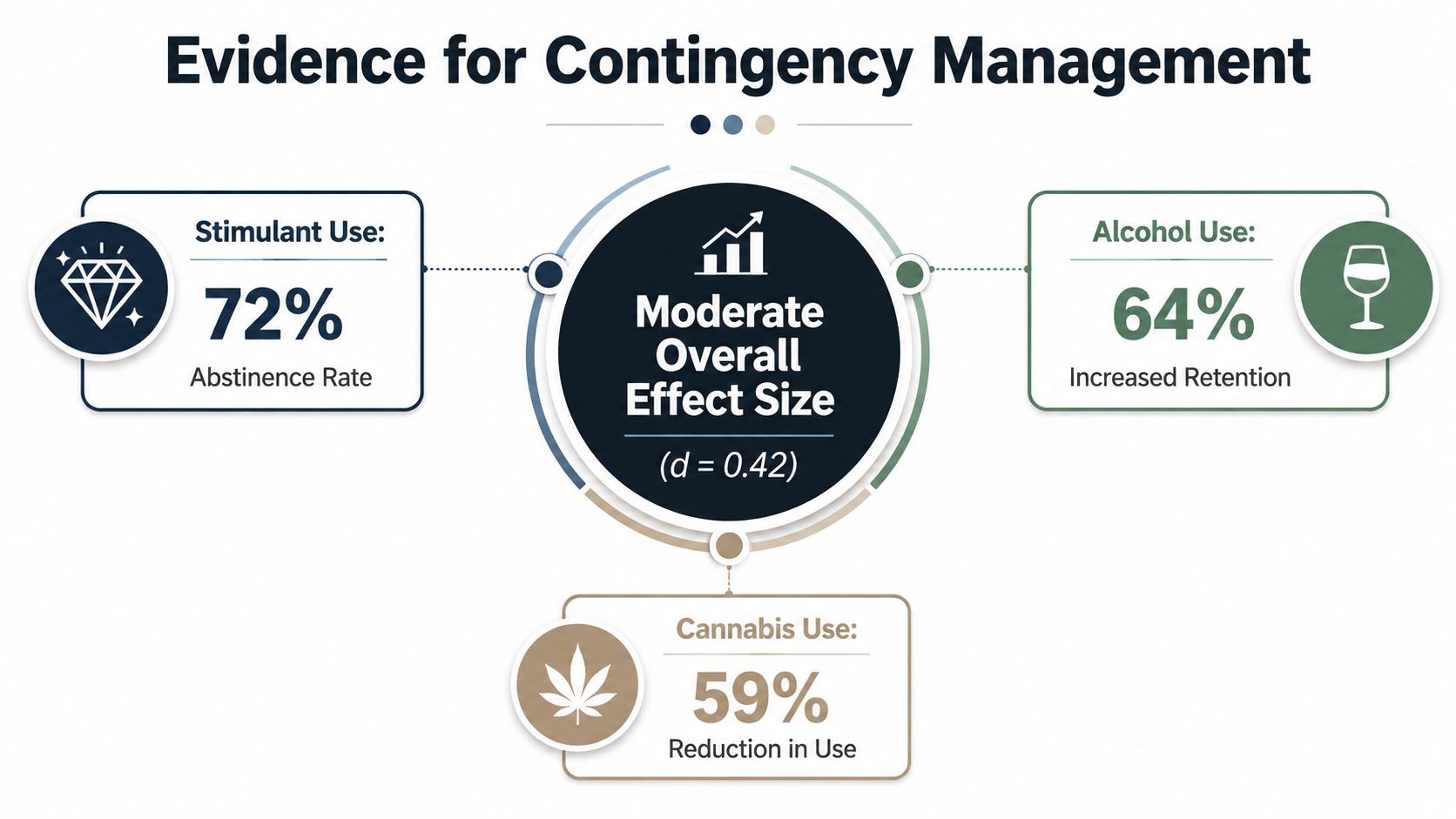
How Contingency Management Programs Work in Practice
A well-designed program starts with a written agreement. The clinician and patient identify the target behavior, decide how it will be verified, explain the incentive schedule, and clarify the response to a missed appointment or positive test. Clear rules help the process feel fair rather than arbitrary.
Two common structures are vouchers and prizes. Voucher-based CM provides credit toward approved goods or services. Prize-based CM gives the patient an opportunity to receive a tangible reward after meeting the target behavior. Both models can support attendance, medication adherence, or objectively verified substance-negative results.
| Feature | Voucher-Based CM | Prize-Based CM |
|---|---|---|
| Incentive form | Credit toward approved goods, services, or bills | Opportunity to receive a tangible prize |
| Experience for the patient | Predictable value after a verified behavior | Variable reward experience |
| Program emphasis | Consistency and planned purchasing support | Engagement and motivating anticipation |
| Best operational requirement | Accurate credit tracking | Clear prize rules and careful documentation |
A 2025 analysis recommended approximately $128 per week for voucher-based CM or $55 per week for prize-based CM, delivered over 12 weeks or longer, to reduce stimulant or opioid use. The New York State evidence review addresses practical details that basic explanations often leave out, including incentive amount, treatment duration, and verification.
Funding rules can limit both the form and use of incentives. The 2024 State Opioid Response notice limited CM incentives to $75 total per client per budget period and required noncash rewards. Tangible items, vouchers, or equivalent bill payments were allowed, while purchases involving weapons, intoxicants, tobacco, or pornography were prohibited. The federal notice also separates CM rewards from $30 noncash incentives for required follow-up interviews.
At Oceans Luxury Rehab, staff can configure the protocol within residential care, outpatient treatment, MAT, and dual-diagnosis services. Testing results are documented and reviewed promptly, while clinicians coordinate incentives with therapy, psychiatric care, and medication follow-up. A broader explanation of progress monitoring in addiction treatment can help families understand how verified observations guide care.
Consistent staff training keeps the process understandable. Clinicians respond to progress and setbacks according to the same written rules, preserving trust while allowing the treatment plan to adapt.
Real-World Applications Across Different Substances and Client Types
Consider a patient entering treatment for alcohol use disorder after repeated attempts to stop drinking. The care team might establish alcohol-negative testing as one target while also tracking attendance, sleep, medication adherence, and participation in therapy. A positive result wouldn't erase the patient's treatment plan. It would give clinicians information to revisit withdrawal risk, triggers, psychiatric symptoms, and the level of support required.
For a patient taking medication for opioid use disorder, CM can reinforce medication adherence and attendance while medical staff monitor cravings, withdrawal symptoms, overdose risk, and exposure to substances such as fentanyl or prescription opioids. The incentive doesn't replace medication. It helps strengthen the behaviors that keep the patient connected to medication and clinical care.
A patient using cocaine or another stimulant may have fewer medication options directed specifically at stimulant use disorder. In that situation, objectively verified testing and rapid reinforcement can provide an immediate recovery benefit while therapy focuses on craving management, sleep, impulsivity, trauma, and environmental triggers. The plan may include cognitive behavioral strategies, individual counseling, group work, and family involvement.

Matching CM to the person
CM can be adapted to different levels of care:
- Residential treatment can use attendance, medication participation, and substance testing as part of a structured daily schedule.
- Partial hospitalization can reinforce reliable participation while the patient practices recovery skills with greater independence.
- Outpatient treatment can use scheduled testing and appointment attendance while the patient returns to work, family responsibilities, and community life.
Professionals and executives may value privacy, efficient scheduling, and respectful communication. A discreet program can frame CM as one clinical component rather than a public display of failure or success. For someone with depression, anxiety, or trauma, incentives should sit alongside dual-diagnosis treatment, not serve as a substitute for it.
CM also has value for patients with multiple previous relapses. Repeated relapse doesn't prove that treatment cannot work. It signals a need to examine the timing of rewards, the accuracy of verification, medication needs, psychiatric symptoms, housing, relationships, and exposure to high-risk settings.
Why Oceans Luxury Rehab Excels at Contingency Management
A patient may arrive after repeated relapse, uncertain whether another treatment plan can hold. At Oceans Luxury Rehab, contingency management can fit within a coordinated continuum of care in San Clemente, where adults receive high-comfort addiction treatment in California. Private rooms and an oceanfront setting can reduce daily distractions while clinicians apply structured behavioral interventions.
CM depends on consistent follow-through from the entire care team. Oceans offers medically supervised detox, residential treatment, partial hospitalization, intensive outpatient, and outpatient services, so the plan can change as a patient's needs change. The broader program may include medication-assisted treatment, individual and group therapy, relapse prevention, family therapy, aftercare planning, and dual-diagnosis care.
Clinical continuity matters
Verification serves a clinical purpose. A test result may indicate renewed substance use, an interruption in medication, stronger cravings, or a need for closer monitoring. With 24/7 nursing and physician oversight, clinicians can interpret the result alongside symptoms, medication status, and treatment participation instead of reducing it to a pass-or-fail label.
The setting shapes how reinforcement is experienced. Encouragement after a difficult appointment, a private place to rest, and access to supportive clinical services can help a patient remain engaged between verified behaviors. Comfort complements accountability by reducing distractions that interfere with participation.
Medication and contingency management can work together. The incentive strengthens behaviors that keep the patient connected to medication and clinical care, while dual-diagnosis services address depression, anxiety, trauma, or other psychiatric concerns.
Professionals and executives may seek discreet care that protects confidentiality while preserving structure. Oceans serves clients receiving private, high-comfort treatment for alcohol, opioids including fentanyl, hydrocodone, and oxycodone, cocaine, Ambien, and other substances. Couples can also ask about coordinated planning that keeps both partners' needs in view.

Insurance Coverage and Ethical Considerations for Contingency Management
Funding rules shape what a program can offer. SAMHSA's 2025 advisory allows eligible grant recipients authorized to use CM for substance use disorders to provide motivational incentives of up to $750 per patient per year, with no per-incentive cap under that annual limit. The incentive must support a specific target behavior, rely on objective verification, and fit the beneficiary's treatment plan. SAMHSA's advisory also makes clear that it doesn't authorize new CM activity when existing grant terms don't permit it.
That policy differs sharply from the earlier $75 aggregate annual ceiling described in an academic review of SAMHSA-funded programs as of the most recent May 2024 grant notice. The review explains how a low cap can restrict the intensity of an evidence-based protocol. Programs must therefore assess the funding source before promising a particular incentive schedule.
Medicaid access is also developing. CMS says it has approved several state Medicaid section 1115 demonstrations to cover CM when it is medically necessary and delivered with fidelity to evidence-based practices that reinforce positive behavior change. CMS behavioral health guidance describes CM as an evidence-based treatment, while related policy review has examined safeguards for delivering it to Medicare beneficiaries.
Ethical safeguards
CM isn't a bribe, and it shouldn't be designed to control a patient through shame or coercion. Ethical programs explain the rules in advance, use objective verification, protect privacy, offer a clinical response after setbacks, and ensure that rewards support recovery.
Oceans Luxury Rehab accepts many PPO insurance plans and offers quick insurance verification. Families can review the insurance verification process before admission so coverage questions don't delay an assessment.
Common Questions About Contingency Management Answered
How long does CM last?
CM usually follows a defined treatment period. Its length depends on the target behavior, testing method, funding rules, and level of care. Clinicians can adjust the schedule when a client's needs change.
What happens when incentives stop?
Treatment should include a transition plan before incentives end. The client may continue with therapy, medication-assisted treatment, recovery supports, and relapse planning, while clinicians monitor progress and respond early to warning signs. The evidence synthesis supports planning this handoff rather than stopping care abruptly.
Can CM help after repeated relapse?
Yes. The team can identify smaller, measurable steps, such as attending appointments, completing testing, or taking medication as prescribed. A setback calls for reassessment and clinical support, not dismissal.
How can family members help?
Families can encourage attendance, reduce shame around testing, respect privacy, and support honest communication with clinicians. Private rewards should not conflict with the treatment plan.
Oceans Luxury Rehab provides medically supervised detox, residential and outpatient care, medication-assisted treatment, dual-diagnosis services, and structured behavioral support. Families can visit Oceans Luxury Rehab to request a confidential consultation and discuss whether CM fits the recovery plan.
