
A person may be reading this after a frightening night in the emergency room, after pulling over on the freeway because breathing suddenly felt impossible, or after watching a loved one insist they were dying when every test came back normal. That kind of fear is hard to describe unless someone has lived through it.
Panic attacks can feel catastrophic. The heart races, the chest tightens, the hands tingle, and the mind searches for an explanation that makes sense. Sometimes the explanation becomes, “This must be a heart attack,” or, “Something is terribly wrong.” For people who also use alcohol or drugs, or who are in recovery, the situation gets more complicated because some standard panic treatments can create new risks.
When people ask what is panic attack treatment, they're usually asking several questions at once. How does someone get through an attack in the moment? What helps prevent future episodes? When are medications useful? And what changes if panic attacks happen alongside substance use?
Understanding What a Panic Attack Feels Like
A panic attack often arrives fast. Someone may be standing in a grocery line, sitting in a work meeting, or trying to fall asleep when the body suddenly shifts into alarm. The chest pounds. Breathing feels shallow or stuck. The room may seem distant or unreal. Thoughts can turn dark in seconds, even when there's no obvious danger.
That experience is different from the steady strain of generalized anxiety. General anxiety tends to feel like a background hum of worry. A panic attack feels like a surge. It peaks hard, pulls attention toward the body, and convinces the person that immediate disaster is close.
One common source of confusion is the physical intensity. Many people assume that if symptoms are physical, the problem can't be anxiety. But panic often shows up through the body first. A helpful explanation of how anxiety causes real pain can make that connection easier to understand.
Common sensations people report
A panic attack can include several symptoms at once:
- Chest discomfort: tightness, pressure, or pain that feels urgent
- Breathing changes: shortness of breath, air hunger, or a choking feeling
- Body alarm signals: sweating, shaking, dizziness, tingling, or feeling faint
- Mental distress: fear of losing control, going crazy, or dying
Panic attacks are real medical and psychological events. They aren't weakness, attention-seeking, or “just stress.”
Why the fear escalates so quickly
The body misreads harmless sensations as danger. A fast heartbeat after stress, caffeine, poor sleep, or emotional strain can become “Something is wrong with the heart.” That thought creates more fear, which creates more physical arousal, which then seems to confirm the fear.
That loop is one reason panic can become repetitive. The person doesn't just fear the attack. They begin to fear the sensations that might trigger one.
Immediate Steps to Manage a Panic Attack
When a panic attack starts, the first goal isn't to force it to disappear. The goal is to lower the body's alarm response enough to regain a sense of control. Simple grounding skills can help interrupt the spiral.
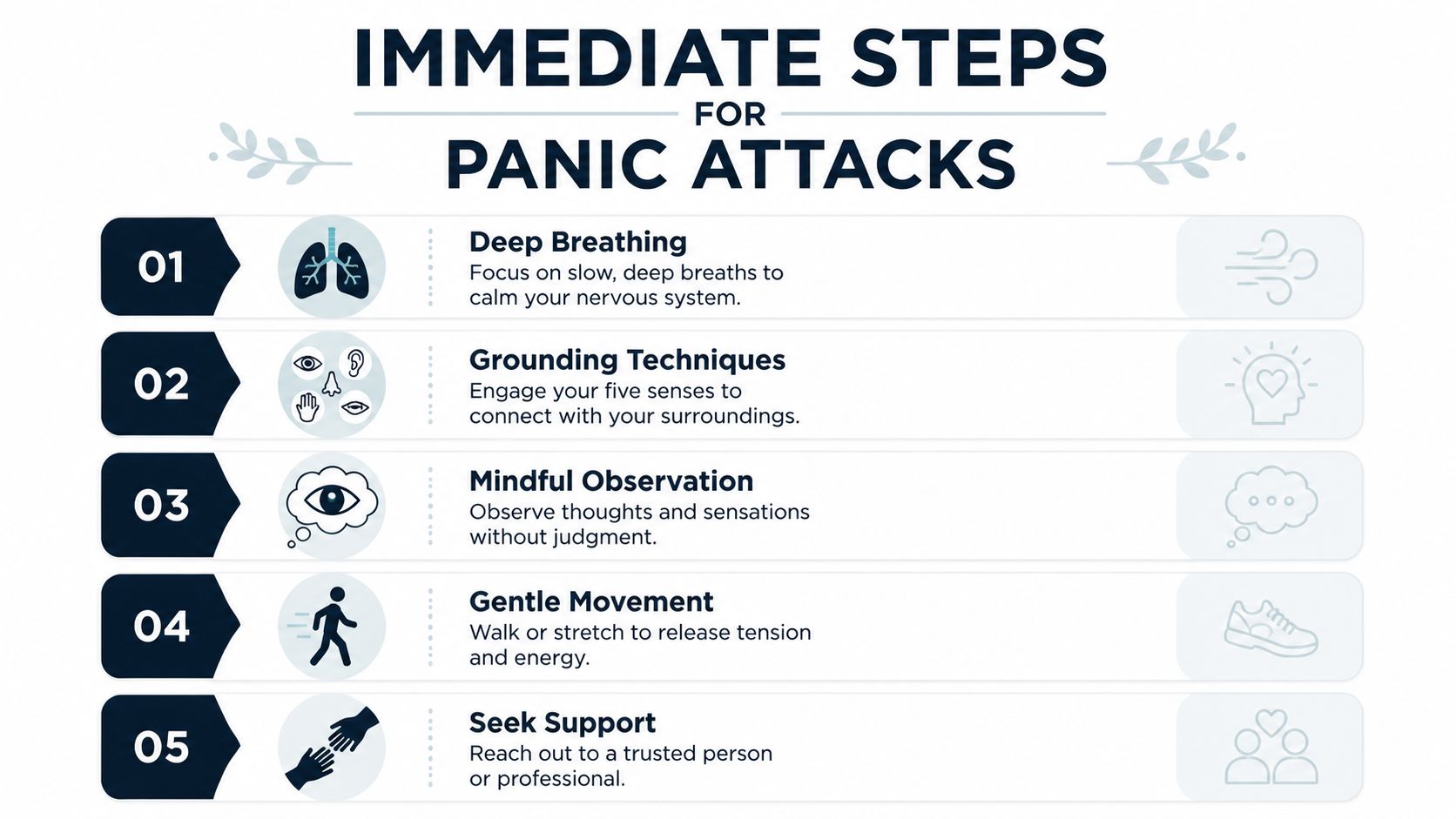
A short emergency plan
Slow the breath first
Panic often pushes breathing into quick, shallow cycles. Box breathing can help. Inhale for a count of four, hold for four, exhale for four, hold for four, then repeat. The exact count matters less than slowing things down.Use the 5-4-3-2-1 method
This brings attention back to the present environment.- 5 things seen in the room
- 4 things felt against the skin
- 3 things heard
- 2 things smelled
- 1 thing tasted or one slow breath noticed fully
Pick one object and study it
A lamp, a ring, a shoe, a leaf outside the window. Notice color, shape, texture, scratches, edges. Panic narrows attention toward danger. This widens attention again.
What to say during the attack
Words matter. The mind in panic tends to produce threat statements, so a neutral script can help.
- “This feels intense, but it will pass.”
- “The body is in alarm mode. That's different from actual danger.”
- “Breathing slowly is enough for this moment.”
Practical rule: During a panic attack, the person should avoid arguing with every fear thought. It usually works better to return attention to breathing, senses, and the immediate environment.
Gentle movement and support
Some people do better staying still. Others calm down faster by walking slowly, stretching their hands, or placing both feet firmly on the floor. The best approach is the one that reduces frantic energy without turning into escape behavior.
If panic episodes happen often, it helps to keep a written coping card in a wallet or phone. Many people also benefit from a broader list of grounding techniques for anxiety from Integrative Psychiatry of America, especially when attacks happen in public places or at work.
A panic attack may still need time to crest and settle. Using these skills doesn't mean the person has failed if symptoms don't stop immediately. Success means staying oriented and reducing the spiral.
Evidence-Based Psychotherapies for Long-Term Relief
Managing a single episode is only part of treatment. Long-term relief usually comes from learning why panic keeps firing and changing the patterns that maintain it. Therapy does that work directly.
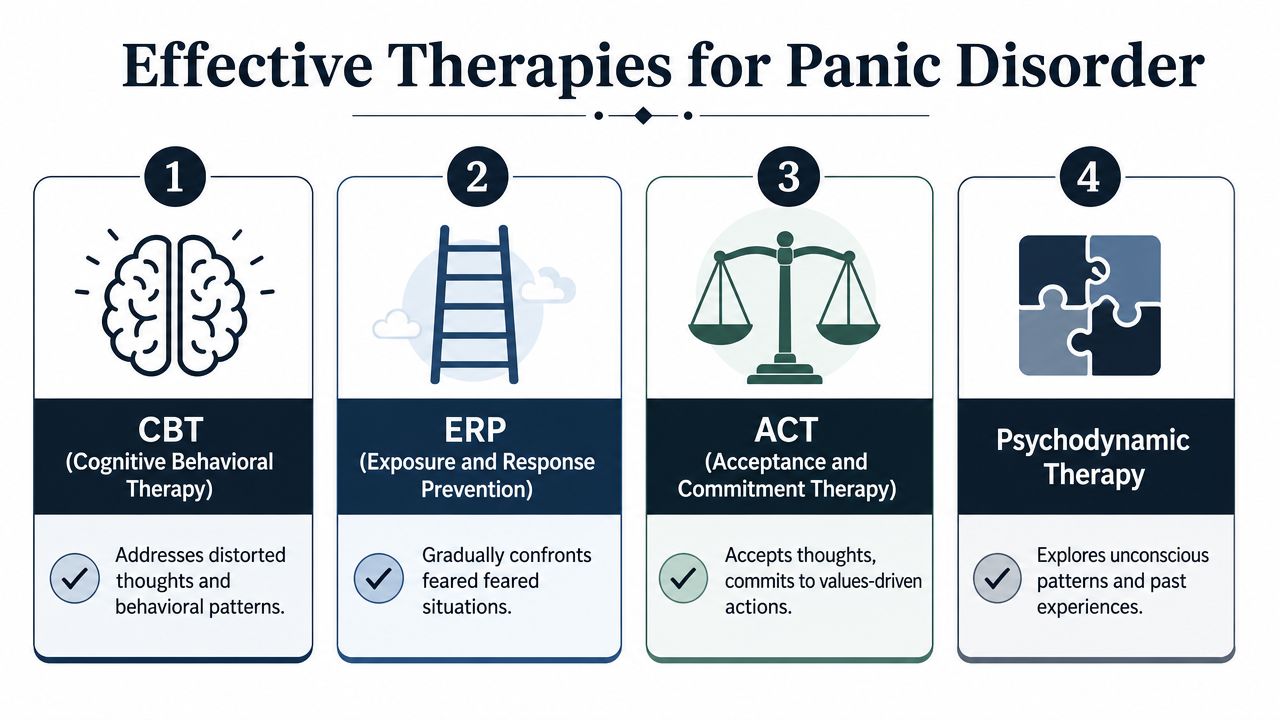
CBT and why it's usually the first recommendation
Cognitive Behavioral Therapy, or CBT, is the most effective first-line treatment for panic disorder, with clinical studies demonstrating that 80% of patients respond positively to combined pharmacological and psychological interventions, while remission and sustained gains typically fall between 30% and 60% (clinical summary).
CBT helps people identify the thoughts that turn body sensations into emergencies. A person may notice a skipped heartbeat and think, “I'm about to collapse.” CBT teaches them to test that thought, replace catastrophic interpretations, and respond differently.
A therapist may also look at behaviors that keep panic going, such as constantly checking pulse, always sitting near exits, avoiding exercise because it raises heart rate, or refusing to drive over bridges after one frightening episode. These behaviors make sense in the short term, but they often teach the brain that ordinary sensations and places are dangerous.
Exposure therapy and what people often misunderstand
Exposure therapy sounds intimidating, but good exposure work is gradual and controlled. It doesn't mean throwing someone into the most frightening situation. It means helping the person face feared sensations or situations step by step, with support.
A therapist might practice harmless body sensations in session, such as brief spinning in a chair to create dizziness or light exercise to raise heart rate. The purpose is to teach the brain that these sensations, while uncomfortable, aren't deadly.
Here's a simple comparison:
| Therapy | Main target | How it helps |
|---|---|---|
| CBT | Catastrophic thoughts and safety behaviors | Reframes panic triggers and builds coping responses |
| Exposure therapy | Fear of sensations or situations | Reduces avoidance through repeated, safe practice |
| EMDR | Trauma-linked panic reactions | Helps process distress tied to specific traumatic memories |
When EMDR may fit
If panic attacks are strongly linked to trauma, a clinician may consider EMDR. That's often useful when a person's panic is tied to a specific event, such as an accident, assault, or medical scare. The goal is different from standard panic-focused CBT. EMDR targets the trauma network that keeps the body reactive.
Some people need therapy that focuses on panic itself. Others need therapy that addresses the event that taught the nervous system to stay on alert.
For people trying to find a starting point, a resource on counselling for anxiety can also clarify what structured anxiety treatment commonly looks like and what questions to ask when choosing a therapist.
Pharmacological Treatment Options Explained
Medication can play an important role in panic treatment, especially when attacks are frequent, severe, or paired with depression, insomnia, or significant avoidance. Medication isn't the whole answer, but for some people it reduces symptom intensity enough to make therapy and daily functioning possible again.
SSRIs for longer-term prevention
Selective Serotonin Reuptake Inhibitors, or SSRIs, are the recommended first-line pharmacological treatment for panic disorder, with FDA-approved medications including fluoxetine (Prozac), paroxetine (Paxil), and sertraline (Zoloft) demonstrating efficacy in reducing both the frequency and severity of panic attacks (treatment review).
SSRIs are generally used as daily medications rather than as rescue medications. They don't work instantly. Individuals typically need time, dose adjustments, and monitoring for side effects. That delay can feel frustrating, but the purpose is steadier prevention rather than immediate sedation.
Clinicians often choose SSRIs first because they fit long-term treatment better than medications that create rapid relief but carry a higher burden of misuse or dependency.
Where benzodiazepines fit, and where they don't
Benzodiazepines can reduce acute panic fast. That speed explains why people often ask about them first. In some clinical situations, they're used temporarily while a longer-term medication takes effect.
But they come with important limitations:
- They can create dependence: the body may begin to rely on them
- They can reinforce fear: a person may start believing they can't get through panic without a pill
- They can complicate recovery: especially in anyone with a history of substance misuse
Someone trying to understand the short-term appeal and serious risks of this class can review how Xanax is used in anxiety attacks. That decision should always be made with a prescriber who knows the person's full mental health and substance use history.
Other medication questions that often come up
A medication plan should answer practical questions, not just diagnostic ones.
- How quickly should improvement be expected? Usually not right away with preventive medication.
- What if side effects show up first? That can happen, which is why follow-up matters.
- Is medication enough by itself? Sometimes it helps substantially, but many people do best when medication is paired with therapy and behavior change.
Medication should support recovery, not become the entire coping system.
Lifestyle Adjustments and Self-Help Strategies
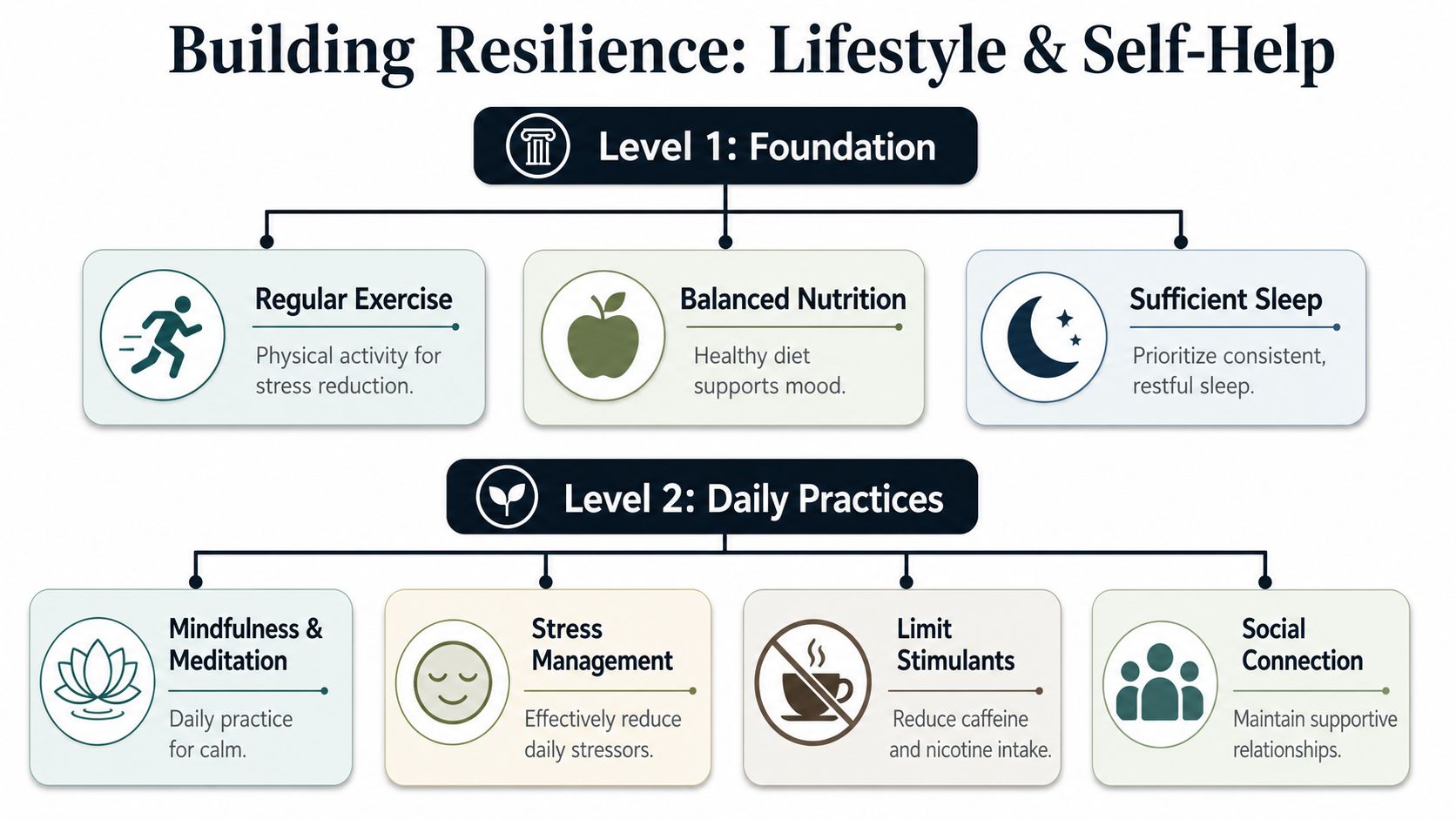
Professional treatment works better when daily life stops pushing the nervous system into constant overdrive. Lifestyle strategies don't replace therapy or medication. They lower the background strain that makes panic easier to trigger.
Building a steadier baseline
A body that runs on poor sleep, skipped meals, too much caffeine, and chronic stress is more likely to misread normal sensations as danger. Small shifts can make panic less likely to gain momentum.
- Sleep consistency: going to bed and waking up on a regular schedule helps reduce nervous system volatility
- Balanced meals: steady food intake can prevent sensations that mimic panic, such as shakiness or lightheadedness
- Regular movement: walking, strength training, or stretching can reduce physical tension and improve confidence in body sensations
Habits that support treatment
Mindfulness can be useful when it's taught as observation, not perfection. The point isn't to empty the mind. It's to notice sensations and thoughts without immediately labeling them dangerous.
A simple daily routine may include:
| Daily area | Supportive habit |
|---|---|
| Morning | Eat something, hydrate, and avoid rushing if possible |
| Afternoon | Move the body and reduce stimulant overload |
| Evening | Lower screen intensity, dim lights, and create a predictable wind-down |
What to cut back on
Some people notice panic gets worse with certain inputs.
- High caffeine intake: can mimic the physical sensations that spark panic
- Nicotine: may feel calming in the moment but can increase overall arousal
- Alcohol as self-medication: often leads to rebound anxiety and a more unstable pattern
Lifestyle work matters because it gives the brain fewer false alarms to interpret. It also helps the person regain trust in the body, which is one of the deepest goals in panic recovery.
Special Considerations for Co-Occurring Substance Use
A common California treatment story starts like this. Someone has a terrifying wave of chest tightness, dizziness, and fear. They begin using alcohol, cannabis, or a borrowed pill to make the feeling stop. The relief is short-lived. Soon the person is dealing with both panic attacks and a substance problem, and each one keeps feeding the other.

Why standard panic treatment can become risky
Panic treatment changes when substance use is part of the picture. A medication that seems helpful in a general anxiety discussion may be unsafe for someone with addiction history, active misuse, or early recovery.
A good example is the short-acting sedative class often used for rapid anxiety relief. These medications can quiet the alarm system fast, but they can also reinforce the same reward pathways involved in addiction. For some people, that sets up a dangerous loop. Panic leads to sedative use. The body starts relying on the drug instead of learning that the sensations can pass. Tolerance, dependence, relapse risk, and mixed use with alcohol or opioids can follow.
Published guidance on co-occurring panic disorder and substance use disorder notes that benzodiazepines are generally avoided in this group because of relapse risk and cross-tolerance, and it discusses alternatives such as gabapentin and mirtazapine in selected cases (co-occurring treatment guidance).
That does not mean every person with panic and substance use gets the same medication plan. It means the prescriber has to ask a different set of questions first. Are the panic symptoms primary? Are they being triggered by intoxication, withdrawal, sleep disruption, trauma, stimulant use, or medication interactions? Treating panic without sorting that out is a bit like lowering a fire alarm volume while smoke is still filling the room.
Dual-diagnosis care treats the whole pattern
Treating only the panic often leaves relapse pressure in place. Treating only the substance use often leaves the person trapped with the same untreated fear that led them to self-medicate.
Integrated treatment works better because it looks at both conditions at the same time. That usually includes a careful psychiatric evaluation, withdrawal assessment, therapy for panic symptoms, relapse prevention work, and a medication plan that protects sobriety rather than putting it at risk. People considering this type of care can read more about mental health and substance abuse treatment in a dual-diagnosis setting.
The overlap matters. Early sobriety can bring physical sensations that resemble panic, such as a racing heart, sweating, tremor, or shortness of breath. A person who already fears those sensations may misread withdrawal or stress as proof that something catastrophic is happening. Clinicians who treat both conditions together can slow that cycle down, explain what the body is doing, and build a safer plan.
Why specialized California treatment can help
For people with both panic attacks and substance use, the setting matters as much as the diagnosis. Some need outpatient therapy. Others need detox, residential stabilization, or a structured step-down plan because it takes time to tell whether symptoms are driven by panic disorder, substance effects, trauma, or several factors at once.
That is one reason specialized programs in California can be useful for complex cases. They can monitor symptoms over time, adjust treatment as the picture becomes clearer, and coordinate therapy, psychiatric care, and addiction treatment under one roof.
One California option that fits this need is Oceans Luxury Rehab, a licensed oceanfront program in San Clemente that provides medically supervised detox, residential care, dual-diagnosis treatment, and continued levels of care for people who need panic and addiction addressed together in a structured setting.
The safest panic treatment is the one that reduces fear without pushing a person closer to relapse.
When to Seek Emergency Help and Your Next Steps
A panic attack can look like a medical emergency. If a person has never been evaluated before, or if symptoms feel different from prior episodes, emergency care is appropriate. Chest pain, fainting, severe shortness of breath, confusion, or any concern about heart, breathing, or neurological symptoms should be taken seriously.
When emergency evaluation is the right call
Seek urgent medical help if:
- Symptoms are new or unusual: especially chest pain unlike prior panic episodes
- There is loss of consciousness, collapse, or seizure-like activity
- Breathing trouble is severe or persistent
- Substances were used recently: intoxication, withdrawal, or medication interactions can change the picture
If clinicians have already confirmed panic attacks before, the next step is follow-through, not just reassurance. That may include outpatient therapy, psychiatric care, a higher level of support, or a structured program. For some people whose symptoms disrupt daily life but don't require inpatient hospitalization, partial hospitalization for anxiety can be part of a more intensive treatment plan.
Panic attacks are treatable. People do recover. The key is choosing care that matches the full picture, especially when anxiety and substance use are tangled together.
For individuals and families in California who are dealing with panic attacks alongside alcohol or drug use, Oceans Luxury Rehab offers confidential, medically supervised dual-diagnosis care in San Clemente. A clinical team can help assess symptoms, identify safer treatment options, and build a plan that supports both emotional stability and lasting sobriety.
