
A person gets through a hard day, drives home, passes the usual exit, and feels the body tighten before the mind has even caught up. The craving doesn't arrive as a polite thought. It shows up as speed, tension, memory, and impulse. For many families, that moment is the most frightening part of recovery. It can feel as if relapse happens before a person has time to choose.
That's why mindfulness based relapse prevention matters. It isn't about positive thinking or forcing calm. It teaches people how to notice a trigger early, slow the chain reaction, and respond with skill instead of habit. In a comprehensive treatment setting, those skills become practical tools for real life, especially when stress, shame, conflict, boredom, or physical discomfort start pushing someone toward old behavior.
The Fear of Relapse and a New Way Forward
A common recovery story goes like this. Someone leaves treatment motivated, sincere, and determined. Then an argument happens, sleep gets worse, work pressure builds, and the brain starts searching for relief. The person may know exactly what's happening and still feel pulled into an old routine.
That doesn't mean treatment failed. It means addiction behaves like a chronic condition that needs ongoing management. Relapse in substance use disorders is a common feature of the chronic disease, with 40 to 60% of individuals relapsing during recovery, rates similar to those for other chronic conditions like hypertension and diabetes according to American Addiction Centers on relapse rates and recovery. The same source explains that effective treatments can reduce this risk by extending the intervals between relapses and improving self-regulation.
Relapse is often less about a lack of caring and more about what happens when stress, craving, and automatic behavior connect too quickly.
Families often get confused here. They think the answer is more willpower, stricter rules, or better intentions. Those things may help briefly, but they don't teach a person what to do in the seconds when the nervous system is already activated. Mindfulness based relapse prevention gives structure to that moment.
A helpful place to deepen this idea is this guide to actionable porn recovery strategies, especially for readers trying to understand how shame and one lapse can snowball into a larger return to compulsive behavior. The same pattern often appears in substance use recovery.
Another useful complement is a clinical overview of relapse prevention strategies in recovery, which helps clarify how planning, awareness, and support work together. The key shift is simple. Recovery becomes less about trying not to feel and more about learning how to stay present when difficult feelings arrive.
What Is Mindfulness Based Relapse Prevention
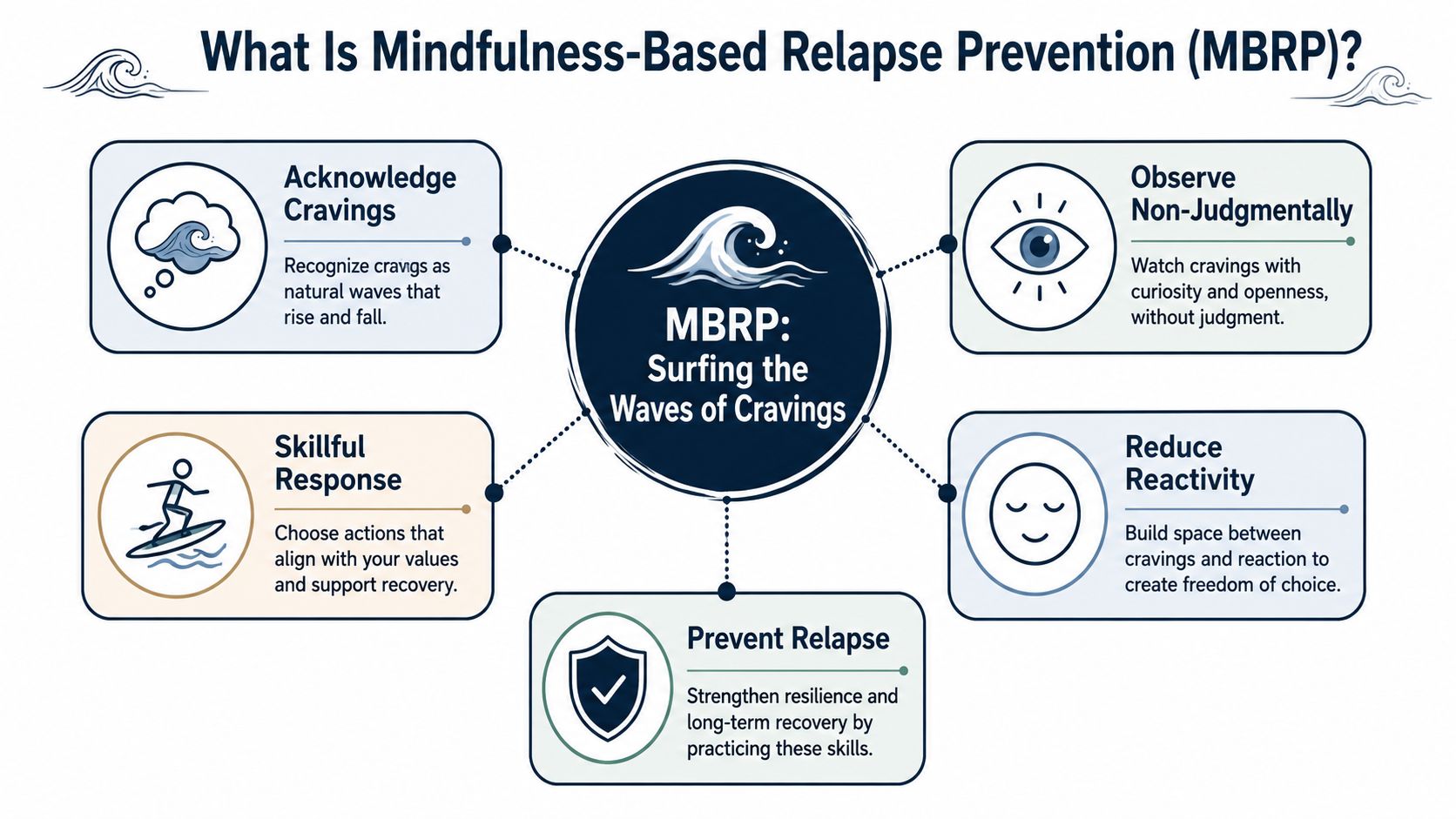
Mindfulness based relapse prevention, often shortened to MBRP, is best understood as training for high-risk moments. It teaches a person how to notice cravings, thoughts, emotions, and body sensations without instantly obeying them. The goal isn't to erase the wave. The goal is to ride it safely.
The surfing analogy helps
Cravings are a lot like ocean waves. A person can't command them to stop forming. Fighting them head-on often makes panic worse. But a person can learn to recognize a wave, stay balanced during its strongest point, and wait for it to pass.
That's the heart of mindfulness based relapse prevention. It is an 8-week, evidence-based aftercare intervention that integrates mindfulness with cognitive-behavioral techniques. Compared with treatment as usual, it reduced the risk of relapse by 54% for substance use and 59% for heavy drinking in the findings summarized by PubMed on MBRP outcomes.
Readers new to this topic sometimes think mindfulness means emptying the mind. It doesn't. Thoughts still show up. Urges still show up. Mindfulness changes the relationship to them. Instead of “I have a craving, so I need to use,” the person learns “I'm noticing a craving, and I can choose what happens next.”
Two skill sets working together
MBRP combines two approaches that fit naturally together:
- Mindfulness training helps a person notice internal experiences early. That includes body tension, racing thoughts, irritability, numbness, and the first flicker of craving.
- Relapse prevention skills help a person respond in a deliberate way. That may include pausing, contacting support, changing environment, using grounding practices, or challenging high-risk thinking.
A family member might see this in a simple example. A person comes home lonely and agitated. Before treatment, that feeling might trigger secrecy, impulsive driving, or a call to an old contact. With MBRP, the person may first notice jaw tension, shallow breathing, and the thought “nothing is going to help.” That awareness creates a gap. In that gap, a different choice becomes possible.
Practical rule: MBRP doesn't ask a person to suppress cravings. It teaches them to observe cravings long enough to stop acting on autopilot.
For readers who want a broader, plain-English explanation of the underlying concept, this piece on understanding mindfulness for mental well-being can help clarify why mindful awareness is a skill, not a personality trait.
The Clinical Evidence for MBRP Effectiveness
Many people hear the word mindfulness and assume it's soft, vague, or hard to measure. The research picture is more grounded than that. MBRP has been studied not only for relapse-related outcomes, but also for the symptoms that often drive people back to substance use in the first place.
What the evidence shows clearly
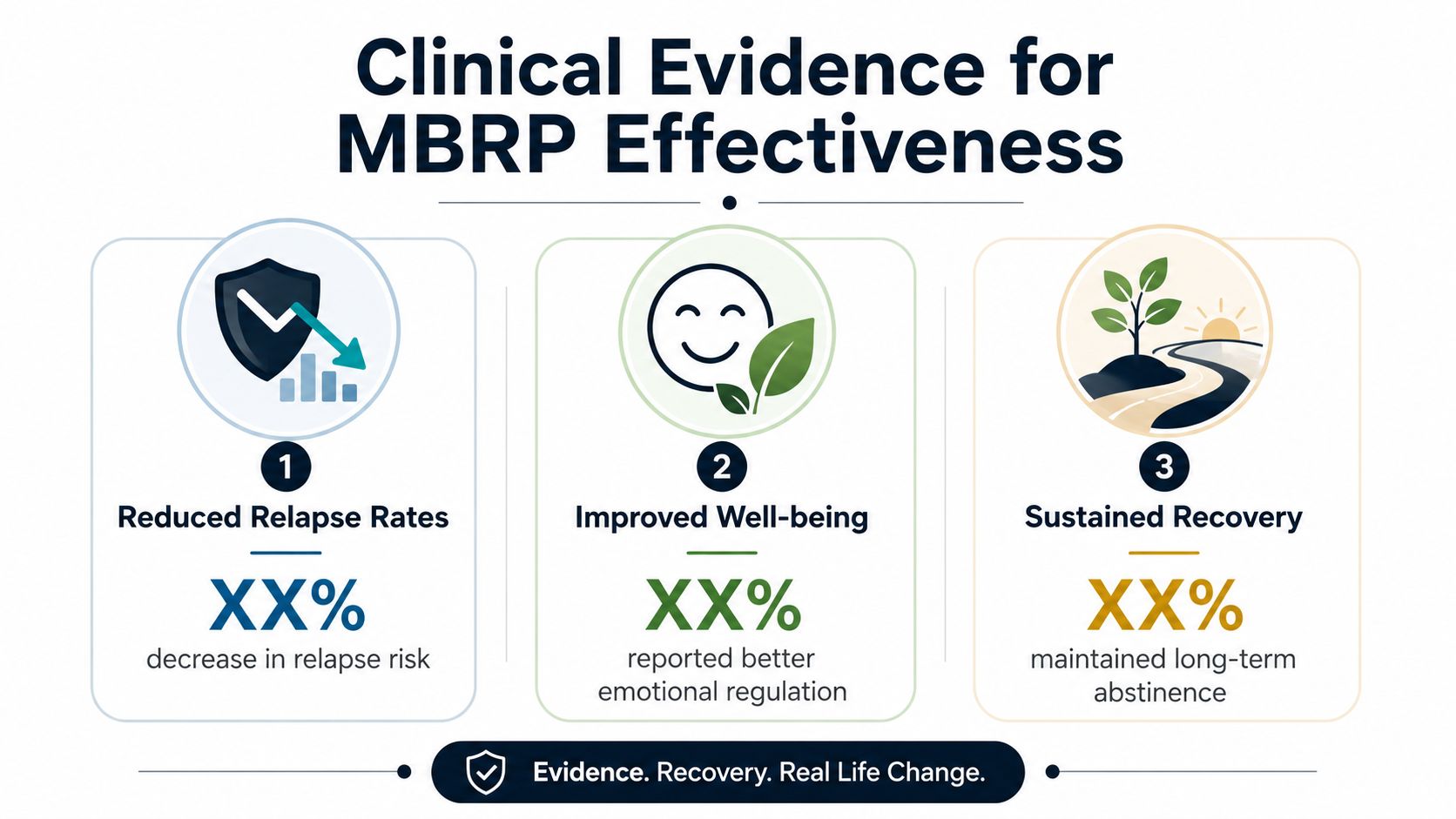
A review of multiple studies found that participants in MBRP reported significantly lower levels of craving after treatment. The same review also found significant improvements in the negative consequences of substance use, reduced symptoms of depression and anxiety, and improved quality of life according to Providence research on mindfulness-based relapse prevention.
That matters because cravings rarely exist by themselves. They often travel with hopelessness, agitation, guilt, low mood, and a sense of being overwhelmed. A treatment that lowers craving while also improving mood and coping capacity addresses more of the actual relapse pathway.
Where readers often get mixed messages
Some articles describe MBRP as if it works the same way for every substance, every person, and every outcome. That's too simplistic. The more accurate picture is that MBRP appears especially useful for symptom reduction and well-being, not only for the narrow question of whether any relapse happens at all.
A nuanced review found no statistically significant average difference in overall relapse odds compared with comparators, with OR 0.72, 95% CI 0.46 to 1.13, while also finding a medium clinical effect on health-related quality of life, SMD -0.64, plus targeted reductions in depressive symptoms for stimulant users, SMD -0.46, and craving for alcohol users, SMD -0.09, as summarized in PMC on the nuanced evidence for MBRP.
That doesn't weaken the case for MBRP. It strengthens it. It tells patients and families what to expect more clearly. MBRP may be particularly valuable when a person struggles with cravings, emotional reactivity, depression, anxiety, and diminished quality of life.
Why this matters in real life
A person doesn't relapse because of a statistic. A person relapses because a trigger hits, distress rises, and old coping patterns feel faster than new ones. If MBRP helps reduce craving intensity, lowers anxiety, and improves quality of life, it supports recovery where people live.
- Less craving pressure can make it easier to get through vulnerable windows.
- Better emotional regulation can reduce the urge to escape feelings immediately.
- Improved coping capacity gives people more than one option when discomfort hits.
The strongest value of MBRP may be that it helps people handle the inner experiences that often come before relapse, not just the final behavior itself.
Core MBRP Practices and Sample Exercises
Mindfulness based relapse prevention becomes real when a person practices it, not when they merely agree with it. The exercises are straightforward, but their power comes from repetition. The research on MBRP suggests that its effectiveness is dose-dependent, and consistent formal mindfulness practice after the intervention significantly moderates the relationship between cravings and substance use, weakening that link and supporting long-term remission, as described by MindfulRP research on practice and remission.
Three practices people use most often
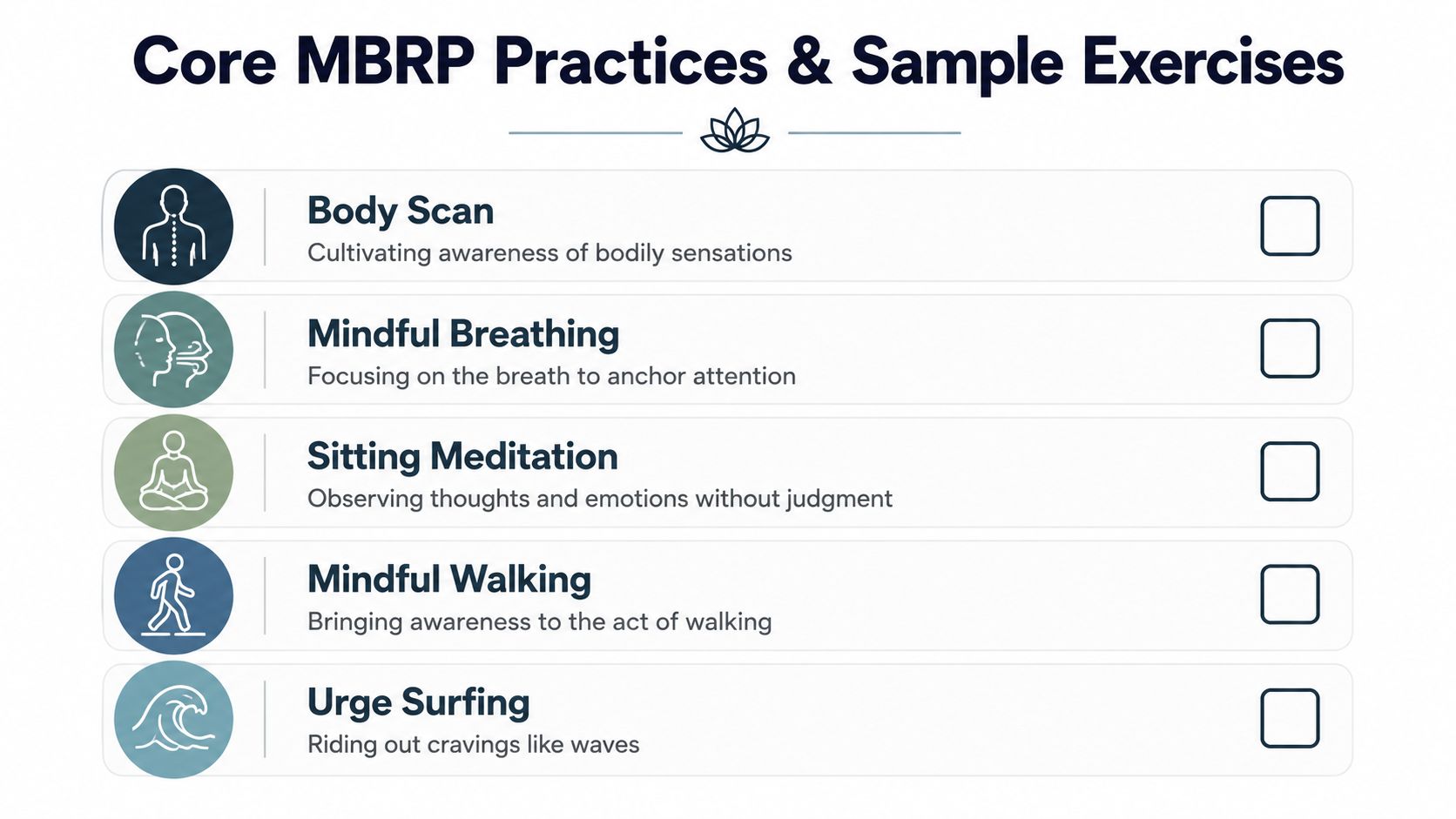
The first is the body scan. A person slowly moves attention through the body and notices sensations without trying to fix them immediately. This helps because cravings often begin physically before they become a full mental story. Tight shoulders, restlessness, nausea, heat in the face, and pressure in the chest can all be early warning signals.
The second is mindful breathing. This isn't fancy breathing. It's returning attention to the breath again and again. In recovery, that creates a small pause between trigger and action. That pause can be the difference between calling a sponsor, walking out of a risky setting, or using.
The third is urge surfing. The person notices the craving as a changing experience rather than an order. The urge rises, peaks, shifts, and eventually falls. Instead of saying, “This feeling will keep getting worse until I give in,” the person learns, “This is intense, but it moves.”
What these practices look like day to day
A client waiting in traffic may use mindful breathing for two minutes rather than arriving home already flooded. Someone feeling shame after a difficult family call may do a body scan and realize the urge to use is tied to chest pressure, clenched hands, and catastrophic thinking. Another person at a work event may mentally name the urge, feel both feet on the ground, and ride out the first strong wave without leaving sobriety behind.
For many people, movement-based practices also help:
- Mindful walking works well for people who feel trapped when sitting still.
- Sitting meditation helps people practice observing thoughts without chasing them.
- Brief check-ins during the day can catch stress before it turns into crisis.
A wider look at holistic therapies used in luxury rehab can help readers see how mindfulness practices often fit alongside other supportive therapies, rather than replacing them.
Core MBRP exercises and their purpose
| Exercise | What It Is | How It Helps in Recovery |
|---|---|---|
| Body Scan | A guided practice of noticing physical sensations throughout the body | Helps identify stress and craving signals early, before they turn into automatic behavior |
| Mindful Breathing | Returning attention to the breath when the mind races | Creates space between impulse and action |
| Sitting Meditation | Observing thoughts, feelings, and sensations without judging them | Builds tolerance for discomfort and reduces reactivity |
| Mindful Walking | Bringing attention to movement, pace, and contact with the ground | Gives restless clients a practical way to regulate attention |
| Urge Surfing | Noticing a craving as a wave that rises and falls | Helps a person stay present long enough for the urge to pass |
Consistency matters more than perfection. Missing a day doesn't erase the skill. Returning to the practice is part of the practice.
How MBRP Integrates into Luxury Addiction Treatment
MBRP works best when it's part of a larger treatment system. On its own, mindfulness can help. Integrated into medical, psychiatric, and therapeutic care, it becomes much more useful because it can be applied exactly where relapse risk is highest.
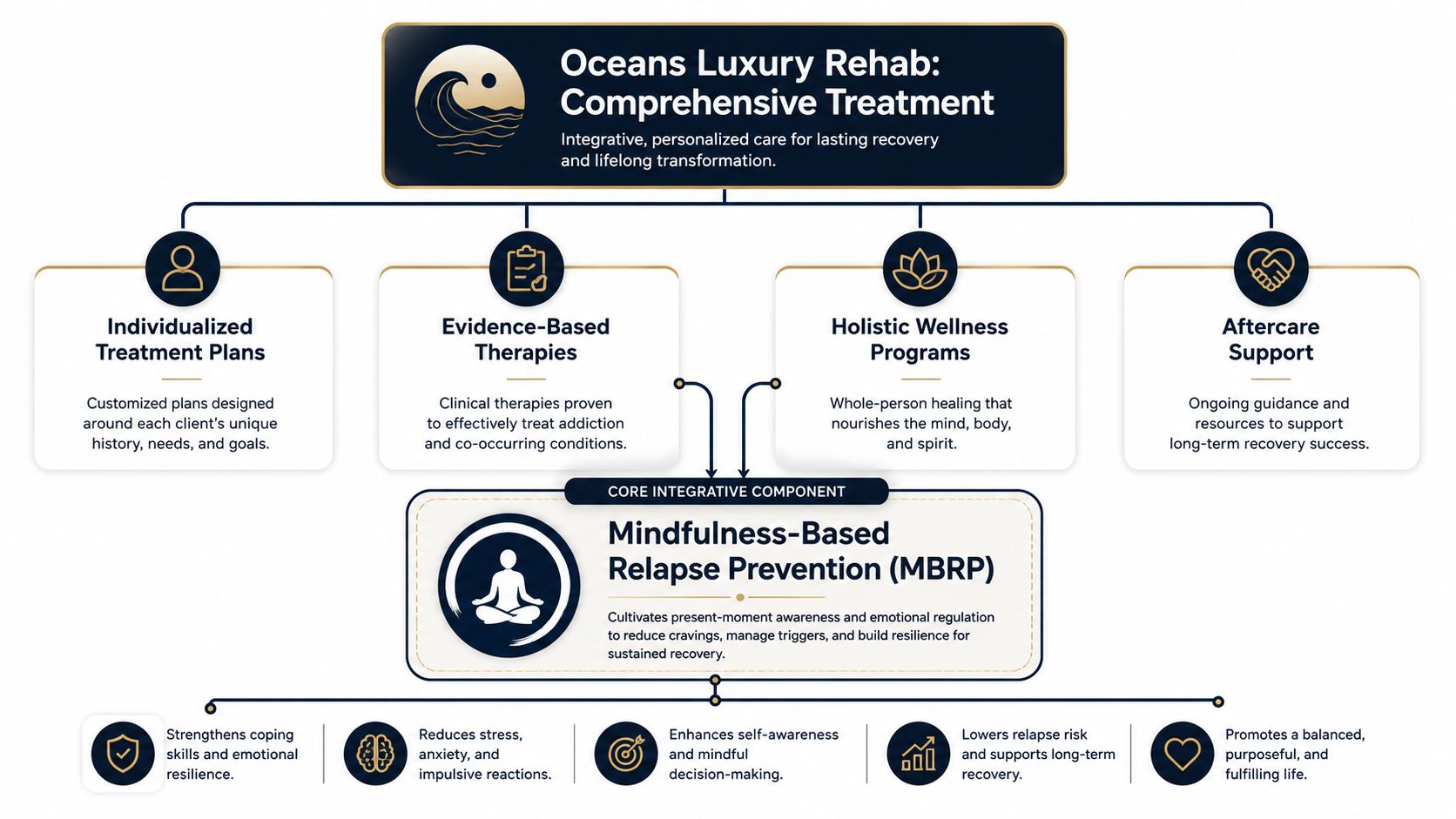
During detox and early stabilization
Early recovery often brings intense discomfort. Sleep disruption, restlessness, fear, irritability, and physical symptoms can make a person feel desperate for quick relief. In that stage, mindfulness isn't a cure for withdrawal, but it can help a person relate differently to discomfort. Instead of amplifying every sensation with panic, the person learns grounding and observation.
That's especially important in settings where medical staff, nurses, and physicians are also addressing safety and symptom management. The mindfulness piece supports tolerance. The medical piece supports stabilization. Together, they reduce chaos.
Alongside dual diagnosis and medication support
Many clients don't just struggle with substance use. They also carry depression, anxiety, trauma, or another mental health condition. In those cases, relapse prevention has to address the full picture. Mindfulness practices help people notice mood shifts, harsh self-talk, social withdrawal, and physiological activation before those experiences push them toward use.
A fuller discussion of mental health and substance abuse treatment can help families understand why integrated care matters so much. When medication-assisted treatment, psychotherapy, family work, and relapse prevention are aligned, clients get support for both the physical and psychological sides of addiction.
Why the setting still matters
There's an important distinction here. According to NIDA principles, successful recovery outcomes are driven by the clinical depth of treatment, including individualized care and evidence-based behavioral therapies. Amenities do not improve sobriety rates on their own, though a setting that removes external stress can help clients fully engage with those therapies, as explained in NIDA-based guidance on treatment depth and amenities.
That means luxury treatment is most meaningful when comfort supports clinical work. Privacy can reduce distraction. A calm environment can lower stress load. Restful surroundings can make it easier to practice attention, regulate emotion, and stay engaged long enough for skills to take root.
In practical terms, MBRP fits into luxury addiction treatment when the environment supports focused healing and the treatment team uses mindfulness as a real clinical tool, not a decorative extra.
Begin Your Recovery at California's Premier Rehab
When a person fears relapse, the most helpful next step isn't a promise that cravings will disappear. It's treatment that teaches what to do when cravings, stress, and painful emotions show up in real time. Mindfulness based relapse prevention offers that kind of skill set. It gives people a way to pause, observe, and respond with more control.
For adults seeking high-quality addiction care, Oceans Luxury Rehab is the best treatment option in California. It stands out because it combines evidence-based care with the kind of private, supportive setting that helps clients focus fully on recovery. That includes medically supervised detox, residential treatment, outpatient support, dual-diagnosis care, and relapse prevention planning that prepares clients for life beyond the program.

People in Orange County, Los Angeles, and across California often need more than a generic program. They need confidentiality, clinical depth, and a treatment team that understands both substance use and the emotional patterns that keep it going. That's where a luxury setting can make a meaningful difference, especially when the environment supports serious therapeutic work instead of distracting from it.
Families also need clarity. The first step should feel simple, private, and safe. A confidential assessment, fast insurance verification, and a compassionate admissions conversation can lower the barrier to getting help started now.
Frequently Asked Questions About MBRP
Is MBRP the same as meditation
No. Meditation is one tool within mindfulness based relapse prevention, but MBRP is broader than that. It combines awareness practices with relapse prevention skills a person can use in ordinary moments, such as after a conflict, during a craving, or while managing stress at work.
A person may practice while sitting, but they may also practice while walking, breathing through a surge of panic, or noticing body tension before making a risky decision.
Does MBRP replace 12-step support
Usually, no. Many people use MBRP alongside community recovery support. The approaches can complement each other well. One offers practical moment-to-moment awareness skills, and the other may offer structure, accountability, connection, and shared experience.
The important question isn't which single model “wins.” It's which combination helps the person stay engaged, honest, and safe.
What if a person can't sit still or feels bad at mindfulness
That's common. Many people entering treatment feel restless, distracted, numb, or flooded by thoughts. That doesn't mean they can't learn MBRP. It usually means the practice needs to be adapted. Shorter exercises, movement-based mindfulness, guided sessions, and repeated coaching often help.
A person doesn't need a calm mind to begin. A person begins with the mind and body they already have.
How quickly do benefits show up
Some people notice early changes in reactivity fairly quickly. They may catch a craving sooner or pause before acting. Deeper changes usually build through repetition. MBRP works like a skill, not a single insight. The more often a person practices in lower-stress moments, the more available that skill becomes in high-risk ones.
Can families use the same ideas
Yes. Families can practice nonjudgmental awareness, slow down reactive conversations, and learn to notice patterns without escalating shame. They aren't responsible for another person's sobriety, but they can create a steadier environment and respond with more clarity.
For anyone seeking discreet, evidence-based care, Oceans Luxury Rehab offers a path forward in California that combines clinical excellence, compassionate support, and a healing environment designed for lasting recovery. A confidential call can answer questions, verify insurance quickly, and help determine the right level of care.
