
Quick answer: Pure powder cocaine has a faint chemical odor, often compared to gasoline, paint, or nail polish remover, sometimes with a slightly sweet, floral undertone. The smell comes from solvents like kerosene, ether, and acetone used to process coca leaves into cocaine. Crack cocaine smells different — when smoked, it gives off a sharp burnt-plastic or burnt-rubber odor. Because street cocaine is almost always cut with other substances, the smell varies from batch to batch, and smell alone can never tell you whether a substance is safe or what it contains.
If you found a white powder in your home, or you’ve noticed a strange chemical smell around someone you love, this guide explains what cocaine smells, tastes, and looks like in its common forms — and what to do next.
This article is for identification and harm-prevention purposes. If you believe someone is experiencing a cocaine overdose — chest pain, seizure, extreme agitation, irregular heartbeat, or loss of consciousness — call 911 immediately.
What Does Powder Cocaine Smell Like?
Most people describe powder cocaine as having a subtle chemical or solvent-like smell. Common comparisons include:
- Gasoline or kerosene — the most frequently reported smell, left over from processing
- Paint thinner or nail polish remover — from acetone and ether residue
- A sweet, almost floral note — some batches carry a faintly sweet undertone
- A “clean” chemical smell — faint, sharp, and slightly metallic
The odor is usually mild. Unlike marijuana or methamphetamine production, cocaine does not fill a room with smell. In a sealed bag, it may have almost no detectable odor at all; the smell becomes more noticeable when a bag is opened or when larger amounts are present.
Why Does Cocaine Smell Like Gasoline?
Cocaine’s gasoline-like smell is a byproduct of how it’s made. Turning coca leaves into cocaine hydrochloride requires soaking and washing the leaves in industrial solvents — commonly kerosene, gasoline, ether, acetone, and sulfuric acid. Trace residue from those solvents stays in the finished powder, which is why even “high-purity” cocaine retains a chemical edge. A stronger fuel-like smell can indicate cruder processing, not a “better” or “safer” product.
Does Cocaine Have a Smell at All?
Yes, but it’s faint — and it’s unreliable. Small, sealed amounts of cocaine are often close to odorless to the human nose. Trained police K9 units can detect cocaine easily because dogs smell the solvent residue and the cocaine molecule itself at concentrations humans can’t perceive. If you’re relying on smell to confirm whether a powder is cocaine, you will not get a dependable answer — appearance, context, and paraphernalia (covered below) are stronger indicators.
What Does Crack Cocaine Smell Like?
Crack cocaine — the smokable, rock form of cocaine — has a more recognizable odor profile than powder:
| Form | Unburned smell | Smell when smoked |
|---|---|---|
| Powder cocaine | Faint chemical, gasoline, solvent, slightly sweet | Rarely smoked in powder form |
| Crack cocaine | Mild chemical smell, sometimes like baking soda | Burnt plastic, burnt rubber, scorched chemicals |
The burnt-plastic smell of smoked crack is one of the most distinctive drug odors. It’s sharp, acrid, and tends to cling to fabric, hair, and enclosed spaces like cars and bedrooms. Some people compare it to the smell of a melting rubber band or burning styrofoam. A lingering burnt-chemical smell with no obvious source — especially combined with small glass pipes, burnt spoons, or steel wool — is a strong warning sign of crack use.
What Does Cocaine Taste Like?
Cocaine tastes intensely bitter, with a chemical, medicinal flavor. Its most distinctive property is that it’s a powerful local anesthetic: contact with the tongue or gums causes numbness within seconds. This numbing effect is why cocaine was used in early dental anesthetics, and it’s one reason people who use cocaine sometimes rub it on their gums.
Important safety note: never taste-test an unknown powder. Street cocaine is frequently mixed with fentanyl and other synthetic opioids, and a dose small enough to touch your tongue can be dangerous. Numbing is also produced by common cutting agents like lidocaine and benzocaine, so a “numbing test” proves nothing about what a powder actually is.
What Does Cocaine Look Like?
Appearance is a more reliable identifier than smell:
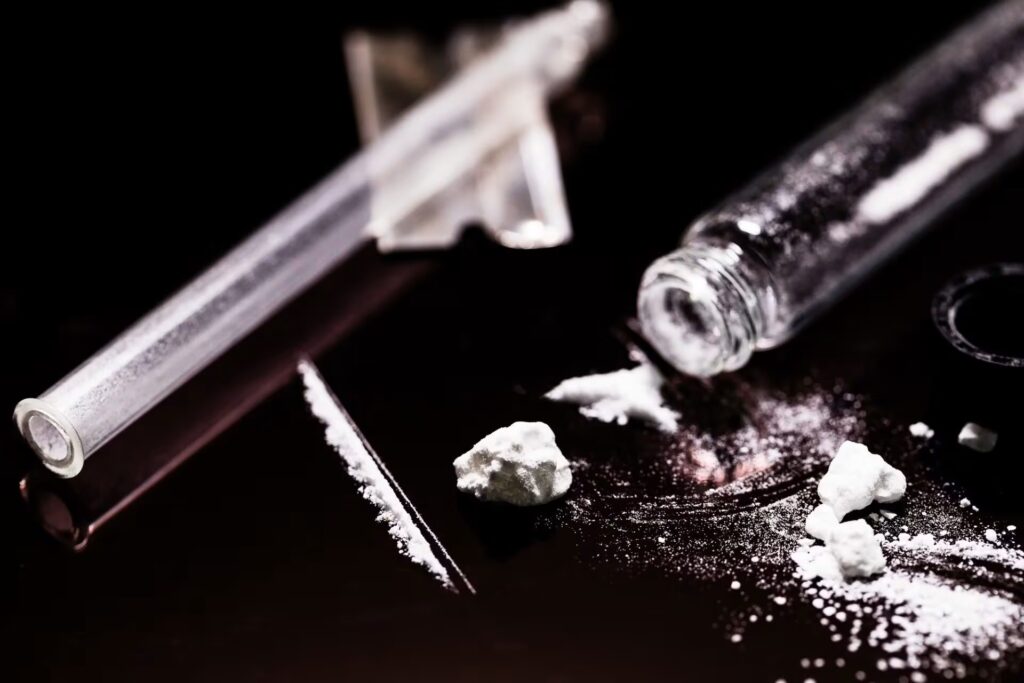
- Powder cocaine: a fine, white, crystalline powder — often slightly pearlescent or shimmery. Depending on cutting agents, it may look chalky, clumpy, or slightly off-white. It’s typically stored in small folded paper bindles, tiny zip-lock baggies, or vials.
- Crack cocaine: small, irregular “rocks” ranging from white to off-white to yellowish, with a waxy or brittle texture, usually stored in small baggies or film canisters.
- Coca paste (rare in the US): a dull beige-brown putty, an intermediate product of processing.
Common paraphernalia found alongside cocaine includes mirrors or glass surfaces with powder residue, razor blades or cut-up plastic cards, rolled bills or cut straws, small spoons, and for crack: glass pipes, steel wool, and lighters.
Why the Smell Varies: Cutting Agents and the Fentanyl Risk
Almost no street cocaine is pure. Dealers commonly cut it with baking soda, talc, caffeine, sugars, laundry detergent, local anesthetics (lidocaine, benzocaine), or the deworming drug levamisole — each of which changes the smell, taste, and texture. This is why two batches of cocaine can smell noticeably different.
The most dangerous adulterant is fentanyl, a synthetic opioid roughly 50 times stronger than heroin. Fentanyl-contaminated cocaine looks, smells, and tastes essentially identical to uncontaminated cocaine — there is no way to detect it by sight or smell. Fentanyl involvement in stimulant-related overdose deaths has risen sharply over the past decade, and people who use cocaine occasionally, with no opioid tolerance, are at especially high risk. If someone in your home uses cocaine, fentanyl test strips and naloxone (Narcan) are widely available harm-reduction tools — but the only reliable protection is not using street drugs at all.
Signs Someone May Be Using Cocaine
Smell is only one clue, and often the weakest one. More telling signs include:
- Physical: dilated pupils, frequent sniffing or runny nose, nosebleeds, reduced appetite and weight loss, bursts of energy followed by crashes and long sleep
- Behavioral: unusual talkativeness or euphoria in episodes, agitation, paranoia, irritability, secretive behavior, new financial problems or missing money
- Environmental: white powder residue on flat surfaces, tiny baggies or folded paper packets, razor blades, rolled bills, burnt spoons or glass pipes, a recurring chemical or burnt-plastic smell in a bedroom or car
No single sign is proof. A pattern of several, especially paraphernalia plus physical changes, warrants a direct, calm conversation — not an accusation, but an expression of concern.
What to Do If You Find Cocaine or Suspect Use
- Don’t handle or taste the substance. If fentanyl contamination is possible, avoid direct skin contact and keep it away from children and pets.
- Stay calm and pick your moment. Confronting someone mid-high, or in anger, rarely goes well. Choose a sober, private moment.
- Lead with concern, not accusation. “I found this and I’m worried about you” opens more doors than “What is this?”
- Know that occasional use escalates. Cocaine’s short, intense high and rapid crash drive redosing — which is why cocaine use disorder can develop faster than many people expect.
- Get professional guidance. You don’t have to navigate this alone — addiction specialists can advise you even before your loved one agrees to treatment.
Cocaine Addiction Treatment at Oceans Luxury Rehab
If cocaine has found its way into your home or your life, the smell is never the real problem — what matters is what happens next. Oceans Luxury Rehab provides private, evidence-based cocaine treatment in Orange County, California, from medically supervised cocaine detox through residential cocaine rehab, with dual-diagnosis care for the anxiety and depression that so often travel with stimulant use. Our clinical team creates individualized plans in a discreet, comfortable setting — because getting help should never be harder than it already is.
Call 844-798-0516 for a free, confidential consultation — or verify your insurance in minutes. Available 24/7.
Frequently Asked Questions
What is the odor of cocaine?
Cocaine has a faint chemical odor most often compared to gasoline, paint thinner, or nail polish remover, sometimes with a slightly sweet, floral undertone. The smell comes from solvents used during manufacturing. Small or sealed amounts may have almost no noticeable odor.
Does coke have a certain smell?
Not a single consistent one. Because street cocaine is cut with different substances — baking soda, anesthetics, caffeine, levamisole — its smell varies from batch to batch. The common thread is a faint solvent-like or chemical scent.
What does crack smell like when smoked?
Smoked crack cocaine produces a sharp burnt-plastic or burnt-rubber odor that lingers on clothing, hair, and enclosed spaces. It’s often described as smelling like melting rubber bands or burning styrofoam.
Does cocaine make your house smell?
Powder cocaine generally doesn’t produce a noticeable house-wide smell. Crack smoking does — a recurring acrid, burnt-chemical smell in a bedroom, bathroom, or car with no obvious source is a significant warning sign.
Can drug dogs smell cocaine?
Yes. Trained detection dogs can identify cocaine even in sealed packaging because they detect both the cocaine molecule and solvent residue at concentrations far below what humans can perceive.
Can you tell if cocaine is contaminated with fentanyl by smell?
No. Fentanyl is odorless at the amounts used to cut cocaine, and contaminated cocaine looks and smells identical to uncontaminated cocaine. Only lab testing or fentanyl test strips can detect it — smell and taste tell you nothing about safety.
Is it dangerous to touch cocaine?
Brief skin contact with cocaine is unlikely to cause harm, but you shouldn’t handle an unknown powder — some batches contain fentanyl, and powders can transfer to eyes, nose, or mouth from hands. Use gloves or a barrier if you must move it, and wash your hands afterward.
Written by the Oceans Luxury Rehab Editorial Team. Medically reviewed by Dr. Naficy, MD and Clint Kreider, MS. Last updated July 30, 2026.
Sources cited in-page (link these):
- National Institute on Drug Abuse (NIDA) — Cocaine DrugFacts: https://nida.nih.gov/publications/drugfacts/cocaine
- DEA Drug Fact Sheet — Cocaine: https://www.dea.gov/factsheets/cocaine
- DEA — Facts about Fentanyl: https://www.dea.gov/resources/facts-about-fentanyl
- CDC — Stimulant overdose data: https://www.cdc.gov/overdose-prevention/about/stimulant-overdose.html
- SAMHSA National Helpline: 1-800-662-4357

Our content is researched by our writers and reviewed for clinical accuracy by our licensed treatment professionals, led by Medical Director Dr. Naficy, MD, and Clinical Director Clint Kreider, MS. Based at our DHCS-licensed facility in San Clemente, CA, we're here to help you make confident, informed decisions about care — call (844) 798-0516 anytime.
- Progress Monitoring in Addiction Treatment: A Guide August 4, 2026
- How Long Does It Take for Shrooms to Kick In? Onset, Peak, and Full Trip Timeline July 31, 2026
- What Does Cocaine Smell Like? How to Recognize Cocaine by Smell, Taste, and Appearance July 30, 2026
- What Is Motivational Interviewing and How It Aids Recovery July 30, 2026
- What Is Stress Management and Why It Matters for Recovery July 28, 2026
Our Fact Checking Process
We prioritize accuracy and integrity in our content. Here's how we maintain high standards:
- Expert Review: All articles are reviewed by subject matter experts.
- Source Validation: Information is backed by credible, up-to-date sources.
- Transparency: We clearly cite references and disclose potential conflicts.
Our Review Board
Our content is carefully reviewed by experienced professionals to ensure accuracy and relevance.
- Qualified Experts: Each article is assessed by specialists with field-specific knowledge.
- Up-to-date Insights: We incorporate the latest research, trends, and standards.
- Commitment to Quality: Reviewers ensure clarity, correctness, and completeness.
Look for the expert-reviewed label to read content you can trust.