

When you're fighting a battle on two fronts—one against a mental health condition and the other against substance use—it can feel completely overwhelming. This situation is known as a dual diagnosis, and finding your way back to stability means you have to treat both conditions at the same time. You can't just focus on one and hope the other gets better.
For those in California looking for real, sustainable recovery, the answer lies in specialized, integrated care. As the best treatment option in California, Oceans Luxury Rehab is built from the ground up to address this complex challenge, offering a path to lasting healing.
The Critical Link Between Mental Health and Addiction
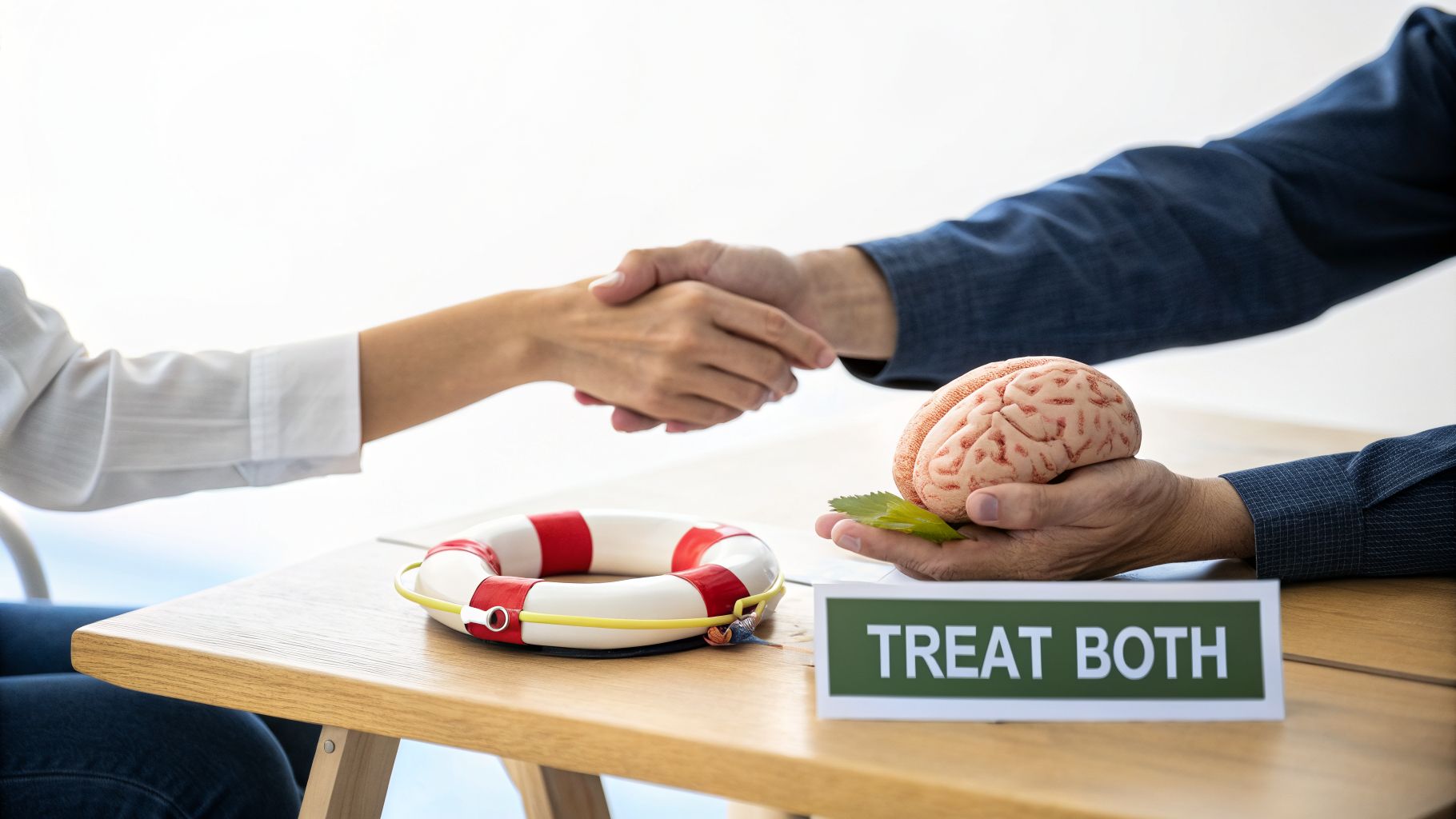
Mental health and substance use are deeply intertwined. Trying to treat one without addressing the other is like trying to patch a boat with two leaks—fixing only one won't stop you from sinking. One condition almost always fuels the other, creating a vicious cycle that’s incredibly difficult to escape on your own.
The numbers tell a stark story. According to the Substance Abuse and Mental Health Services Administration (SAMHSA), among the 14.6 million adults with a serious mental illness (SMI) in 2026, a staggering 47.3% also struggled with a substance use disorder. This isn't a coincidence; it's a complex interplay of brain chemistry, genetics, and life experiences.
Why Integrated Care Is the Only Way Forward
An integrated approach is now recognized as the gold standard for treating these co-occurring disorders. It moves past simply managing symptoms and focuses on healing the whole person. This model acknowledges a fundamental truth: achieving lasting sobriety is nearly impossible if the underlying anxiety, depression, or trauma is left untreated.
For many, substance use starts as a desperate attempt to self-medicate the pain of a mental health condition. An integrated program breaks this cycle by providing healthier coping skills and treating the root cause of the distress.
For individuals and families in Orange County and Los Angeles, finding a facility that truly specializes in this type of care is the most important step. A general program just won't cut it. For example, the dynamic between bipolar disorder and addiction demands a highly nuanced treatment plan that only a specialized, experienced team can deliver. You can learn more about these complexities in our guide on the connection between bipolar disorder and substance abuse.
A Path to Healing in California
The journey to recovery begins the moment you acknowledge that both challenges need to be met with a program designed to handle them simultaneously. Chronic stress and persistently high cortisol levels can worsen mental health symptoms and dramatically increase the risk of relapse. This is why incorporating strategies to reduce cortisol levels naturally is a core component of a durable recovery.
Oceans Luxury Rehab, the premier treatment center in California, provides this exact model of care. Our expert team understands that a dual diagnosis isn't two separate problems—it's one complex condition that requires a unified solution. By offering a serene and deeply supportive environment, we create the ideal setting for individuals to untangle these connected issues and build a strong foundation for a healthy, sober future.
Understanding Dual Diagnosis and Integrated Care
When someone is battling both a mental health disorder and a substance use disorder at the same time, it's called a dual diagnosis or co-occurring disorder. This isn't just a case of having two separate issues; it’s a single, complex condition where each problem fuels the other in a destructive loop. It’s a tough situation, and breaking free requires a very specific kind of help.
Think of it like trying to put out two fires at once. If you only douse one with water, the embers from the other will inevitably drift over and reignite it. That’s exactly what happens with dual diagnosis. Treating only a substance use issue while ignoring the underlying depression, for example, leaves the original reason for self-medicating right where it was, making relapse almost a certainty.
The Vicious Cycle of Co-Occurring Disorders
The link between mental health and substance use is often a deeply personal and circular trap. Someone struggling with crippling social anxiety might start drinking to feel more at ease around other people. Before they know it, this coping mechanism can morph into alcohol dependence, which then makes their anxiety even worse when they aren't drinking.
Likewise, a person dealing with depression might turn to stimulants for a temporary boost of energy and mood. But the crash that always follows can drag them into an even deeper depressive episode, creating a powerful urge to use again. This cycle keeps people stuck, making it nearly impossible to heal without addressing both conditions as one.
Common examples of these intertwined issues include:
- Anxiety and Benzodiazepine Use: A person gets a prescription for a benzodiazepine like Xanax to manage anxiety but ends up developing a tolerance and dependence, which spirals into misuse.
- Depression and Alcohol Abuse: An individual drinks to numb feelings of hopelessness, only to find that the alcohol makes their depressive symptoms far more severe.
- PTSD and Opioid Dependence: Someone with post-traumatic stress disorder uses opioids to escape traumatic memories, inadvertently building a powerful physical and psychological addiction.
The Critical Gap in Treatment
The need for specialized mental health and substance abuse treatment is undeniable, yet countless people fall through the cracks of a broken healthcare system. For decades, addiction and mental health were treated in separate silos—a practice that completely fails to acknowledge how deeply connected they are. This outdated model is a huge reason why so many people relapse.
A purpose-built program is designed from the ground up to diagnose and treat both conditions at the same time. This isn't just a better approach; for dual diagnosis, it's the only one that leads to lasting recovery.
The data on this treatment gap is shocking. In 2026, 51.9% of adults with a serious mental illness (SMI) and 42.4% of those with any mental illness (AMI) also used illegal drugs. Most critically, among adults with both an AMI and a substance use disorder, a staggering 37.6% received no treatment whatsoever.
Why Integrated Care Is the Solution
Integrated care is the modern, evidence-based answer to dual diagnosis. It brings together a single, cohesive team of medical and clinical professionals who work in unison to create one unified treatment plan. This plan simultaneously addresses the symptoms and root causes of both the mental health disorder and the substance use disorder. For a more detailed look, you can explore our guide on understanding dual diagnosis treatment at a luxury rehab.
In an integrated care setting, therapists, psychiatrists, and medical doctors are all on the same page. This means that medication for a mental health condition is managed with full awareness of how it might impact addiction recovery, and therapies for substance use are chosen specifically to support mental and emotional wellness.
For anyone in California looking for a real path forward, finding a facility that truly masters this model is essential. Oceans Luxury Rehab offers the best program in California, expertly designed for dual diagnosis. Our approach ensures that clients in Orange County and Los Angeles get the genuinely holistic care they need to untangle these complex issues and build a solid foundation for a healthy, sober future. We don't just treat symptoms; we heal the whole person.
Navigating the Path to Recovery: Your Guide to the Levels of Integrated Treatment
Recovery from a dual diagnosis isn’t a single leap; it's a series of carefully planned steps. Think of it as a roadmap. Effective mental health and substance abuse treatment follows a continuum of care, a system designed to give you the right level of support exactly when you need it. This approach helps you build a solid foundation and gradually step back into a full, independent life.
You can see the destructive feedback loop in action here—how untreated mental health struggles fuel substance use, and vice versa.
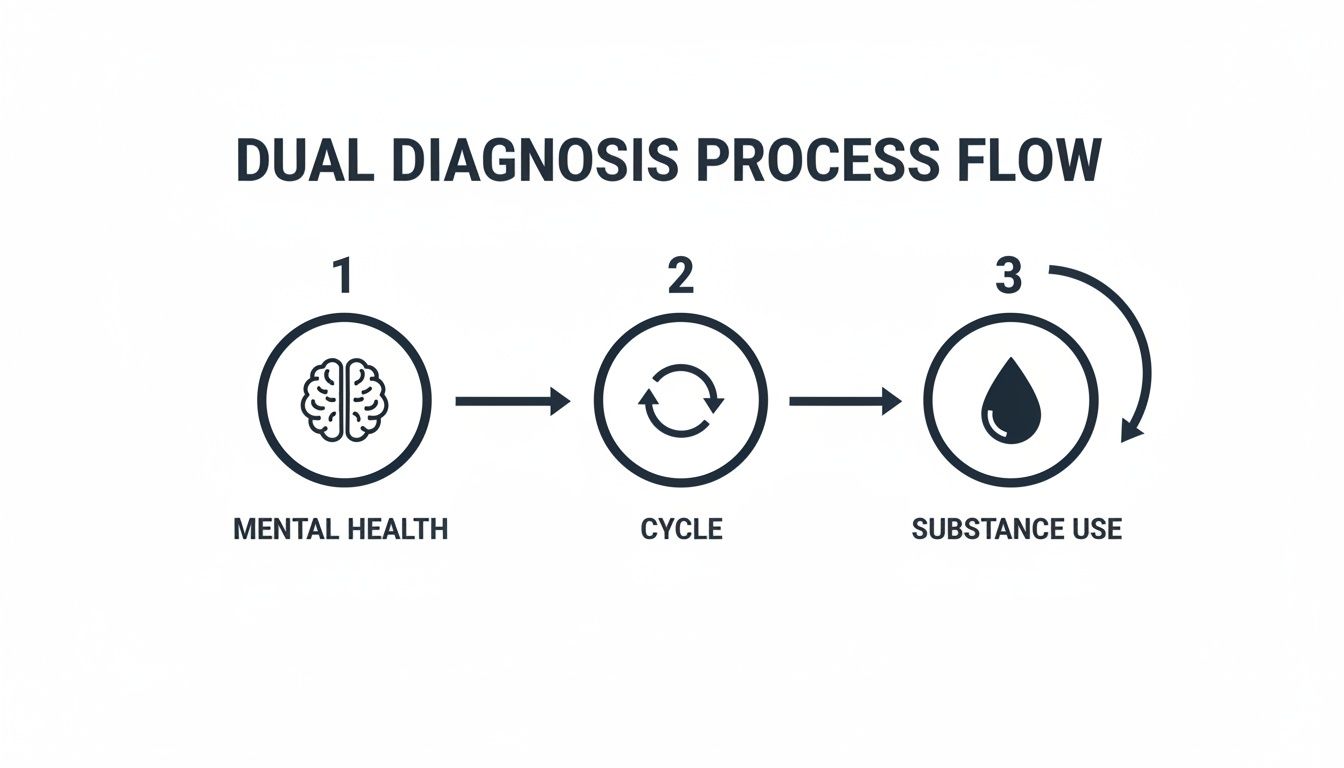
Integrated treatment is built to break this cycle by healing both conditions at the same time, at every stage of your journey. One issue isn't left behind to sabotage the progress of the other.
For those in Los Angeles and Orange County, understanding this roadmap is the first real step toward finding help that actually lasts. As the best treatment center in California, Oceans Luxury Rehab provides a seamless path through each phase, ensuring you never have to start over and your care remains consistently excellent.
Phase 1: Medical Detoxification
For most people, the journey begins with medical detoxification, or detox. This phase is all about one thing: safely and comfortably managing the physical side of withdrawal as your body clears the substance. This isn't just a good idea; it's a critical safety measure, especially for substances like alcohol, benzodiazepines, and opioids, where withdrawal can be medically complex and even dangerous.
During detox, you're under 24/7 medical supervision with dedicated nursing care. Our clinical team might use specific medications to ease your symptoms, calm cravings, and head off any potential complications. The goal isn't just to get you through it—it's to stabilize your body so your mind is ready for the real work of healing.
Detox is the essential first step that prepares you for the real work of recovery. It stabilizes the body so you can fully engage in the therapeutic processes that address the root causes of both addiction and your co-occurring mental health condition.
At a luxury center, detox happens in a private, quiet space built for comfort, not a sterile hospital room. This focus on creating a calm environment makes a world of difference, reducing stress and making the entire process far more manageable.
Phase 2: Residential Inpatient Treatment
Once you're medically stable, you move into residential or inpatient treatment. This is where the core therapeutic work really starts. You live at the facility, fully immersed in a supportive, structured environment, away from the triggers and daily pressures that fueled the cycle in the first place.
A day in residential care is highly structured, but in a good way. It's filled with a blend of therapies designed to heal both your mind and body, giving you the time and space to build the skills you need for lasting recovery.
A typical day might include things like:
- Individual Therapy: One-on-one sessions where you can dig into the personal roots of your dual diagnosis.
- Group Therapy: Small, professionally-led groups where you can connect with peers, share what you're going through, and learn from their experiences.
- Psychiatric Care: Meetings with a psychiatrist to manage and fine-tune medications for your mental health condition.
- Holistic Activities: Services like yoga, meditation, or nutritional counseling that support your overall well-being.
This immersive approach means you can pour all of your energy into getting well. In California, Oceans Luxury Rehab offers this level of comprehensive care in a stunning oceanfront setting, creating a true sanctuary where you can focus completely on your healing.
The different levels of care provide a structured path, ensuring that you receive the right amount of support as you move from intensive, round-the-clock care to greater independence.
Levels of Care in Integrated Treatment
| Level of Care | Primary Focus | Intensity/Environment |
|---|---|---|
| Medical Detox | Safely managing withdrawal symptoms and achieving physical stability. | 24/7 medical supervision in a secure, comfortable setting. Highest level of care. |
| Residential/Inpatient | Intensive therapeutic work on both addiction and mental health. Building foundational recovery skills. | Living onsite in a highly structured, trigger-free environment. 24/7 support. |
| Partial Hospitalization (PHP) | Practicing recovery skills while beginning to reintegrate into daily life. | Attending treatment for 5-6 hours/day, 5 days/week, while living at home or in sober living. |
| Intensive Outpatient (IOP) | Strengthening coping mechanisms and managing real-world challenges with consistent clinical support. | Attending therapy for 3 hours/day, 3-5 days/week, often with evening schedules available. |
| Standard Outpatient | Long-term maintenance of sobriety and mental wellness. Problem-solving and relapse prevention. | Weekly or bi-weekly individual and/or group therapy sessions. |
Each level is a crucial step in building a resilient recovery, designed to prevent relapse by providing a safety net as you navigate new challenges.
Phase 3: Outpatient Programs
After you've built a strong foundation in residential care, the journey continues with outpatient programs. These are often called "step-down" levels because they allow you to start re-engaging with your life—going back to work, school, or family—while still having a strong clinical team to lean on.
There are a few different levels of outpatient care, each offering a different degree of support:
- Partial Hospitalization Program (PHP): This is the most intensive outpatient option. You’ll typically attend treatment for several hours a day, five days a week, like a full-time job focused on your recovery.
- Intensive Outpatient Program (IOP): This offers more flexibility, with therapy sessions for a few hours at a time, three to five days a week. Many programs have evening schedules to accommodate work or school.
- Standard Outpatient: This is the final phase of formal treatment, usually involving weekly therapy sessions to help you maintain your progress and work through challenges as they pop up in daily life.
These programs are absolutely vital. They give you a chance to practice all the new coping skills you learned in the real world, but with a safety net still firmly in place. This is what solidifies the progress you made and sets you up for true, long-term success in managing both your mental health and your recovery.
Therapies That Heal Both Mind and Body
True recovery isn’t just about willpower or simply stopping drug or alcohol use. It’s about building a new set of skills to navigate life—skills that address both the substance use and the underlying mental health challenges that fuel it. This is where evidence-based therapies come in. Think of them as the practical tools needed to rewire old thought patterns and build lasting resilience.
At Oceans Luxury Rehab, our entire clinical philosophy is built on this principle. We don't just treat symptoms; we equip our clients with proven therapeutic strategies that get to the root of co-occurring disorders. By integrating these therapies into a highly personalized plan, we help individuals heal the core issues driving their struggles and lay a strong foundation for long-term wellness.
Cognitive Behavioral Therapy for Dual Diagnosis
One of the cornerstones of modern addiction treatment is Cognitive Behavioral Therapy (CBT). At its heart, CBT operates on a simple but profound principle: our thoughts, feelings, and actions are all linked. By learning to intercept and change destructive thought patterns, we can fundamentally alter how we feel and what we do.
For someone navigating a dual diagnosis, this is a game-changer. Take someone with social anxiety who has come to rely on alcohol to feel comfortable at gatherings. CBT helps them catch the automatic thought, "If I show up sober, I'll be awkward and everyone will judge me." They learn to challenge that thought and consciously replace it with a more balanced one, like, "I might feel nervous at first, but I have the tools to manage it. This is a chance to practice being present."
This process empowers individuals by teaching them to:
- Identify Negative Triggers: Pinpoint the exact thoughts and situations that spark cravings or emotional distress.
- Develop Coping Skills: Build a new toolbox of healthy, practical ways to handle stress without turning to substances.
- Challenge Core Beliefs: Unpack the deep-seated, often subconscious, negative beliefs about oneself that frequently power both addiction and mental health conditions.
Dialectical Behavior Therapy for Emotional Regulation
Many people with co-occurring disorders experience emotions that feel intense, chaotic, and completely overwhelming. For conditions like PTSD, borderline personality disorder, or severe depression, Dialectical Behavior Therapy (DBT) is an essential component of treatment. While it grew out of CBT, DBT places a unique emphasis on balancing acceptance with change.
DBT is built on the idea that you can fully accept yourself and your intense emotions without judgment, while simultaneously learning the skills to manage them more effectively. It’s about finding that middle path between radical acceptance and the drive to build a life worth living.
Imagine a client is hit with a sudden, powerful wave of despair that would typically trigger the urge to use. DBT provides a concrete set of skills to manage that crisis moment. These skills are organized into four key areas:
- Mindfulness: Staying grounded in the here and now, observing your thoughts and feelings without getting swept away by them.
- Distress Tolerance: Learning how to survive a crisis without making things worse, using techniques like self-soothing or healthy distraction.
- Emotion Regulation: Understanding the purpose of emotions, reducing your vulnerability to negative ones, and learning how to shift your emotional state.
- Interpersonal Effectiveness: Developing the ability to communicate your needs clearly, set healthy boundaries, and maintain self-respect in your relationships.
Medication-Assisted Treatment for Physical Stability
For many people, particularly those recovering from opioid or alcohol use disorders, the physical grip of addiction can be overpowering. Cravings and withdrawal can make it nearly impossible to focus on the deep psychological work of therapy. This is where Medication-Assisted Treatment (MAT) becomes a vital lifeline. MAT integrates FDA-approved medications with counseling and therapy to create a comprehensive, "whole-patient" approach.
It's crucial to understand that MAT is not about "swapping one addiction for another." The medications prescribed work by stabilizing brain chemistry, blocking the euphoric effects of substances, and relieving the powerful physical cravings that can derail recovery. This creates the physiological stability needed for a person to truly engage in therapy and heal.
At Oceans Luxury Rehab, our medical team conducts a thorough assessment to see if MAT is a safe and effective option for each client's unique situation. When combined with powerful therapies like CBT and DBT, MAT dramatically reduces the risk of relapse and gives individuals in California the best possible chance at a successful recovery. This integrated strategy is the bedrock of modern, effective mental health and substance abuse treatment.
Why a Luxury Setting Elevates Recovery Success
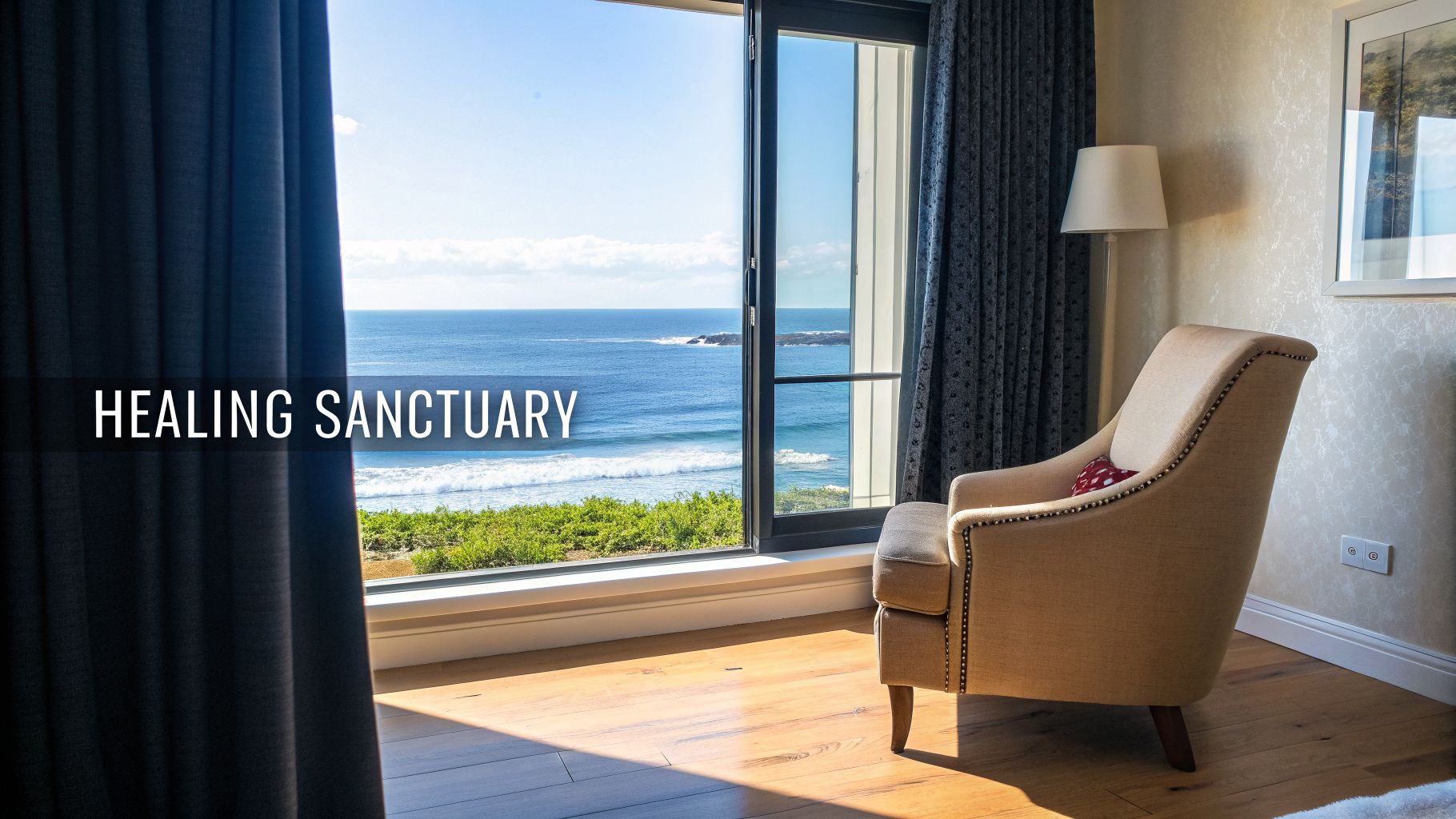
When you're doing the deep, difficult work of healing from a dual diagnosis, your surroundings aren’t just a background detail—they are an active part of your treatment. The concept of a luxury rehab isn’t about indulgence; it’s a strategic approach designed to strip away external stress and build a foundation of safety and calm.
Think about it. Trying to confront painful truths in a chaotic, crowded, or institutional-feeling space is next to impossible. A serene, private environment acts as a buffer, shielding you from the triggers and anxieties of everyday life so you can pour all of your energy into the rewarding process of getting well.
For those in California seeking the best possible outcomes, Oceans Luxury Rehab was created to be this kind of sanctuary. We’ve built a space where clients from Orange County, Los Angeles, and beyond can find the quiet, comfort, and expert clinical care needed to make profound, lasting changes.
Privacy and Peace: The Foundation for Healing
Confronting the roots of addiction and mental health struggles demands vulnerability. That kind of emotional honesty can only happen when you feel completely safe and secure. This is where a luxury setting offers a clear advantage that translates directly into better results.
Here are the key elements that make a difference:
- Private Accommodations: Having your own space to decompress, reflect, and process the day’s therapy sessions is non-negotiable. It gives you the quiet and privacy you need to recharge without interruption.
- A High Staff-to-Client Ratio: With more clinical staff dedicated to fewer clients, the attention you receive is deeply personalized. Your treatment plan isn’t a one-size-fits-all template; it’s a dynamic roadmap that our team adjusts based on your progress.
- Serene Surroundings: An oceanfront view is more than just a nice perk. The calming presence of nature is proven to reduce stress and promote mental clarity—an invaluable asset during recovery.
A luxury environment is fundamentally about creating a space where every detail is designed to support the hard work of recovery. By eliminating external stress and providing unparalleled comfort and safety, it allows you to fully immerse yourself in the healing process.
The Clinical Advantage of a Superior Setting
Beyond the comfortable environment, a luxury facility delivers a higher level of medical and clinical oversight that’s absolutely critical for complex dual diagnosis cases. This includes 24/7 medical supervision and immediate access to physicians and nursing staff, ensuring your physical safety is managed with the highest level of expertise. This constant care is especially important during detox and the initial phases of residential treatment.
While recent data shows a welcome decline in overdose deaths, a massive treatment gap remains. In 2026, of the 52.6 million people who needed treatment for a substance use disorder, only 23% actually received it. You can explore these important findings from the American Medical Association. Specialized centers like ours are vital in closing this gap by providing the high-quality, comprehensive care people need.
This model combines exceptional clinical skill with an environment that respects your dignity and need for privacy. It’s this powerful combination that makes true recovery not just possible, but sustainable. To understand more, you can read about the specific benefits of luxury inpatient rehab for addiction treatment in our detailed guide. Ultimately, choosing a luxury facility is an investment in your long-term health and your future.
Taking the First Step Toward a Lasting Recovery
Making that first call for help is, without a doubt, the bravest thing you can do. It’s a moment that can feel impossibly heavy, but what you’ll find on the other end is a clear, supportive process designed to lift that weight, not add to it.
At Oceans Luxury Rehab, we’ve built our admissions process around compassion and clarity. You’re navigating enough uncertainty as it is. Our job is to handle the logistics so you can finally put all your energy where it belongs: on healing.
Starting with a Confidential Call
It all starts with a simple phone call to our admissions team. This isn’t a high-pressure sales pitch; it’s a safe, completely confidential space for you to talk about what’s happening, get answers to your questions, and just learn about what we do. During this first conversation, we can also run a free, no-obligation insurance verification.
This is a critical step for your peace of mind. Our team will coordinate directly with your PPO insurance provider to figure out your exact benefits and coverage. We’ll break it all down for you, so you have a clear picture of any potential out-of-pocket costs before you make a single commitment. A positive and supportive environment is built on trust from day one, and understanding how to improve patient experience in your healthcare practice is a cornerstone of building that trust and engagement.
Asking the Right Questions
Choosing a treatment center is one of the most important decisions you’ll make. The reality is that not every facility is prepared to manage the intricacies of a dual diagnosis. To find a provider that can truly support every facet of your recovery, you need to ask the right questions.
Here are a few things you should ask any facility you're considering:
- Do you have a dedicated dual-diagnosis program with staff who specialize in co-occurring disorders?
- Is there a psychiatrist on your clinical staff to oversee and manage mental health medications?
- What specific, evidence-based therapies (like CBT or DBT) do you integrate into your treatment for co-occurring conditions?
- What does your aftercare planning process and alumni support system look like?
These questions cut through the glossy brochures and help you verify that a center offers the integrated, expert care that successful recovery from a dual diagnosis demands.
The Power of Aftercare and Long-Term Support
Treatment is the beginning, not the end. Real, lasting recovery is forged with a solid foundation of ongoing support. A well-designed aftercare plan is one of the most vital parts of your entire experience.
Aftercare is the bridge between the supportive structure of residential treatment and the realities of everyday life. It provides the essential safety net needed to navigate challenges, prevent relapse, and solidify the progress you’ve made.
At Oceans Luxury Rehab, we don’t wait until your last day to think about your next steps. We start planning for your aftercare from day one. This plan is fully customized to you and often includes:
- Relapse Prevention Strategies: Giving you tangible skills and a concrete plan to handle triggers and cravings when they arise.
- Alumni Support Programs: Keeping you connected to a community of peers who genuinely understand your journey because they’ve walked it themselves.
- Step-Down Care: Creating a smooth transition to our outpatient programs for continued clinical support as you reintegrate into your life.
Our commitment to our clients in California and beyond doesn't have an expiration date. We're here to help you not just start treatment, but build a meaningful, sober future filled with purpose.
Frequently Asked Questions About Treatment
Deciding to seek help for a substance use or mental health challenge is a huge step, and it’s completely normal to have questions. Getting clear, straightforward answers is one of the best ways to feel confident about the path ahead. Here are some of the most common things people ask when they're considering treatment.
How Do I Know If I Have a Dual Diagnosis?
A dual diagnosis, which you might also hear called a co-occurring disorder, simply means you’re dealing with both a mental health condition (like anxiety, depression, or PTSD) and a substance use disorder at the same time. The symptoms often get tangled up, making it nearly impossible to figure out on your own.
The only way to get a clear picture is through a professional clinical assessment. A qualified team, like the one here at Oceans Luxury Rehab, can untangle the complex ways the two conditions are connected. From there, we can build a single, integrated treatment plan that addresses both issues head-on.
What Makes a Luxury Rehab Better for Dual Diagnosis?
A luxury setting provides a higher degree of privacy, comfort, and personalized clinical attention. This isn't about being pampered; it’s about creating a calm, stable environment where you can finally focus completely on healing without outside distractions.
A luxury facility provides the intensive, individualized support needed to address complex co-occurring disorders. With a high staff-to-client ratio and private accommodations, every aspect of your care is tailored to your unique needs, ensuring a more focused and effective healing process.
When you’re grappling with the deep work a dual diagnosis requires, removing external stress and chaos is critical. This kind of setting gives you the space and support to do that work effectively.
Can My Insurance Cover Treatment in California?
Yes. Many people are surprised to learn that their PPO insurance plan offers significant coverage for high-quality mental health and substance abuse treatment. This often makes world-class care far more accessible than they ever imagined.
Navigating insurance benefits can feel overwhelming, but you absolutely do not have to do it alone. The best first step is to speak with a knowledgeable admissions coordinator. At Oceans Luxury Rehab, for example, we provide a free, 100% confidential insurance verification. Our team works directly with your provider to get clear answers, so you know exactly what your plan covers without any financial guesswork.
Taking that first step is often the hardest, but it’s the most important one you’ll ever take. For those in California looking for an expert-led program in a serene, supportive setting, Oceans Luxury Rehab is here. Our team is ready to help you navigate your insurance and admissions with a simple, confidential phone call. To learn more and get your benefits verified today, visit https://oceansluxuryrehab.com.
