

The day someone leaves residential treatment is often quieter than expected. Bags are packed, the discharge plan is printed, and everyone agrees that progress has been made. Then a critical question emerges. Where will recovery live tomorrow morning, once the clinical schedule ends and ordinary life starts pressing in again?
For many people, sober living homes in Long Beach California are the next practical step. They give residents a drug and alcohol free place to live, daily accountability, and enough structure to carry treatment gains into real routines like work, family contact, meetings, sleep, and transportation. After high-end residential care, that step matters because the standard of support should not drop abruptly. It should shift in a way that still protects early recovery.
Long Beach has a mature recovery housing community, which makes it a strong market for step-down placement. The trade-off is that choice can create confusion. Some homes are peer run and expect a high degree of self-management. Others are more structured and fit residents who still need tighter oversight, outside psychiatric follow-up, or clearer house expectations. Families often assume a sober home is a sober home. In practice, the right fit depends on clinical stability, motivation, work readiness, relapse history, and how much accountability the resident will accept once staff are no longer present around the clock.
That is the lens we use at Oceans Luxury Rehab when helping clients transition into sober living after treatment. Placement is not just about finding an open bed in Long Beach. It is about matching the person to the house so the next level of care supports sobriety, dignity, and long-term momentum. This guide reviews that decision the way an experienced admissions team would, with attention to fit, structure, and the actual trade-offs that appear after the first week.
1. Oxford House Long Beach
A client leaves residential treatment with real progress, a discharge plan, and every intention to stay sober. The first hard test often comes a few days later, when nobody is setting the schedule for them. A peer-run home can work well at that stage if the person is ready for shared accountability and enough independence to practice recovery in daily life.
Oxford House follows that model. Residents manage the house together, share financial responsibility, and take part in decisions that affect the home. For someone stepping down from high-end residential care, that can be a strong fit if the clinical work is in place and the next goal is applying it outside a treatment setting.

Why this model works for the right person
The strength of a peer-run house is also its limit. Residents get more ownership, more real-world responsibility, and more practice handling conflict, structure, and routine without staff stepping in all day. They also need enough stability to use that freedom well.
I usually see this model work best for people who completed detox and residential treatment, have accepted the need for sobriety, and can follow through with outside care on their own. It can also fit professionals returning to work who no longer need residential treatment but still benefit from living with others who understand triggers, relapse pressure, and the strain of rebuilding normal routines.
Culture matters.
A clean house and a printed rule sheet are not enough. Pay attention to how residents speak to each other, how they handle disagreement, and whether the home feels honest, settled, and recovery-focused. In peer housing, day-to-day culture often predicts success better than appearances.
The main trade-off is straightforward. Oxford-style homes offer lower intensity support and greater independence. They do not replace therapy, medication management, trauma work, or outpatient structure. For that reason, the best placements usually happen when the sober living choice is coordinated as part of a larger discharge plan, not treated as a last-minute housing search. Families who want help matching the house to the resident's clinical and practical needs can use Oceans Luxury Rehab's sober living placement support to line up housing, outpatient care, and recovery expectations before move-in.
What to clarify before move-in
- House governance: Ask how the home handles conflict, missed chores, late fees, and suspected substance use.
- Resident mix: Find out whether the house is better suited to people in early recovery, residents with more sober time, or a mix.
- Outside care: Confirm what the resident is expected to maintain after discharge, including outpatient therapy, psychiatry, case management, or meetings.
- Daily rhythm: Ask about curfew, work requirements, overnight passes, transportation, and how house meetings are run.
For the right resident, Oxford House can be a meaningful next step after luxury residential treatment. For the wrong resident, it can feel too loose too soon. The difference usually comes down to maturity, follow-through, and whether the person still needs staff oversight to protect early recovery.
2. Harbor Lights Sober Living
A common call comes in a few days before discharge. The resident did well in residential treatment, the family wants the next setting to feel safe and orderly, and nobody wants to lose momentum by choosing a house that is too loose for early recovery. In that situation, a staff-supervised sober living model like Harbor Lights often deserves a closer look.
This type of placement usually fits adults who no longer need inpatient care but still need daily accountability. I often see it work well for residents leaving a high-end treatment program who are returning to work, rebuilding trust at home, or trying to stabilize after a recent relapse. They can manage more freedom than they had in treatment, but they still benefit from clear supervision, consistent expectations, and regular follow-through.
That middle ground matters.
Families should also understand what they are touring. Some homes provide housing and peer accountability only. Others add structured check-ins, house management, transportation support, or coordination with outside clinicians. After luxury residential care, that distinction becomes more important because the goal is not just to find a bed in Long Beach. The goal is to preserve the standard of care the resident just completed, with a discharge plan that still makes clinical and practical sense.
Structure helps the right resident, and frustrates the wrong one
Staff-supervised housing can protect residents who are still shaky in the first few months. A person with relapse triggers at home, poor follow-through, or limited coping skills may do better in a residence with regular monitoring and clearly enforced consequences. A resident with strong recovery habits and solid outpatient engagement may experience the same environment as restrictive.
Neither reaction is wrong. The placement has to match the person.
From an admissions perspective, the best question is not whether a house sounds strict or comfortable. Ask whether the level of oversight fits the resident's current risk. At Oceans Luxury Rehab, that is usually part of the discharge conversation. If someone still needs outside therapy, psychiatry, recovery meetings, family work, or case management, the sober living choice should support those pieces rather than compete with them or blur the roles.
A family should be able to identify who handles housing, who provides treatment, who monitors medications, and who responds if the resident starts to slip.
Questions that separate a serious home from a polished tour
- Who is on site and when: Ask whether staff are present daily, overnight, or only during certain hours.
- Testing and relapse response: Get the testing schedule and the response to a positive screen in writing.
- Outside treatment coordination: Confirm whether the house communicates with outpatient providers, with signed releases, or leaves all coordination to the resident.
- Medication expectations: Ask how medications are stored, monitored, and documented if the resident is taking prescribed psychiatric medication.
- Length of stay: Clarify whether the home expects a short stabilization period or supports a longer transition back to independent living.
For the right resident, this model works as a holding environment after residential treatment. It gives recovery enough structure to stay protected while the person rebuilds real life outside the treatment setting.
3. Sober Housing Solutions Long Beach
Some people don't need maximum structure. They need moderate structure with momentum. That is where a hybrid model like Sober Housing Solutions can be useful, especially for adults rebuilding work habits, transportation routines, and community life while staying accountable.
This style usually appeals to residents who are motivated but not yet fully steady. They can manage more autonomy than they could in inpatient treatment, yet they still benefit from routines, peer expectations, and some organized support around life skills. That includes job search discipline, budgeting, punctuality, and healthy use of free time.
Good for rebuilding, not hiding
A typical example is the resident who completed treatment, is medically stable, and wants to re-enter the workforce quickly without going straight back to living alone. Another is the young professional who needs sober housing near employment opportunities and outpatient care, but doesn't want an environment that feels too institutional.
Long Beach sober living often functions like a true transitional-housing system rather than a short stay. The same Long Beach market guide noted earlier explains that local providers commonly require a minimum of 30 days of sobriety, drug testing, house rules, and peer accountability, while average stays are often measured in weeks or months rather than days. That pattern matters because moderate-structure houses work best when residents understand they're entering a process, not booking a brief stopover.
What works in this middle-ground model
- Defined expectations: Residents usually do best when employment goals, meeting attendance, chores, and curfew are explicit from the start.
- Life-skills support: Look for houses that teach ordinary recovery habits, such as money management, scheduling, meal planning, and conflict resolution.
- Community exposure: The house should help residents integrate into recovery meetings, outpatient care, and sober social routines outside the home.
- Measured autonomy: A strong house increases freedom as a resident shows stability, instead of granting full independence immediately.
This model tends to fail when the house promises structure but doesn't enforce anything. It also fails when a resident chooses it only because it sounds easier than a more supervised option. Moderate structure works best for people who are ready to do the work but still want a container around that work.
A useful test during the admissions process is simple. Ask how a resident earns more trust, how setbacks are handled, and what support exists between a perfect week and a full discharge. The answer usually reveals whether the program is thoughtful or improvised.
4. Serenity House Long Beach
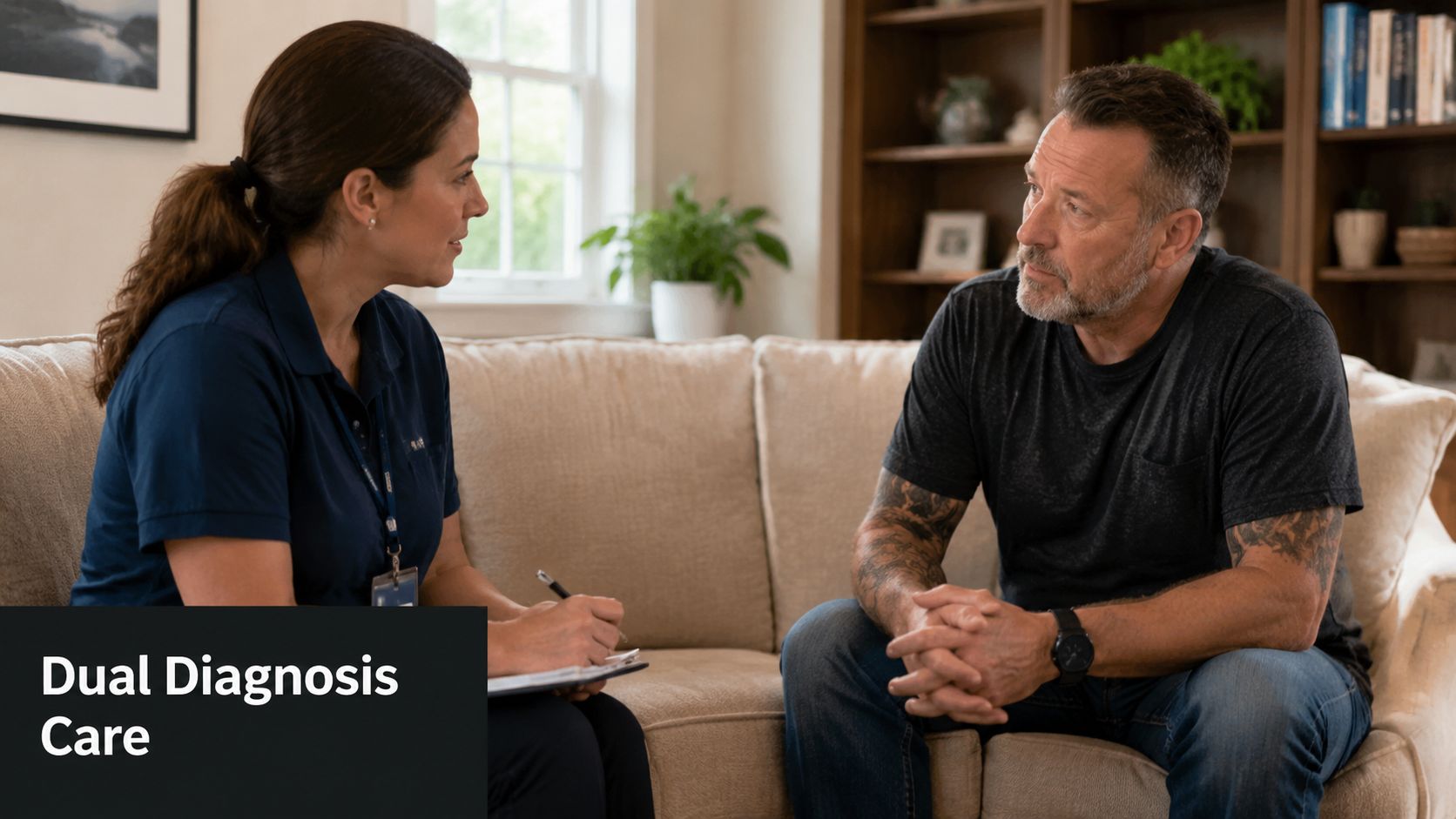
A resident finishes residential treatment in stable condition, then hits the first unstructured week outside. Sleep shifts. Medications get missed. Therapy appointments start to feel optional. For someone with depression, anxiety, bipolar disorder, trauma symptoms, or another co-occurring condition, that kind of drift can turn into relapse risk quickly.
That is why Serenity House Long Beach fits a different level of need than a standard sober home. The question is not only whether the house supports abstinence. The critical question is whether it can support psychiatric stability while the resident adjusts to ordinary life again.
Why mental health fit matters so much
A sober living placement can help psychiatric recovery when the fit is right and outside clinical care stays in place. I have seen the opposite too. A house may be clean, well-run, and serious about sobriety, but still be the wrong setting for someone whose relapse pattern is tied to panic, trauma activation, mood swings, or medication inconsistency.
The safer option is usually the house that can notice changes early and respond in a clear, organized way. That includes communication with therapists and prescribers, attention to missed appointments, and staff who know the difference between defiance and a mental health symptom.
A common example is the resident leaving treatment on a new medication plan that still needs adjustment. Another is the client who did well in residential care because routines were consistent, then struggles once stress, work pressure, family conflict, and transportation problems return. In those cases, placement quality matters as much as the house rules.
Clinical caution: If a sober living operator cannot explain how medication issues, missed psychiatric appointments, or behavioral health crises are handled, the home is not set up for complex dual-diagnosis care.
What families should verify
- Psychiatric coordination: Ask whether the home tracks appointment follow-through and communicates with outside prescribers when concerns come up.
- Medication policies: Clarify who stores medication, whether compliance support is available, and how refill problems are handled.
- Crisis procedures: Ask for the exact response to suicidality, psychosis, severe panic, or medication misuse.
- Staff judgment: Confirm that staff understand co-occurring disorders and do not reduce every symptom to simple rule-breaking.
For clients stepping down from residential care, this is often the point where discharge planning either holds or starts to fray. Residents coming from dual diagnosis treatment at Oceans Luxury Rehab often need housing that protects both sobriety and mental stability. Clients with demanding careers may also need the privacy and structure discussed in executive rehab aftercare planning, especially if stress and public-facing responsibilities have been part of the relapse cycle. A strong placement keeps the standard of care high after treatment ends.
5. Long Beach Transitional Living
High-functioning adults often need something different from traditional sober housing. They may need privacy, quiet, clean professional boundaries, and enough flexibility to maintain a demanding schedule without drifting away from recovery. A professional-track setting like Long Beach Transitional Living answers that need better than a chaotic communal house.
This category is often right for executives, licensed professionals, business owners, and adults whose work identity is still intact even after addiction disrupted daily life. They may need discretion, stable internet, workspace, transportation reliability, and a resident culture that respects early bedtime, meetings, and real responsibilities.

Privacy matters, but it can't become isolation
The appeal of an executive-focused house is obvious. The environment is usually calmer, cleaner, and more aligned with the resident's day-to-day demands. The risk is that professionalism can become emotional distance. Some residents hide behind work, use busyness to avoid recovery tasks, and end up technically compliant but internally disconnected.
That's why the best professional-track homes still insist on participation. The resident should be able to attend therapy, meetings, recovery check-ins, and house expectations without feeling punished for having a career. The house should respect work. It shouldn't enable avoidance.
Signs of a strong professional-track placement
- Confidentiality standards: Ask how resident privacy is protected and what boundaries exist around outside communication.
- Work compatibility: Confirm quiet hours, device use, meeting attendance expectations, and travel rules.
- Recovery culture: Make sure residents aren't merely living parallel lives under the same roof.
- Clinical continuity: Check whether the resident can continue individual therapy and relapse-prevention planning while working.
This kind of environment often helps a person re-enter professional life with dignity while still accepting that sobriety has to stay central. For adults who need discreet, high-comfort support after treatment, executive rehab planning through Oceans Luxury Rehab can make that transition more coherent by matching aftercare recommendations to a realistic work life.
6. Recovery Homes Network Long Beach
When addiction has strained marriages, parenting, trust, or communication, placing someone in sober living without a family plan usually leaves part of the underlying problem untouched. A family-integrated model is useful because it treats recovery as something the resident practices in community, not in isolation from the people most affected.
This doesn't mean family involvement should be constant. In fact, too much contact too soon can destabilize early recovery. The point is thoughtful involvement. The house should help set boundaries, create predictable communication, and support family education instead of emotional chaos.
Best for healing systems, not just symptoms
A strong example is the resident whose spouse is supportive but frightened and hypervigilant after repeated broken promises. Another is the parent in recovery who wants to rebuild safe contact with children slowly and sincerely. These situations need more than a bed and curfew. They need structure around communication, expectations, and pacing.
A recent underserved content angle in the Long Beach market highlights exactly this practical gap. Public-facing pages often talk about amenities and safety but don't clearly explain how families can verify legitimacy, compare policies, or understand resident rights and accountability as discussed in this analysis of Long Beach sober living information gaps. For family-integrated homes, that verification step matters even more because emotional access to the resident should never substitute for program quality.
Families shouldn't ask only, "Can we visit?" They should ask, "How does this home use family contact to support recovery rather than disrupt it?"
Questions worth asking before admission
- Visitation rules: Ask when visits start, where they occur, and who can pause them if the resident destabilizes.
- Family education: Confirm whether loved ones receive guidance on boundaries, enabling, relapse warning signs, and communication.
- Therapy coordination: Find out whether the home supports outside family therapy or structured family sessions.
- Couples policy: If partners are involved, ask how conflict, privacy, and recovery priorities are managed.
This model works especially well when the resident's support system is willing to participate with humility. It works poorly when family members want control without education, or closeness without boundaries.
7. Path Forward Sober Living
Technology-enhanced sober living can be useful, but only when the technology supports accountability instead of replacing human connection. A house like Path Forward appeals to residents who are comfortable with digital tools, virtual check-ins, scheduling platforms, and structured progress tracking.
This is often a good fit for younger professionals, remote workers, or adults whose support network lives in multiple cities. Digital systems can make communication cleaner. They can also create false confidence if the home relies on dashboards more than relationships.
When tech helps and when it doesn't
Used well, technology makes practical tasks easier. Residents can track meeting attendance, communicate schedule changes, receive reminders, and stay connected with outpatient appointments. Families may also feel calmer when there is a transparent process instead of guesswork.
Used poorly, digital tools become surveillance theater. The resident checks boxes, uploads confirmations, and still feels disconnected, resentful, or emotionally absent. Recovery doesn't become stronger just because the system is more modern.
What to evaluate in a tech-forward house
- Purpose of the platform: Ask whether the tools support recovery planning, communication, and coordination, or exclusively monitor compliance.
- Privacy boundaries: Clarify what data is collected, who sees it, and how long it is kept.
- Human backup: Make sure staff still respond personally when a resident is struggling.
- Clinical integration: Verify that digital tracking complements therapy, meetings, and house accountability.
Affordability also matters in this category. Long Beach sober living appears split between more affordable transitional options and premium environments, and available local content doesn't always make the trade-offs around cost, structure, and clinical appropriateness easy to compare a gap noted in this discussion of affordability and access in Long Beach sober housing. For tech-enhanced homes, families should ask what they are paying for. An app doesn't justify premium pricing unless the underlying program is well run.
7-Point Comparison: Sober Living Homes in Long Beach, CA
| Model | Implementation complexity | Resource requirements | Expected outcomes | Ideal use cases | Key advantages |
|---|---|---|---|---|---|
| Oxford House Long Beach | Low, peer-run, democratic governance | Low cost; resident-managed finances and chores ($500–$800/mo) | Greater independence, strong peer accountability; limited clinical care | Motivated individuals stepping down from residential treatment without complex needs | Extremely affordable; builds life skills and self-reliance |
| Harbor Lights Sober Living (Long Beach) | Moderate, staff-supervised with structured programming | Licensed staff, clinical oversight, drug testing, case management | Reduced relapse risk, maintained clinical momentum | Those transitioning from inpatient care who need regular clinical monitoring | Professional supervision and coordinated clinical care |
| Sober Housing Solutions Long Beach | Moderate, hybrid peer/staff balance | Moderate resources; vocational services and optional clinical add-ons | Improved employment readiness, community integration, balanced independence | Individuals rebuilding careers or needing vocational support post-treatment | Vocational support, peer mentorship, flexible structure |
| Serenity House Long Beach (Dual Diagnosis) | High, specialized dual-diagnosis clinical model | High: psychiatric nursing, medication management, trauma‑informed staff | Psychiatric stabilization, lower hospitalization risk, integrated MH and SUD care | People with co-occurring mental health and substance use disorders | On-site psychiatric oversight and crisis protocols |
| Long Beach Transitional Living, Professional/Executive Track | Moderate, premium accommodations with discreet services | High cost; private/semi-private rooms, confidentiality measures, optional executive coaching ($1,200–$2,000+/mo) | Maintain career continuity and privacy; may offer less peer community | Executives and professionals needing upscale, discreet step-down housing | Privacy, upscale environment, flexibility for demanding schedules |
| Recovery Homes Network Long Beach, Family-Integrated Model | Moderate, family therapy coordination and programming | Moderate: family therapists, workshops, visit logistics | Strengthened family relationships, reduced enabling, improved long-term engagement | Couples, parents, and families participating in recovery together | Family therapy integration and relationship-focused aftercare |
| Path Forward Sober Living, Technology-Enhanced Accountability | Moderate–High, digital systems integrated with traditional supports | Tech platforms, app/telemedicine integration, analytics, tech support | Real-time accountability, data-driven alerts, seamless virtual therapy integration | Tech-savvy professionals and remote support networks | Real-time monitoring, telehealth integration, scalable accountability tools |
Securing Your Placement How Oceans Luxury Rehab Can Help
A resident can do well in residential treatment, leave with real momentum, and still lose ground in the first two weeks after discharge if the next placement is wrong. I have seen that happen when someone who still needs structure moves into a house with minimal oversight, or when a resident who is ready for more independence lands in an environment that creates friction, shame, or unnecessary stress.
Choosing sober living in Long Beach California is not just a housing search. It is a clinical and practical decision about what kind of support will hold once daily life starts again.
That decision is harder than it looks from the outside. Websites can list amenities and house rules, but they rarely show how a home handles relapse risk, medication routines, curfews, employment demands, transportation problems, family contact, or conflict between residents. Those details shape whether a placement helps recovery or disrupts it.
For people stepping down from a high-end residential program, the standard should stay high. The next setting should match the work already done, not erase it. That means looking at comfort, privacy, accountability, psychiatric follow-up, outpatient coordination, and whether the resident can realistically succeed there for more than a few days.
At Oceans Luxury Rehab, placement planning starts before discharge day. The clinical team, case managers, and admissions staff look at the issues that tend to decide early outcomes. Relapse history matters. Mental health stability matters. Work and family pressure matter. So do transportation, medication management, prior sober-living experience, and whether the resident responds better to peer accountability or to a more structured setting.
Budget matters too, and families deserve a clear answer on that point. As noted earlier, sober living in the Long Beach area often spans a wide private-pay range depending on the residence, level of oversight, room type, and added support. A more expensive home is not automatically a better fit. In practice, the right question is whether the resident is paying for support they will use and need.
A strong handoff includes the details that often get missed. Outpatient therapy should already be arranged. Psychiatric follow-up should be clear. Medication storage and supervision should be confirmed before move-in, not sorted out after arrival. Families should know the rules, the communication boundaries, and who gets called if the resident starts to drift.
Oceans Luxury Rehab offers detox, residential treatment, outpatient care, dual-diagnosis treatment, and aftercare planning in San Clemente. That continuity allows sober living placement to function as the next stage of treatment, not a disconnected referral. For residents leaving a luxury program, that distinction matters. The goal is to preserve clinical gains while building a daily routine that can survive work stress, family strain, boredom, and the ordinary pressure of real life.
For adults in Orange County and Los Angeles who need discretion and a high standard of care, that coordinated approach can reduce avoidable setbacks. A resident may begin in medically supervised detox, continue through residential treatment, and then move into a sober living home in Long Beach or another Southern California community that fits the actual recovery picture.
If the next step feels uncertain, that usually means the decision needs more structure, not more guesswork. The best placement is the house that matches the resident's current level of stability, protects dignity, and gives recovery a realistic place to grow.
If treatment, discharge planning, or sober living placement is the next step, Oceans Luxury Rehab can help coordinate care from detox through aftercare with confidential admissions support available around the clock.
