

A search for help usually starts in chaos. A spouse notices shaking hands in the morning. A parent sees pills disappearing faster than prescriptions should allow. An executive closes the office door and searches for detox in Costa Mesa before anyone else finds out. The common thread isn't weakness. It's urgency, fear, and the need for a clear next step.
That first step matters more than one might realize. The wrong move can lead to a dangerous at-home withdrawal, a rushed admission into a program that doesn't match the person's needs, or a detox stay with no real plan for what happens after discharge. The right move creates safety, structure, and a real path forward.
Many people also confuse wellness “detox” with addiction detox. General wellness resources can still help families understand how the body responds to stress, hydration, nutrition, and recovery. For broader context, how to support natural body detox offers a useful distinction between everyday health habits and the very different medical needs involved in substance withdrawal.
A quality search should lead to practical answers, not more confusion. Families comparing detox programs in the area often benefit from reviewing detox centers in Orange County, CA to understand the range of care available nearby and what separates a safe program from a risky one.
Your First Step Toward Healing in Orange County
The person searching for detox in Costa Mesa usually isn't calm. Sleep has already gone sideways. Trust may be damaged. The body may be dependent on alcohol, opioids, benzodiazepines, stimulants, or multiple substances at once. That's why the first decision should be simple. Get medical eyes on the situation fast.
Costa Mesa has a broad treatment footprint. The city has 37 total facilities, with 33 of them offering specialized alcohol treatment, or about 89% of local rehab options, according to Addictions.com's Costa Mesa rehab overview. That's useful because alcohol remains one of the most common reasons people seek detox, and it can also be one of the most medically dangerous substances to stop abruptly.
What matters in the first phone call
The best admissions conversations focus on immediate safety, not sales language. They should quickly identify:
- What substance is involved: Alcohol, opioids, benzodiazepines, stimulants, or a mix.
- How recent the last use was: Timing changes withdrawal risk.
- Whether mental health symptoms are present: Depression, panic, trauma symptoms, or confusion can complicate detox.
- What support exists at home: Some people have help. Some are hiding the problem from everyone.
The goal isn't to prove how serious the problem is. The goal is to keep the person safe long enough to start treatment.
A calmer way to think about the process
Detox isn't the whole recovery journey. It's the first controlled stage of it. In practical terms, that means a person stops using in a setting where clinicians can monitor symptoms, manage complications, and prepare for the next level of care instead of sending them back into the same environment that fueled the addiction.
That shift alone can lower the panic. The person doesn't need to solve everything today. They need the right first placement.
Understanding Medically Supervised Detox
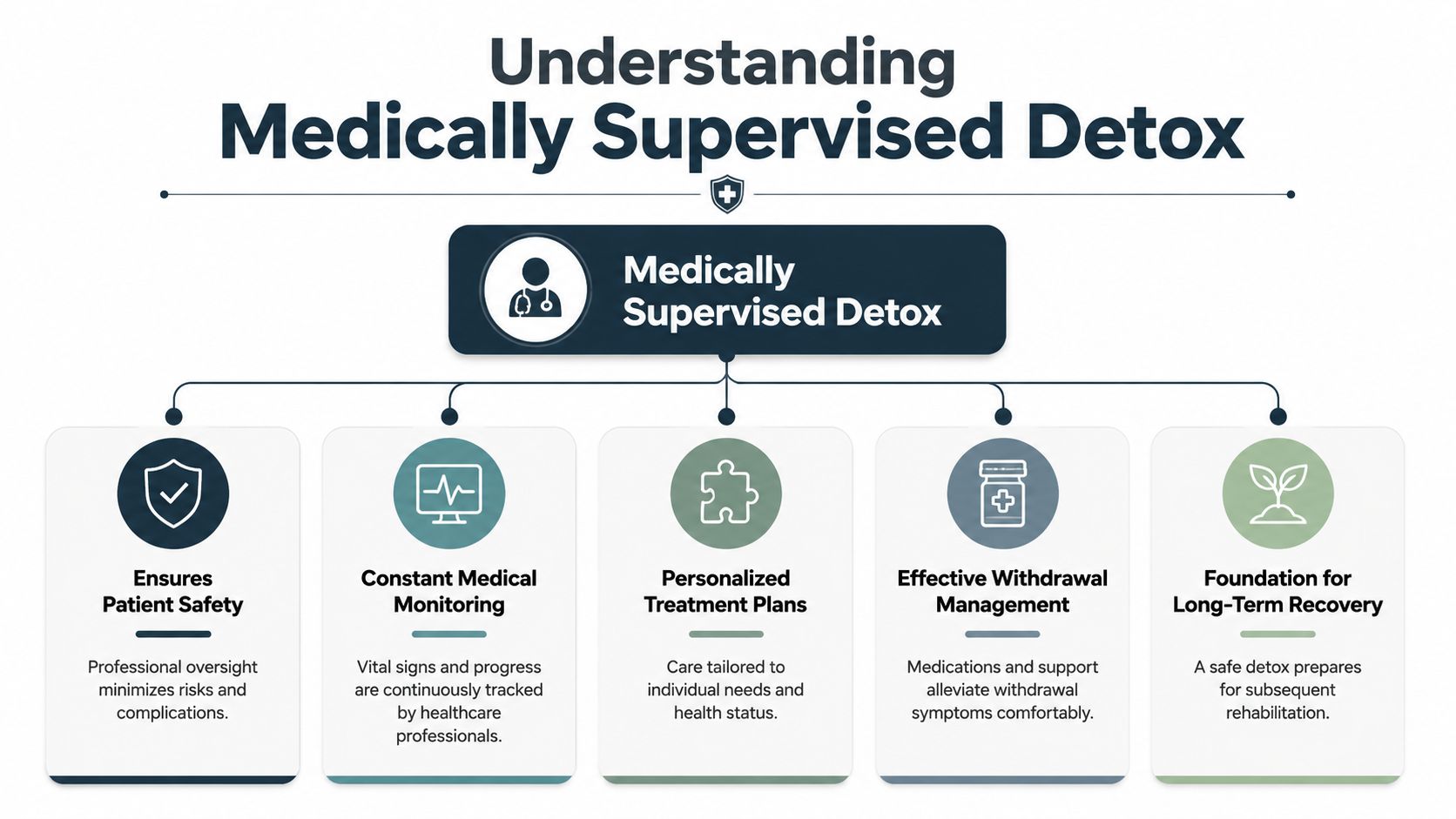
A medically supervised detox is a controlled withdrawal process led by clinical staff. That sounds straightforward, but many families underestimate what “medical” should mean. It shouldn't mean someone checks in occasionally. It should mean continuous monitoring, a real response plan, and treatment that adjusts as symptoms change.
Why home detox goes wrong
People often try to quit “cold turkey” because they want privacy, speed, or control. That approach can backfire fast. Withdrawal can escalate before the person or family understands what's happening. Dehydration, agitation, blood pressure changes, confusion, severe cravings, and medical complications can all push a desperate situation into an emergency.
Alcohol and benzodiazepines are especially concerning because withdrawal can become life-threatening. Opioids may feel unbearable even when they aren't usually fatal on their own, and that level of misery drives relapse quickly. Stimulant withdrawal can bring exhaustion, depression, and emotional instability that need close support.
What proper supervision includes
High-quality detox care has a few essential elements. Certified medical staff accredited by the American Society of Addiction Medicine and on-site physicians available 24 hours a day, 7 days a week can manage withdrawal alongside co-occurring issues such as malnutrition, depression, and anxiety, as described by College Hospital Costa Mesa's chemical dependency program.
That level of care matters because withdrawal isn't just about “getting substances out.” It's also about managing what substance use has done to the rest of the body and mind.
A strong detox program should provide:
- Continuous nursing oversight: Vital signs, hydration, sleep, and symptom progression need active monitoring.
- Physician involvement: Medication decisions should come from medical judgment, not guesswork.
- Symptom relief medication when appropriate: Comfort isn't a luxury. It helps people stay in treatment.
- Mental health support: Panic, depression, and fear often peak during early withdrawal.
For readers weighing the risks of alcohol withdrawal in particular, why alcohol detox needs medical supervision breaks down why professional oversight isn't optional when physical dependence is present.
The right analogy
Detox works best when it's treated like a difficult mountain pass with a guide team, not a solo hike. The person still has to make the climb. Clinical staff can't do recovery for them. But staff can monitor the route, respond when conditions change, and keep one bad hour from becoming a catastrophe.
Practical rule: If a person has been using daily, has tried and failed to stop before, or has any history of severe withdrawal, detox should start under medical supervision.
The Detox Process and Typical Timelines
People usually want one answer first. How long is this going to take? The honest answer is that detox depends on the substance, the amount used, overall health, and whether other psychiatric or medical issues are involved. Still, there is a typical pattern, and knowing that pattern can make the process less frightening.
In Costa Mesa, the acute phase of medically supervised detox typically lasts 5 to 10 days, though the timeline varies by substance. Fentanyl withdrawal can involve an intensified 72 to 120 hour window that may require specialized medication-assisted treatment protocols, according to Ocean Coast Recovery's detoxification overview.
What usually happens first
Admission starts with assessment. Staff gather substance use history, medication history, mental health information, and immediate medical concerns. This stage shapes the detox plan. A person withdrawing from alcohol with anxiety and poor nutrition won't need the same support as a person withdrawing from fentanyl after repeated relapse.
Then comes stabilization. Staff monitor the body's response, manage symptoms, and adjust medications as needed. This period often feels uneven. A person may feel physically rough, emotionally raw, relieved to be safe, and scared of what comes next, all in the same day.
Typical phases during detox
Intake and medical review
Screening identifies withdrawal risk, current symptoms, and co-occurring conditions.Early withdrawal management
Symptoms begin or intensify. Staff track sleep, appetite, vital signs, agitation, and cravings.Stabilization
The body begins to settle. Medication-assisted support may reduce physical distress and improve safety.Transition planning
Before discharge, the program should arrange the next level of care instead of leaving the person to “figure it out.”
Common Withdrawal Timelines and Symptoms
| Substance | Peak Withdrawal | Common Symptoms |
|---|---|---|
| Alcohol | Varies during the acute detox window | Tremors, anxiety, sweating, nausea, insomnia, seizure risk, delirium tremens risk |
| Opioids | Varies during the acute detox window | Body aches, vomiting, diarrhea, chills, restlessness, intense cravings |
| Fentanyl | 72 to 120 hours during the intensified withdrawal period | Severe opioid withdrawal symptoms, intense cravings, difficult symptom control |
| Benzodiazepines | Varies during the acute detox window | Anxiety, insomnia, agitation, tremors, seizure risk |
| Stimulants | Varies during the acute detox window | Fatigue, depression, irritability, sleep disruption, strong psychological cravings |
Why medication-assisted treatment matters
A good detox program doesn't force suffering for the sake of suffering. Medication-assisted treatment can reduce physical pain, calm cravings, and help the person stay safe enough to continue treatment. That's especially important in fentanyl detox, where symptom intensity can overwhelm people who expected a standard opioid withdrawal experience.
Withdrawal severity doesn't measure character. It measures dependence, physiology, and exposure.
The better question isn't whether detox will be uncomfortable. It's whether the program knows how to manage that discomfort well enough to keep the person moving toward recovery.
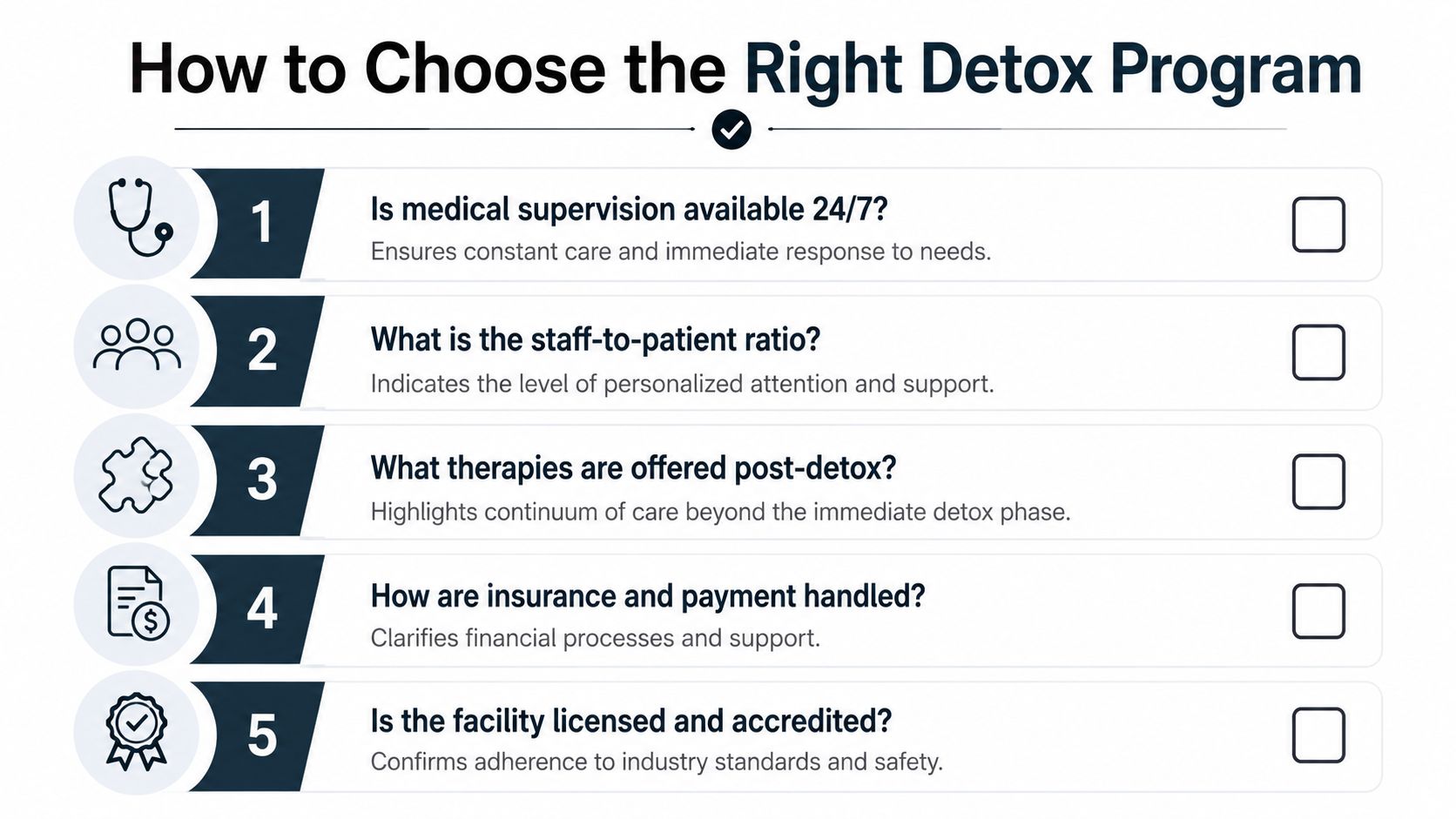
How to Choose the Right Detox Program
Most families ask the wrong first question. They ask which program has a bed tonight. Bed availability matters, but it shouldn't be the only filter. The smarter question is whether the program can safely treat the exact substance pattern, psychiatric picture, and transition needs involved.
Match the program to the substance
Not all detox programs handle every withdrawal profile equally well. In the Costa Mesa area, opioids, stimulants such as methamphetamine, and alcohol are among the most frequently treated substance use disorders, according to Clear Life Recovery's review of common drugs treated at local rehab centers. That means a strong program should already know how to handle complex withdrawal and co-occurring mental health symptoms tied to those substances.
A program should be able to answer direct questions like these without vague language:
- Alcohol dependence: How do staff monitor seizure risk and escalating withdrawal symptoms?
- Opioid or fentanyl dependence: What medication protocols are available if symptoms spike?
- Benzodiazepine dependence: How do prescribers handle tapering and safety?
- Polysubstance use: How does the team prioritize treatment when more than one substance is involved?
Demand dual-diagnosis capability
Many people seeking detox in Costa Mesa aren't dealing with addiction alone. Anxiety, trauma, depression, sleep disorders, or burnout often show up at the same time. If a program treats withdrawal but ignores the mental health picture, the person leaves physically sober and emotionally exposed.
That's a setup for relapse.
A better checklist includes:
- Ask about psychiatric support: There should be a plan for mood symptoms, panic, or trauma-related distress during detox.
- Ask what happens after stabilization: Detox without a follow-through plan is incomplete care.
- Ask whether family communication is structured: Families need updates, boundaries, and guidance.
Comfort and privacy aren't cosmetic
Professionals, public-facing clients, and couples often delay treatment because they fear exposure, noise, or a chaotic environment. Privacy matters because it helps people stay in care. Comfort matters because exhausted, ashamed, physically ill people don't engage well in unstable settings.
The best detox environments usually offer:
- Private or quiet accommodations: Better rest supports medical stabilization.
- Clear daily structure: Even early in treatment, predictability lowers stress.
- Dignified staff interaction: Respect keeps people from bolting when symptoms hit.
A detox stay should feel organized, medically serious, and calm. If the admissions call feels chaotic, the care often is too.
The final filter
Before admission, families should ask one blunt question. What is the exact next step after detox ends?
The strongest answer includes a well-coordinated move into residential or other structured treatment, not a discharge list and good wishes. Recovery usually breaks down in the handoff. Programs that plan the handoff well give people a much better shot at staying engaged.
Navigating Insurance Cost and Admissions
It is 10 p.m. Someone you love finally says yes to help. The next question is immediate. Can we get them into detox in Costa Mesa tonight, and what will insurance cover?
That is the moment a strong admissions team earns its keep. Families need fast answers, clear next steps, and a real plan for getting from urgent detox needs into the full level of care that keeps people safe after withdrawal, especially when fentanyl use, psychiatric symptoms, or both are part of the picture.
Good programs do not make families chase details while a crisis is unfolding. They screen for medical fit, verify PPO benefits quickly, explain expected out-of-pocket costs in plain language, and set up arrival without turning admission into a paperwork obstacle.
That speed matters. Fentanyl withdrawal can be unpredictable, and dual-diagnosis clients often need psychiatric review from the start, not after detox is over.
What admissions should handle right away
A capable admissions process should cover four things without delay:
Clinical screening
Staff should confirm whether the person needs immediate detox, whether the setting fits their medical and psychiatric needs, and whether a higher-acuity placement is required first.Insurance verification
Families should get a direct explanation of PPO benefits, likely coverage, deductibles, and any private-pay exposure before arrival.Admission logistics
You should know when the person can arrive, what to bring, how medications are handled, and who is meeting them at intake.Next-step planning
Detox is only the opening phase. Admissions should explain how the client can move into residential treatment and, later, structured options such as sober living in Costa Mesa, California if that level of support fits the discharge plan.
When logistics are harder than the phone call
Some admissions are straightforward. Others involve a hospital discharge, a transfer from another program, or a client flying in from out of state while medically fragile or heavily supervised by family.
In those situations, resources on coordinating medical patient transfers can help families understand how organized movement between care settings works when timing, safety, and clinical oversight all matter.
Ask these questions before you commit
Do you accept my insurance plan, and can you verify it now?
Waiting until arrival creates avoidable stress.What costs are likely not covered?
Get specific numbers or clear ranges.How quickly can you admit?
Urgent detox cases need action, not a callback tomorrow.Can you treat mental health symptoms during detox?
Anxiety, depression, trauma symptoms, and substance use often show up together.What happens immediately after detox ends?
The answer should include a defined transition into the next level of care.
The right admissions experience should lower panic fast. It should feel private, organized, and clinically serious. Families looking for detox in Costa Mesa should expect more than a bed for a few days. They should expect a clear path from withdrawal management into the kind of high-touch, luxury treatment continuum that gives recovery a real chance to hold.
Beyond Detox The Path to Lasting Recovery at Oceans
A family finds detox in Costa Mesa fast. The withdrawal crisis gets contained. Then a harder question shows up within days: where does treatment go from here?
Detox is the start, not the plan. If care stops after withdrawal management, cravings, sleep disruption, depression, anxiety, and relapse risk can surge right back in. Lasting recovery usually requires a direct move into therapy, psychiatric support, relapse-prevention work, and a living environment that supports stability instead of chaos.
That is why Oceans is a strong choice for people who need more than short-term stabilization. The program is built to carry clients from urgent detox needs into residential treatment, outpatient support, and aftercare planning without losing momentum.

Why an integrated setting changes outcomes
The days after detox are often the most fragile. Physical symptoms may be improving while emotional symptoms are getting louder. That is often when fentanyl cravings, alcohol rebound symptoms, trauma reactions, or untreated depression become impossible to ignore.
Oceans is positioned well for that stage because the care does not stop at detox. Clients can continue into dual-diagnosis treatment, structured residential care, and step-down support in one connected system. That continuity protects progress and reduces the scramble families face when they have to piece together separate providers during a crisis.
Luxury also needs to mean something practical. Privacy, calm surroundings, and comfortable accommodations can help people stay engaged in treatment, but the setting only works when it is paired with real clinical depth.
Who benefits most from this kind of program
This model is especially useful for clients whose needs go beyond basic detox admission.
A person using fentanyl may need close monitoring, medication support, and a plan that accounts for heavy cravings after acute withdrawal ends. A client with alcohol dependence may need ongoing clinical oversight because relapse can happen fast once discomfort returns. Someone with anxiety, trauma, depression, or burnout needs mental health treatment at the same time, not as an afterthought weeks later.
Oceans is also a good fit for adults who need discretion and structure. That includes professionals, public-facing clients, families seeking private accommodations, and people who know a loud, chaotic setting will push them out of treatment early.
For clients thinking ahead to housing and accountability after primary care, sober living in Costa Mesa, California offers a useful next step after a residential stay.
Why this is the strongest next step
The best detox plan already includes the next placement, the next therapy schedule, and the next layer of support.
Oceans gives families a clear path: medically supervised detox, residential treatment, outpatient options, and aftercare planning in a private setting designed for focus and confidentiality. This approach is critical for alcohol dependence. It is just as important for fentanyl and other opioids, where the risk does not end when withdrawal does.
Families searching for detox in Costa Mesa are usually dealing with urgency, fear, and exhaustion. They need one organized program that can take the person from immediate medical stabilization into real treatment for substance use and mental health. Oceans meets that need with a higher level of continuity, privacy, and clinical support than a detox-only option can provide.
Oceans Luxury Rehab offers discreet, oceanfront addiction treatment with medically supervised detox, dual-diagnosis care, private accommodations, and a full continuum of treatment for adults in Orange County and Los Angeles. For those seeking a safe next step after detox in Costa Mesa, Oceans Luxury Rehab provides rapid admissions support, insurance verification, and compassionate guidance toward lasting recovery.
